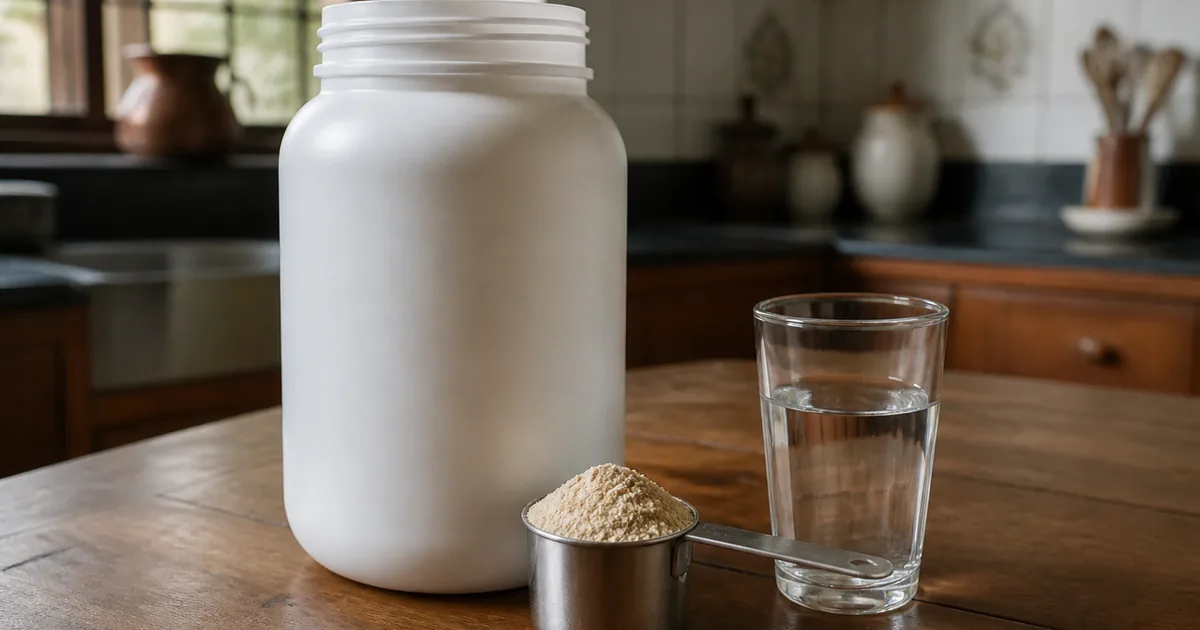
🥛Protein Powder in India: Mislabeled Whey, Metals & Kidney Tests
Citizens Protein Project lab work found sampled Indian tubs often miss the protein claim — especially “medical” shakes. Here is amino-spiking, how to read the label and FoSCoS, and which kidney and liver tests matter before daily scoops.
Scanura Editorial
Health Education Team
Written by Scanura Editorial for health education. This article is not a substitute for advice from a qualified doctor. About our editorial standards
Protein Powder in India: Mislabeled Whey, Heavy Metals & Kidney Tests
Gym India runs on scoops. So do hospital “medical nutrition” shakes. Independent lab work in 2024–2025 — the Citizens Protein Project papers in Medicine and MESH’s CPP-2 follow-up — found a large share of sampled Indian tubs did not match the protein on the label, and some carried heavy metals, aflatoxin, cheap nitrogen (taurine), or undeclared sugar. Instagram turned that into “70% protein powders are fake.” The number is a sample statistic, not a census of every SKU in the country. It is still enough to change how you buy a tub.
This is not “never use whey.” Eggs, dal, curd, and honest paneer remain the default. A labelled, licensed whey isolate can be convenient. A ₹1,199 imported tub from an unknown Amazon seller is a chemistry experiment.
This 2026 guide covers what those studies actually measured, amino / nitrogen spiking, how to read an Indian health-supplement label and FoSCoS licence, who should get creatinine, eGFR, uric acid, and LFT before a high-protein phase — and the myth that whey “destroys kidneys” in healthy people.
Related reading: KFT / creatinine, eGFR by stage, uric acid, SGPT, GGT.
What the Indian Lab Studies Found
Two peer-reviewed MESH-linked projects are the ones worth quoting. They tested products, not rumours. They did not test every brand in India.
Citizens Protein Project (2024) — 36 popular tubs
Published in Medicine. Independent analysis of widely sold Indian protein supplements found widespread mismatch with labelled protein (some low, some high — a spiking clue), plus detectable lead/arsenic, aflatoxins, and pesticide residues in a subset, and herbal extras (green tea extract, Garcinia, ashwagandha) that have liver-injury case literature. Indian-made SKUs looked worse on average than some multinational tubs in that set. MESH and later media rounded the mislabel/spike problem to about 70% of that audit.
Citizens Protein Project 2 — medical vs gym whey (34 tubs)
CPP-2 compared 18 “pharmaceutical / medical nutrition” powders (the kind often pushed at patients) with 16 sports-nutrition tubs.
| Finding (CPP-2, as published) | Medical / pharma powders | Sports / nutraceutical powders |
|---|---|---|
| Mean protein | ~29 g / 100 g | ~76 g / 100 g |
| Label vs lab | 83% off by more than ±5% | Much tighter agreement |
| ≥60 g protein / 100 g | Almost none | 94% met this bar |
| Taurine nitrogen-spiking signal | 89% | 12.5% |
| Added sucrose/fructose ≥2 g/100 g (often unlabelled) | 44% | Rare |
| Heavy-metal / aflatoxin / progesterone signals | More often | Less often |
| Mercury / pesticides in this round | None reported | None reported |
The uncomfortable punchline: the expensive hospital-style shake was, on average, worse protein and more sugar than a decent gym whey. Patients with cancer, liver, or kidney disease are the last people who should be paying for taurine-spiked powder.
These are observational lab audits, not FSSAI prosecutions of named brands in this article. Do not treat a viral screenshot as a ban list.
Protein Spiking — Why the Number on the Tub Lies
Standard protein assays (Kjeldahl / Dumas) count nitrogen, then assume it is all intact protein. Cheap nitrogen looks like protein:
| Spike | Why it is used |
|---|---|
| Taurine, glycine, alanine | High nitrogen, cheap |
| Creatine | Nitrogen; also moves serum creatinine |
| Free BCAAs / glutamine dumped in a “proprietary blend” | Looks like whey on a nitrogen test |
How to read the pack without a mass spec
- Ingredient list: clean WPC-80 looks like whey protein concentrate, emulsifier, flavour, sweetener. Separate glycine, taurine, creatine, “amino blend” high on the list is a spike flag.
- Amino-acid table: for intact whey, the sum of listed amino acids is usually in the same neighbourhood as the protein claim. A huge gap, or a table that exceeds protein grams with mystery “other nitrogen,” is a warning.
- Protein % by weight: (protein grams ÷ serving grams) × 100. True WPC-80 is typically ~70–80%; WPI higher. A tub claiming 90% at a distress price is not a miracle.
- Sugar: CPP-2 found medical powders hiding sucrose/fructose. If you have diabetes, that scoop is a glucose event.
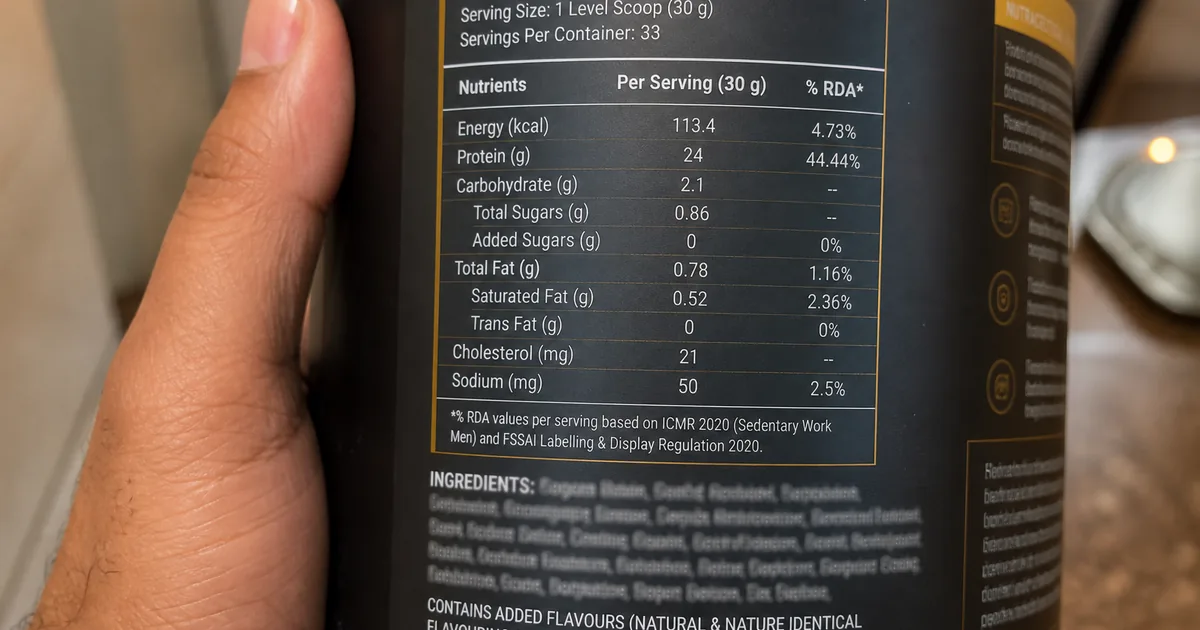
FSSAI’s health supplement rules (2022 framework) require declaration of added free amino acids and ban disease-treatment claims. They do not magically ban spiking if the amino acids are listed, and they do not require a public pre-market protein assay you can search. FoSCoS tells you the licence exists. It does not tell you the scoop is 24 g of whey.
How to Buy With Less Risk
| Do | Don’t |
|---|---|
| Check the 14-digit FSSAI number on FoSCoS | Trust a hologram sticker from a grey importer |
| Buy from the brand site or a known authorised seller | Chase 50% off “US imported” tubs with no Indian FBO |
| Prefer a short ingredient list | “Fat-burner whey” with Garcinia, green tea extract, 27 herbs |
| Ask for a batch COA (protein + metals) if you use it daily | Assume “hospital brand” = cleaner (CPP-2 says often the opposite) |
| Food first: eggs, dal, curd, milk, fish, chicken, labelled paneer | Replace dinner with three scoops |
Counterfeit is a separate crime: raids have found factories packing fake whey at industrial scale. A price that ignores milk-protein economics is the same red flag as ₹80/kg paneer.
Whole food still wins on amino-acid quality plus no mystery metals. Whey is a tool, not a personality.
Does Whey Damage Kidneys?
In people with normal kidneys, typical food-plus-whey protein intakes have not been shown to cause CKD. The scare is mostly internet folklore mixed with real problems in a smaller group:
| Situation | What actually happens |
|---|---|
| Healthy kidneys, one to two scoops, water | Kidneys filter extra urea; drink enough water. Not a reason to skip dal. |
| Known CKD, low eGFR, one kidney, transplant | Protein targets are a nephrologist decision. Do not self-start 2 g/kg from a tub. |
| Creatine + whey | Serum creatinine can rise without a fall in true GFR. Ask for cystatin C or a clinical read before panicking. |
| Very high protein + dehydration + heat | Uric acid and stones are the Indian gym pattern, not “the whey melted your kidneys.” |
| Herbal “liver detox” whey | SGPT / GGT can rise from the herbs, not from β-lactoglobulin. |
Heavy metals and aflatoxin are a chronic contaminant problem if the tub is dirty — another reason to prefer short-list, licensed, COA products, not a reason to CT-scan your kidneys after one shake.
Which Tests Before (or During) a High-Protein Phase
You do not need a lab to eat an egg. You do need a baseline if you are starting daily scoops, creatine, have family kidney disease, diabetes, hypertension, stones, or gout, or you already take painkillers.
| Test | Why |
|---|---|
| Serum creatinine + eGFR | Baseline kidney filter. Recheck if you add creatine — interpret with a doctor. |
| Uric acid | High-protein, beer, and dehydration stack in Indian men in their 20s–30s. |
| Urine routine ± ACR if diabetic or hypertensive | Protein in urine is a different question from protein in a shaker. |
| LFT (SGPT, GGT) | Herbal blends and dirty powders; also fatty liver from the rest of the diet. |
| Fasting glucose / HbA1c | If the powder is a sugar-spiked medical shake. |
There is no “whey blood test.” Labs do not detect last night’s scoop.
If you already have PDFs, upload them to scanura or create an account. scanura explains creatinine, eGFR, uric acid, and SGPT in English or Hindi. It does not certify a tub and it does not replace a nephrologist.
The blood test checker is a range read, not a diagnosis.
Complain about a misleading tub: 1800-11-2100 or Food Safety Connect. Keep the batch code.
Who Should Be Extra Careful
| Who | Why |
|---|---|
| CKD, transplant, solitary kidney | Protein prescription is clinical |
| Pregnancy | Food protein first; skip random imported tubs |
| Teens buying ₹20-adjacent “mass gainers” | Sugar + spike + hormones-on-Instagram |
| Gout / uric-acid stones | Water, not a second night-time scoop |
| Unexplained high SGPT | Stop herbal powders; see a doctor — do not add ashwagandha whey |
| On GLP-1 medicines | Liquid calories and nausea; protein still matters, the source can be food |
Key Takeaways
- Indian lab audits (CPP / CPP-2) found frequent mislabelling and nitrogen-spiking, especially in “medical” powders that were weaker protein and often sweeter than gym whey.
- “70% fake” describes sampled products, not every tub in India. It is still a reason to read the label.
- Spiking fools nitrogen tests with taurine, glycine, creatine. Look at ingredients + amino table + protein %.
- FSSAI licence ≠ third-party protein assay. Check FoSCoS; still prefer a COA and authorised sellers.
- Healthy kidneys tolerate ordinary whey; CKD does not get a gym protocol off YouTube.
- Creatine can raise creatinine without meaning your GFR collapsed.
- Baseline creatinine/eGFR, uric acid, LFT if scoops will be daily or you have metabolic risk — then upload the PDF to scanura.
- Eggs and dal do not need a viral lab scandal to work.
Disclaimer: This article is for educational purposes only. It summarises publicly reported independent laboratory studies (including Citizens Protein Project papers in Medicine) and FSSAI’s health-supplement framework as of 20 August 2026. Study samples are not a ban list of every brand. scanura is not affiliated with MESH, FSSAI, or any supplement company. scanura does not test powders and does not provide medical diagnosis. Kidney disease, high creatinine, and liver-enzyme changes need a qualified clinician. This is health-education coverage, not a product recall.
Medical References
Step-by-Step Guide
- 1
Treat 70% as a sample statistic, not every tub
CPP and CPP-2 tested popular SKUs. Medical nutrition powders were often weaker protein and more spiked than gym whey.
- 2
Read ingredients and protein percent, not the marketing
Taurine, glycine, creatine, and proprietary amino blends can inflate nitrogen tests. True WPC-80 is typically about 70–80% protein by weight.
- 3
Check the 14-digit FSSAI number on FoSCoS
A live licence is not a third-party protein assay. Prefer authorised sellers and a batch COA if you scoop daily.
- 4
Food first; skip herbal fat-burner wheys
Eggs, dal, and curd do not need a mass-spec scandal. Green tea extract and Garcinia blends are a liver story.
- 5
Do not assume whey destroys healthy kidneys
CKD needs a clinician’s protein target. Creatine can raise serum creatinine without a real GFR crash.
- 6
If scoops will be daily, baseline creatinine/eGFR, uric acid, and LFT
Upload the PDF to scanura. scanura does not test powder.
📬 One health report guide, every week
Normal ranges, what your values mean, and what to ask your doctor — in plain language. Free, unsubscribe anytime.