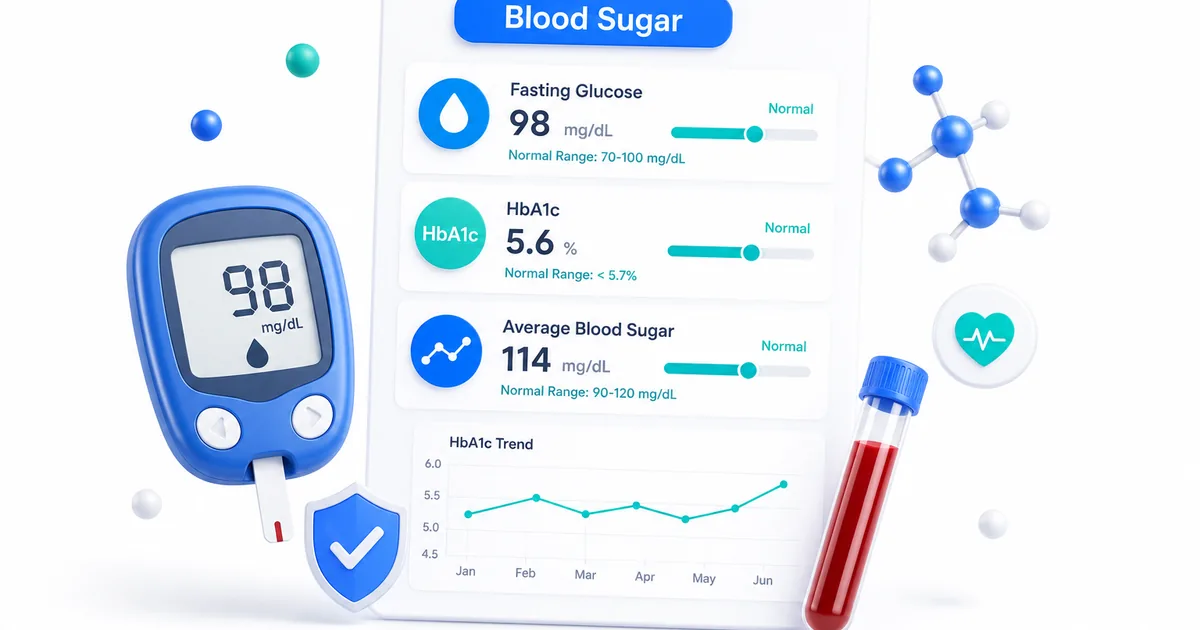
📊HbA1c Test Explained: Your 3-Month Blood Sugar Average
HbA1c shows your average blood sugar over 3 months — the best test for diabetes monitoring. Here's what 5.7%, 6.5%, and 7.0% actually mean for your health.
Scanura Editorial
Health Education Team
Written by Scanura Editorial for health education. This article is not a substitute for advice from a qualified doctor. About our editorial standards
HbA1c Test Explained: Your 3-Month Blood Sugar Average
The HbA1c (glycated haemoglobin) test is the gold standard for monitoring diabetes and catching prediabetes early. Unlike fasting sugar — which captures one moment in time — HbA1c reflects your average blood glucose over roughly 3 months. If your doctor said "your HbA1c is 7.2%" and you didn't know whether to worry, this guide is for you.
For fasting sugar and post-meal glucose, see our blood sugar levels guide.
What HbA1c Measures
Glucose in blood sticks to haemoglobin in red blood cells. The percentage of glycated haemoglobin (HbA1c) correlates with average glucose:
| HbA1c (%) | Approximate Average Blood Glucose |
|---|---|
| 5.0% | ~97 mg/dL (5.4 mmol/L) |
| 6.0% | ~126 mg/dL (7.0 mmol/L) |
| 7.0% | ~154 mg/dL (8.6 mmol/L) |
| 8.0% | ~183 mg/dL (10.2 mmol/L) |
| 9.0% | ~212 mg/dL (11.8 mmol/L) |
| 10.0% | ~240 mg/dL (13.4 mmol/L) |
HbA1c Categories (ADA/WHO Framework)
| HbA1c | Diagnosis |
|---|---|
| Below 5.7% | Normal |
| 5.7% – 6.4% | Prediabetes (impaired glucose regulation) |
| 6.5% or higher | Diabetes (on two occasions, or with symptoms) |
Indian populations develop complications at similar thresholds — don't assume different cutoffs without doctor guidance.
Why HbA1c Beats One Fasting Sugar
- No fasting required — convenient for busy patients
- Not affected by last night's dinner as much as post-meal sugar
- Tracks treatment success over months
- Predicts complications — higher HbA1c correlates with eye, kidney, nerve, and heart damage risk
Limitations
| Situation | HbA1c May Be Unreliable |
|---|---|
| Anaemia | Falsely low or high depending on type |
| Recent blood transfusion | Invalid for 3 months |
| Haemoglobin variants | Thalassaemia, sickle cell — use fructosamine or CGM |
| Pregnancy | Different targets — OGTT preferred for gestational diabetes |
| Kidney failure | Interpret with caution |
If you have thalassaemia trait, tell your lab — see our thalassaemia guide.
Target HbA1c: Personalised Goals
| Patient | Typical Target |
|---|---|
| Healthy adult, newly diagnosed | Below 6.5–7.0% |
| Most adults with diabetes | Below 7.0% |
| Elderly, frail, hypoglycaemia risk | Below 8.0% may be acceptable |
| Pregnancy (pre-existing diabetes) | Below 6.5% — specialist care |
Hypoglycaemia risk: Aggressive targets in elderly on insulin/sulfonylureas can cause dangerous low sugars. Targets must balance benefits and safety.
How Often to Test
| Situation | Frequency |
|---|---|
| Stable diabetes, at goal | Every 6 months |
| Not at goal or therapy changed | Every 3 months |
| Prediabetes screening | Annually |
| High-risk adults (obesity, family history) | Every 1–3 years |
Lowering HbA1c: Evidence-Based Steps
- Weight loss — 5–10% body weight can drop HbA1c 0.5–1.0%
- Diet — reduce refined carbs, white rice portions, sugary drinks; add fibre (dal, vegetables, millets)
- Exercise — 150 min/week aerobic + resistance training twice weekly
- Sleep — poor sleep raises insulin resistance
- Medications — metformin first-line in type 2 diabetes; insulin when needed
- Stress management — cortisol affects glucose
See managing blood sugar naturally for lifestyle detail.
Indian Meal Practical Tips
- Replace half white rice with brown rice or millet
- Eat vegetables and protein before rice to blunt glucose spike
- 10-minute walk after meals
- Limit sweets at festivals — plan portion control, not total deprivation
HbA1c and Complications
Every 1% reduction in HbA1c roughly reduces:
- Microvascular complications (eye, kidney) by ~35%
- Heart attack risk by ~14%
Annual checks when diabetic:
- Eye exam (retinopathy)
- Urine albumin + creatinine (kidney — KFT guide)
- Foot exam (neuropathy)
- Lipid profile (cholesterol guide)
Prediabetes: The Window to Act
At HbA1c 5.7–6.4%, you can often prevent progression to diabetes:
- Lifestyle intervention cuts diabetes risk ~58% in landmark trials
- Metformin may be considered if BMI high and lifestyle insufficient
- Retest HbA1c every 6–12 months
HbA1c in Indian Populations: Nuances
Thin-Fat Phenotype
Many South Asians develop diabetes at lower BMI than Caucasians. HbA1c may reach 6.5%+ while fasting sugar still appears borderline. Don't rely on fasting glucose alone.
Gestational Diabetes
HbA1c is not used to diagnose gestational diabetes — OGTT at 24–28 weeks is standard. Pre-pregnancy HbA1c above 6.5% suggests pre-existing diabetes needing tight pregnancy control.
CGM and Fructosamine
Continuous glucose monitors reveal post-meal spikes hidden in averages. Fructosamine reflects 2–3 week control when HbA1c unreliable (haemoglobin variants, sickle cell, thalassaemia).
Medications Affecting HbA1c
Steroids raise glucose sharply. GLP-1 agonists and SGLT2 inhibitors lower HbA1c with weight and cardiovascular benefits — increasingly prescribed in Indian metros.
Festival Season Management
Eat protein before mithai, walk after heavy meals, and resume routine next day. One indulgent week matters less than 3-month average — but repeated festivals compound damage.
Questions to Ask Your Doctor
- "What is my personal HbA1c target?"
- "Could anaemia affect my result?"
- "Should I start medication or try lifestyle first?"
- "How soon should I retest after changes?"
- "Do I need complication screening now?"
How scanura Helps
Upload HbA1c with fasting sugar and lipid panel for integrated diabetes risk explanation and trend tracking.
Key Takeaways
- HbA1c = 3-month average sugar — best for monitoring diabetes
- Below 5.7% normal; 5.7–6.4% prediabetes; 6.5%+ diabetes
- Target usually below 7% for most adults — individualised
- Unreliable in anaemia and haemoglobin variants
- Retest every 3 months when not at goal
Disclaimer: Educational only. Diabetes diagnosis and treatment require qualified medical care.
Medical References
Step-by-Step Guide
- 1
Read your percentage
Below 5.7% normal. 5.7–6.4% prediabetes. 6.5%+ diabetes on repeat testing.
- 2
Know your personal target
Most adults target below 7%. Elderly or hypoglycaemia risk may allow below 8%.
- 3
Check for unreliable results
Anaemia, haemoglobin variants, and recent transfusion affect accuracy.
- 4
Pair with fasting sugar
Both together give fuller picture than either alone.
- 5
Lifestyle first for prediabetes
Weight loss and exercise can prevent progression to diabetes.
- 6
Retest every 3 months
When not at goal or therapy changed. Every 6 months when stable.
📬 One health report guide, every week
Normal ranges, what your values mean, and what to ask your doctor — in plain language. Free, unsubscribe anytime.