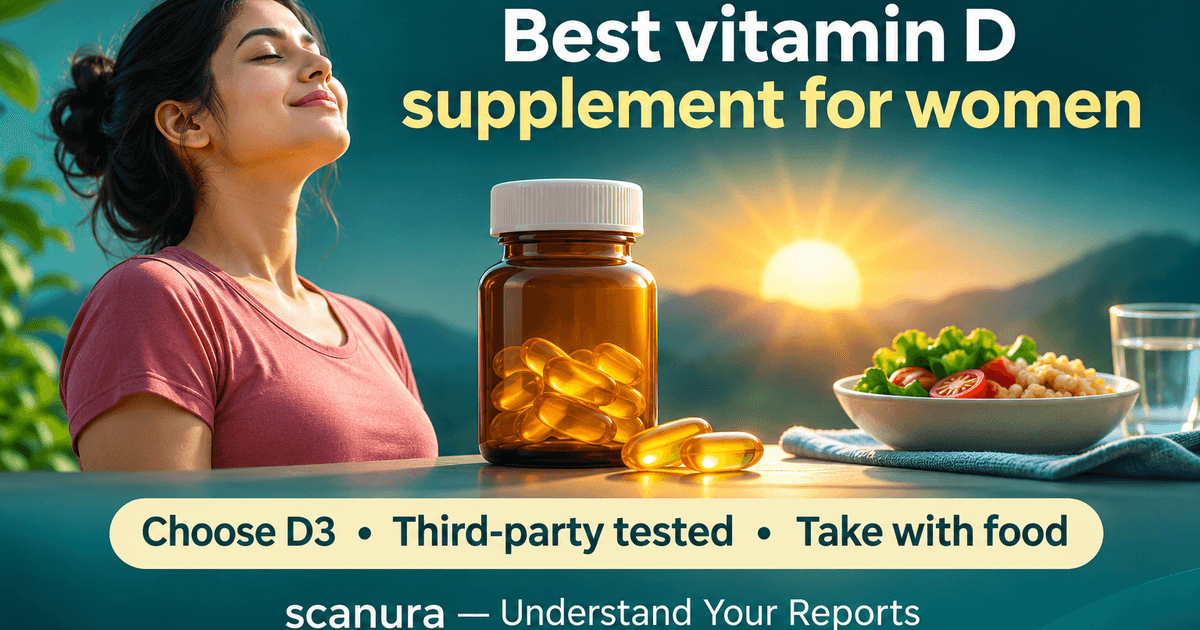
☀️Best Vitamin D Supplement for Women: How to Choose, Dose & Stay Safe
Confused by the vitamin D aisle? How women can choose a safe D3 supplement, match the dose to a blood test, and stay under the daily upper limit.
Scanura Editorial
Health Education Team
Written by Scanura Editorial for health education. This article is not a substitute for advice from a qualified doctor. About our editorial standards
Medical References
- NIH Office of Dietary Supplements — Vitamin D: Health Professional Fact Sheet
- NIH Office of Dietary Supplements — Vitamin D: Consumer Fact Sheet
- Endocrine Society — Vitamin D for the Prevention of Disease Guideline Resources (2024)
- Nature Made — Vitamin D3 2000 IU (50 mcg) Softgels (official product page)
- Nature Made — Vitamin D Supplements (official collection)
Step-by-Step Guide
- 1
Get a 25-hydroxyvitamin D blood test
Ask your clinician for a 25-hydroxyvitamin D test. Symptoms alone cannot confirm deficiency, and the result determines whether you need a supplement and at what dose.
- 2
Choose third-party-verified D3
Pick a vitamin D3 (cholecalciferol) product with a USP, NSF or Informed Choice mark, at the dose your clinician recommends, and take it with a meal containing fat.
- 3
Stay within the daily upper limit
Keep total vitamin D from all sources—supplements, multivitamins and fortified foods—at or below 4000 IU per day unless a clinician directs a higher dose.
- 4
Retest after about three months
Recheck your 25-hydroxyvitamin D level after roughly 90 days of supplementation to confirm improvement before continuing or changing the dose.
- 5
Get clinician input in special cases
If you are pregnant or breastfeeding, have kidney disease or high calcium, take prescription medicines, or are considering more than 4000 IU/day, consult your clinician first.
📬 One health report guide, every week
Normal ranges, what your values mean, and what to ask your doctor — in plain language. Free, unsubscribe anytime.