🫘Kidney Function Test (KFT) Explained: Creatinine, BUN & More
Your KFT report shows creatinine, BUN, and urea levels — but what do they really mean? Here's a plain-language guide to understanding your kidney health.
Scanura Editorial
Health Education Team
Written by Scanura Editorial for health education. This article is not a substitute for advice from a qualified doctor. About our editorial standards
Kidney Function Test (KFT) Explained: Creatinine, BUN & More
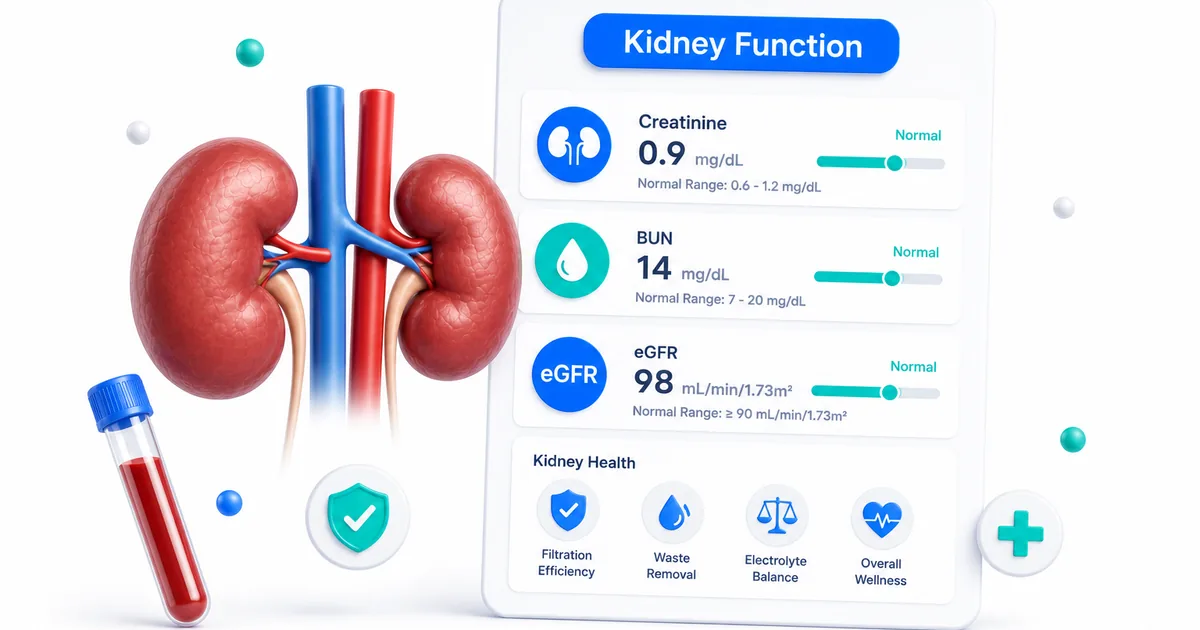
Your kidneys filter blood continuously, balance electrolytes, help control blood pressure, and activate Vitamin D. A Kidney Function Test (KFT) — also called RFT (renal function test) — looks at waste products and estimated filtration so doctors can spot strain early. That matters in India, where diabetes and hypertension drive a large share of chronic kidney disease (CKD).
This guide explains creatinine, urea/BUN, eGFR, and electrolytes in plain language, plus when nephrology referral is usually discussed. It cannot stage your kidneys by itself.
What a Typical KFT Includes
| Test | What it reflects |
|---|---|
| Serum creatinine | Muscle waste filtered by kidneys |
| Urea / BUN | Nitrogen waste; influenced by protein intake and hydration |
| eGFR | Estimated filtration rate — key CKD staging tool |
| Sodium, potassium, chloride, bicarbonate | Electrolyte and acid-base balance |
| Sometimes uric acid, calcium, phosphorus | Broader metabolic / CKD mineral context |
| Urine tests (separate) | Protein, blood, albumin-creatinine ratio |
Blood KFT and urine albumin screening together give a fuller CKD picture than creatinine alone.
Serum Creatinine
| Group | Example adult ranges (lab-dependent) |
|---|---|
| Men | about 0.7 – 1.3 mg/dL |
| Women | about 0.6 – 1.1 mg/dL |
Creatinine rises when filtration falls — but it also tracks muscle mass. A muscular young adult may sit higher than a frail older adult even with similar kidney health. That is why eGFR equations adjust for age and sex (and historically race in some formulas; newer equations evolve — your lab reports what it uses).
Rising creatinine over months is often more concerning than a single mild elevation. Acute jumps occur with dehydration, obstruction, certain medicines (e.g., some painkillers, contrast in susceptible patients), or infection — urgent clinical review decides the cause.
Related: Serum creatinine by age.
BUN / Urea
| Example | Note |
|---|---|
| BUN often ~ 7 – 20 mg/dL | Urea units differ (mg/dL); do not mix tables blindly |
High BUN/urea appears in kidney impairment and in dehydration, high protein intake, GI bleeding, or catabolic states. Low values can appear with low protein intake or pregnancy. Clinicians read BUN with creatinine, not alone.
eGFR — The Number Used to Stage CKD
Estimated Glomerular Filtration Rate approximates how much blood the glomeruli filter per minute.
| eGFR (mL/min/1.73m²) | Educational CKD stage framing |
|---|---|
| ≥ 90 | Normal or high (stage 1 if kidney damage markers exist) |
| 60 – 89 | Mildly decreased (stage 2 if damage markers) |
| 45 – 59 | Mild–moderate (stage 3a) |
| 30 – 44 | Moderate–severe (stage 3b) |
| 15 – 29 | Severe (stage 4) |
| < 15 | Kidney failure (stage 5) — dialysis/transplant pathways |
Staging also needs urine albumin and clinical context. A one-off eGFR of 58 when you were dehydrated is not automatic lifelong “stage 3” — confirm with repeat testing as advised.
Electrolytes Worth Scanning on the Same Report
- Potassium — dangerously high or low levels can affect the heart; medicine lists (ACE inhibitors, spironolactone, some diuretics) matter.
- Sodium — shifts with hydration, hormones, and illness.
- See also our electrolyte guide.
Abnormal potassium with kidney disease is a “call your doctor” situation, not a wait-and-see WhatsApp poll.
Common Drivers of Kidney Stress in India
- Diabetes mellitus — leading cause of CKD worldwide
- Hypertension — damages filtering vessels
- Habitual NSAID painkiller use without medical supervision
- Recurrent urinary obstruction / stones
- Dehydration in heat, gastroenteritis, or poor intake
- Untreated urinary infections in vulnerable patients
- Some herbal / Ayurvedic products contaminated with heavy metals (quality varies — disclose all supplements)
Controlling sugar and blood pressure is still the highest-yield kidney protection strategy for most people at risk.
Symptoms That Need Medical Review
Early CKD is often silent. Later clues include ankle swelling, foamy urine, fatigue, itching, nausea, reduced urine output, or uncontrolled blood pressure. Any blood in urine, inability to pass urine, or swelling with breathlessness needs prompt care.
When nephrology referral is commonly discussed
- Persistently reduced eGFR (especially under 45–60 with risk factors)
- Rising creatinine trend
- Significant albuminuria / proteinuria
- Difficult hypertension plus abnormal KFT
- Electrolyte problems related to kidney disease
How to Prepare for a KFT
- Ask whether fasting is required (often yes when bundled with lipids/sugar).
- Stay reasonably hydrated unless you are fluid-restricted for another disease.
- Do not stop prescribed heart/kidney medicines unless told to for a specific test.
- Avoid starting new painkillers “just for the weekend” before the test.
Questions for Your Doctor
- Is my eGFR reliable today, or should we repeat after hydration / illness recovery?
- Do I need a urine albumin-creatinine ratio?
- Which medicines should I avoid (especially painkillers)?
- What blood pressure and sugar targets protect my kidneys?
- When is imaging (ultrasound) useful?
Scanura and Kidney Panels
Upload a KFT to Scanura for plain-language flags on creatinine, eGFR-related values, and suggested clinician questions. Medication changes, dialysis planning, and biopsy decisions are specialist territory.
FAQ
Does high creatinine always mean dialysis? No. Mild elevations have many causes; dialysis is related to advanced failure and clinical criteria.
Can exercise raise creatinine? Intense exercise and high meat intake can nudge creatinine; eGFR interpretation still belongs with your clinician.
Are “kidney cleanses” useful? No evidence-based detox replaces blood-pressure and glucose control; some herbs harm kidneys.
Protecting Kidneys Day to Day
- Keep blood pressure and glucose in the targets your doctor sets
- Prefer doctor-approved pain strategies over routine NSAID self-medication
- Stay hydrated unless you are on a fluid restriction
- Treat urinary symptoms early rather than ignoring burning or fever
- Review all Ayurvedic / herbal products for safety
Contrast and procedures
If you need CT contrast or major surgery, tell the team about your creatinine/eGFR beforehand. Pre-procedure hydration and medicine holds are clinical decisions.
Pregnancy note
Creatinine normally runs lower in pregnancy; kidney disease in pregnancy needs obstetric-medicine coordination. Do not interpret pregnancy KFTs with non-pregnant internet charts alone.
Reading eGFR Beside Urine Albumin
CKD risk grids combine eGFR category with albuminuria category. Someone with eGFR 62 and heavy albuminuria may need closer follow-up than someone with eGFR 58 and no albuminuria after a dehydrating illness. That is why a complete kidney assessment often includes a urine albumin-creatinine ratio (UACR), not only a serum creatinine line.
Home blood-pressure logs improve kidney visits. Bring a one-week average, not a single clinic reading elevated by white-coat stress.
If you have a single kidney, kidney stones history, or long-standing diabetes, keep digital copies of every creatinine and UACR result. Longitudinal graphs help nephrologists act earlier than isolated annual packages.
Educational only. CKD staging and treatment require qualified medical care. Scanura does not provide nephrology diagnosis.
Medical References
Step-by-Step Guide
- 1
Get a kidney function test
Visit a diagnostic lab for a KFT panel. No fasting is typically required, but check with your lab.
- 2
Check serum creatinine
Men: 0.7-1.3 mg/dL normal. Women: 0.6-1.1 mg/dL normal. High creatinine indicates possible kidney damage.
- 3
Review eGFR
eGFR above 90 mL/min = normal. 60-89 = mildly reduced. 30-59 = moderately reduced. Below 30 = severely reduced.
- 4
Check BUN levels
Normal range is 7-20 mg/dL. High BUN can indicate kidney problems, dehydration, or high protein diet.
- 5
Review electrolytes
Check sodium, potassium, and chloride levels. Abnormal electrolytes can indicate kidney or adrenal problems.
- 6
Consult a nephrologist
If eGFR is below 60 or creatinine is rising over time, consult a nephrologist. Use scanura for instant explanations.
📬 One health report guide, every week
Normal ranges, what your values mean, and what to ask your doctor — in plain language. Free, unsubscribe anytime.