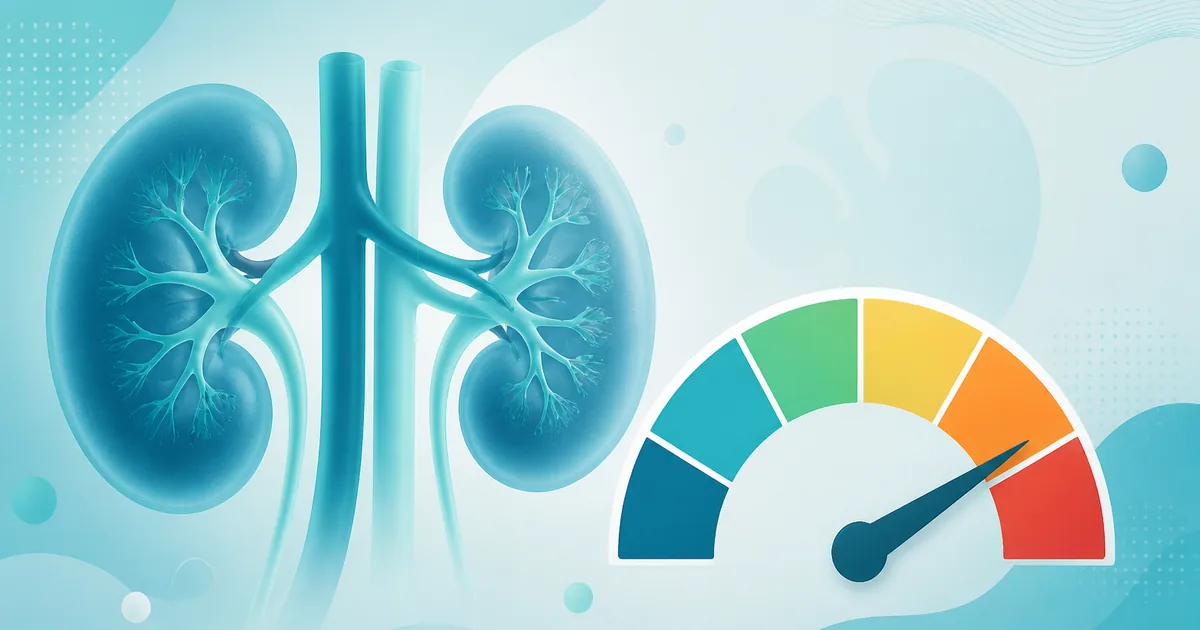
🫘eGFR Explained: Kidney Stage by Number
eGFR 52 on your KFT report — what stage is that? Learn how estimated GFR maps to CKD stages 1–5, why creatinine alone misleads, age and sex caveats, and when diabetics and hypertensives need a nephrologist in India.
Scanura Editorial
Health Education Team
Written by Scanura Editorial for health education. This article is not a substitute for advice from a qualified doctor. About our editorial standards
eGFR Explained: Kidney Stage by Number
Your kidney function test (KFT) report shows creatinine 1.4 mg/dL and eGFR 52 mL/min/1.73m². The lab comment says "Stage 3 CKD." You feel fine. No one explained what the number means or whether you need a nephrologist.
Estimated glomerular filtration rate (eGFR) is the most practical single number for kidney function on routine blood tests. It estimates how much blood your kidneys filter per minute, adjusted for body surface area. Unlike creatinine alone, eGFR accounts for age and sex — so a creatinine of 1.2 means something different at 30 vs 70 years.
This guide explains what eGFR measures, CKD stages 1–5 by number, links to creatinine and KFT panels, caveats about age/sex/race equations (educational), when to see a nephrologist, and kidney protection for diabetes and hypertension in India. For related reading, see serum creatinine by age and kidney function test explained.
What Is eGFR?
Glomerular filtration rate (GFR) measures kidney filtering capacity. True GFR requires specialised testing — impractical for routine care. eGFR is calculated from serum creatinine (and sometimes cystatin C), plus age, sex, and sometimes race/body metrics, using validated equations.
| Feature | eGFR |
|---|---|
| Full name | Estimated glomerular filtration rate |
| Units | mL/min/1.73m² (millilitres per minute per standard body surface area) |
| Higher number | Better kidney function |
| Lower number | Worse kidney function |
| Typical Indian lab label | eGFR, GFR (estimated), e-GFR |
Why eGFR Matters More Than Creatinine Alone
| Creatinine 1.3 mg/dL | Different eGFR Depending On… |
|---|---|
| 25-year-old woman | eGFR may still be >60 — acceptable |
| 70-year-old man | eGFR may be 45–55 — Stage 3 CKD |
| Muscular young man | Creatinine runs high from muscle — eGFR adjusts somewhat |
Creatinine detail: serum creatinine normal range by age.
Full KFT context: kidney function test — creatinine, BUN.
CKD Stages 1–5 by eGFR Number
Chronic kidney disease (CKD) is diagnosed when eGFR <60 for ≥3 months OR there is kidney damage (protein in urine, structural abnormality) even with normal eGFR.
| Stage | eGFR (mL/min/1.73m²) | Name | What It Means |
|---|---|---|---|
| 1 | ≥90 | Normal or high GFR | Kidney damage may still exist (e.g. protein leak) — eGFR alone can look "normal" |
| 2 | 60–89 | Mildly decreased | Early reduction; watch risk factors; repeat confirm |
| 3a | 45–59 | Mildly to moderately decreased | Nephrology discussion often starts; control BP, diabetes, avoid nephrotoxins |
| 3b | 30–44 | Moderately to severely decreased | Regular nephrology follow-up; medication dose adjustments |
| 4 | 15–29 | Severely decreased | Plan for dialysis/transplant education |
| 5 | <15 | Kidney failure | Dialysis or transplant typically needed |
One Number Is Not a Diagnosis
| Important Caveat | Explanation |
|---|---|
| Single low eGFR | Repeat in 3 months — acute illness, dehydration, and medicines can temporarily drop eGFR |
| Stage 1 with proteinuria | Still CKD — eGFR ≥90 does not mean "healthy kidneys" |
| No symptoms until late | CKD is often silent — labs detect it early |
How eGFR Is Calculated — Age, Sex, and Equation Caveats
Most Indian labs now use CKD-EPI 2021 (creatinine-based) or similar equations without a race coefficient — a change from older formulas that adjusted for Black race (not relevant in Indian practice).
| Variable | Effect on eGFR |
|---|---|
| Higher creatinine | Lower eGFR |
| Older age | Lower eGFR at same creatinine — normal ageing reduces GFR |
| Female sex | Higher eGFR at same creatinine (lower muscle mass on average) |
| More muscle mass | Higher creatinine → may underestimate true GFR in very muscular people |
| Malnutrition / muscle loss | Lower creatinine → may overestimate GFR in frail elderly |
Limitations (Educational)
| Limitation | Practical Impact |
|---|---|
| Estimate, not measurement | Cystatin C-based eGFR helps when muscle mass is unusual |
| Acute kidney injury (AKI) | eGFR equations assume stable creatinine — not valid during sudden illness |
| Pregnancy | Standard eGFR not used — obstetric kidney assessment differs |
| Extremes of body habitus | Athletes, amputees, obesity — interpret with specialist |
Ask your doctor: "Was this eGFR calculated with CKD-EPI? Should we confirm with repeat test or cystatin C?"
What Causes Low eGFR in India
1. Diabetes — The Leading Cause
India's diabetes epidemic drives much of CKD. High blood sugar damages glomeruli over years.
| Action | Target (individualised) |
|---|---|
| HbA1c control | Often <7% — discuss your goal |
| Annual KFT + urine albumin | Catch decline before symptoms |
| ACE inhibitor / ARB if protein in urine | Kidney-protective — prescription only |
2. Hypertension
Uncontrolled blood pressure above 130/80 (for many adults with CKD risk) accelerates kidney damage. Home BP monitoring is essential in Indian urban stress environments.
3. Chronic NSAID and Painkiller Use
Diclofenac, ibuprofen, combination painkillers ("pain killer daily for back pain") are notorious for kidney injury in India — especially with dehydration and diabetes.
| Safe Practice | Risky Practice |
|---|---|
| Paracetamol for occasional pain at prescribed dose | Daily NSAIDs for months without kidney check |
| Treating root cause of pain | Ignoring rising creatinine while continuing diclofenac |
4. Dehydration and Heat
North Indian summers, heavy manual labour, and inadequate fluid intake can acutely raise creatinine — repeat when well-hydrated before labelling CKD.
5. Other Causes
Glomerulonephritis, polycystic kidney disease, recurrent kidney stones, obstructive uropathy, herbal nephrotoxins (some arista/kashayam reports of aristolochic acid analogues), and congenital anomalies.
Reading eGFR With the Full KFT Panel
| Test | What It Adds |
|---|---|
| Serum creatinine | Raw input for eGFR — see creatinine guide |
| Blood urea (BUN) | Rises with dehydration and advanced CKD — less specific |
| Urea:creatinine ratio | Helps distinguish dehydration vs intrinsic kidney disease |
| Electrolytes (Na, K) | Advanced CKD affects potassium — dangerous if ignored |
| Haemoglobin | CKD-related anaemia in later stages |
| Urine albumin/creatinine ratio | Early damage marker — can be abnormal before eGFR drops |
Do not read eGFR in isolation. Protein in urine with eGFR 75 is still concerning.
What to Do at Each eGFR Range
eGFR ≥60 (Stages 1–2)
| Step | Action |
|---|---|
| Confirm persistence | Repeat if first abnormal; rule out acute illness |
| Check urine ACR | Microalbumin picks up diabetic kidney stress early |
| Control diabetes and BP | Primary prevention |
| Avoid nephrotoxins | Limit NSAIDs; disclose all medicines |
| Stay hydrated | Especially in summer — but no excessive fluid without advice |
eGFR 45–59 (Stage 3a)
| Step | Action |
|---|---|
| Nephrologist referral | Especially if diabetic, hypertensive, or proteinuria |
| Medication review | Dose-adjust metformin, some antibiotics, contrast planning |
| BP target | Often <130/80 — individualised |
| Repeat every 3–6 months | Track slope — rapid decline needs urgency |
eGFR 30–44 (Stage 3b) and Below
Structured nephrology care, anaemia workup, bone-mineral management, dialysis planning education, and transplant awareness where appropriate. Do not wait until you feel sick.
When to See a Nephrologist
| Situation | Urgency |
|---|---|
| eGFR <60 confirmed ≥3 months | Nephrology referral — especially age <65 |
| Rapid eGFR drop (>5 mL/min/year or sudden fall) | Urgent evaluation |
| Proteinuria / blood in urine | Nephrology or physician workup |
| Diabetes + any eGFR decline | Early nephrology co-management helps |
| eGFR <30 | Regular nephrology care mandatory |
| High potassium, fluid overload, anaemia | Specialist management |
| Planning contrast CT / surgery | Kidney dosing and hydration plan |
Many Indians never see a nephrologist until eGFR is below 20 — earlier referral preserves kidney function longer.
Protecting Kidneys — India-Practical Steps
| Do | Don't |
|---|---|
| Control HbA1c and blood pressure | Ignore "slightly high" creatinine yearly |
| Ask for urine microalbumin annually if diabetic | Daily diclofenac for chronic pain |
| Drink adequate water in heat | Quack "kidney cleanse" unregulated products |
| Take BP/kidney medicines as prescribed | Stop medicines when you feel fine |
| Retest KFT every 3–6 months if CKD | Repeat tests from different labs without noting method |
When to Worry — Emergency Signs
Low eGFR on a stable report is usually not an emergency. Go to hospital immediately for:
| Symptom | Concern |
|---|---|
| Not urinating or very little urine | Obstruction or acute kidney injury |
| Swelling legs + breathlessness | Fluid overload, heart-kidney crisis |
| Confusion, extreme weakness | Severe uraemia or hyperkalaemia |
| Severe vomiting with known CKD | Needs urgent labs |
| Creatinine doubled in days | AKI — stop nephrotoxins, hospital evaluation |
How scanura Helps
KFT reports show creatinine, eGFR, urea, electrolytes, and sometimes urine results on separate pages. Upload everything to scanura or scanura for plain English or Hindi explanation of eGFR stage, creatinine trend, and urine protein together — so you know whether you need a nephrologist now or continued annual monitoring.
Key Takeaways
- eGFR estimates kidney filtering capacity — higher is better; <60 for 3+ months defines CKD.
- Stages 1–5 map to eGFR ranges — Stage 3a (45–59) and below warrant specialist discussion.
- Creatinine alone misleads — age and sex matter; read creatinine by age.
- Diabetes and hypertension are the top CKD causes in India — control glucose and BP aggressively.
- Urine albumin rises before eGFR falls — check microalbumin if diabetic or hypertensive.
- Avoid chronic NSAIDs — diclofenac and ibuprofen damage kidneys silently.
- Repeat abnormal eGFR in 3 months — one test during dehydration is not CKD.
- Upload KFT + urine reports to scanura to track eGFR slope across checkups.
Disclaimer: This article is for educational purposes only. scanura does not provide medical diagnosis. Always consult your doctor for medical decisions.
Medical References
Step-by-Step Guide
- 1
Read eGFR not just creatinine
eGFR accounts for age and sex — more accurate than creatinine alone for staging.
- 2
Map your number to CKD stage
Stage 3a starts at eGFR 45–59; Stage 3b at 30–44; below 15 is kidney failure.
- 3
Confirm persistence over 3 months
One low eGFR during illness or dehydration is not chronic kidney disease.
- 4
Check urine for albumin
Protein leak appears before creatinine rises — add microalbumin if diabetic.
- 5
Control diabetes and blood pressure
Top CKD causes in India — target HbA1c and BP per your doctor's plan.
- 6
See nephrologist if eGFR below 60 persistently
Earlier referral preserves kidney function longer than waiting for symptoms.
📬 One health report guide, every week
Normal ranges, what your values mean, and what to ask your doctor — in plain language. Free, unsubscribe anytime.