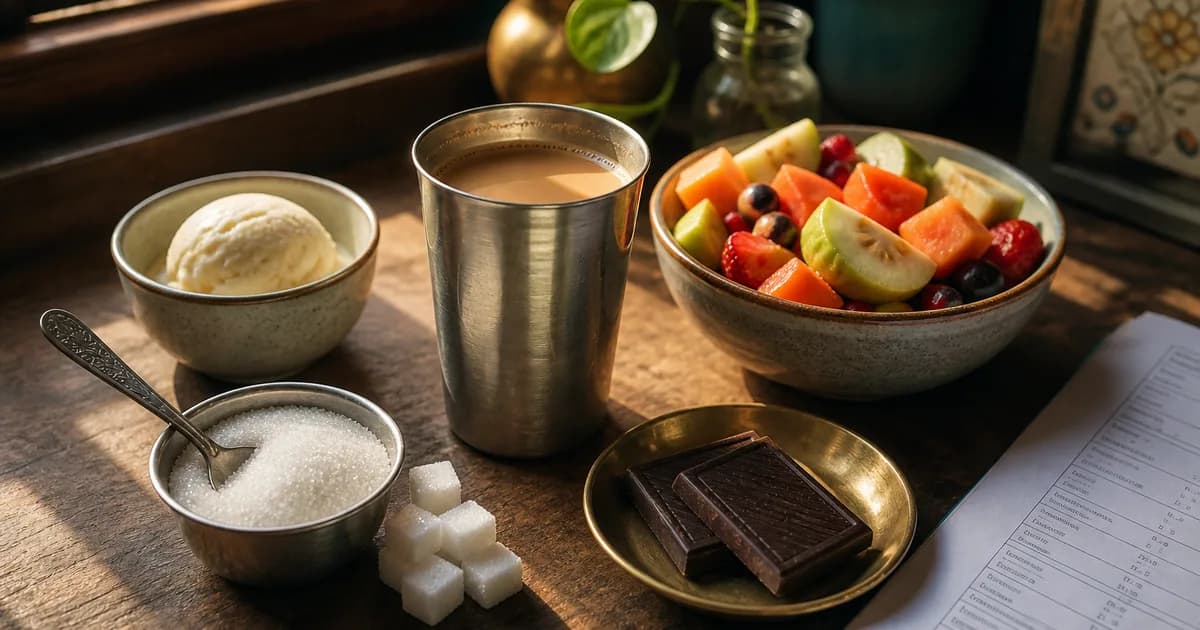
🍬How to Reduce Sugar Intake: Kitna Hona Chahiye & Sugar-Free Treats
Chai, cola, mithai, then “sugar-free” ice cream and chocolate. Here is how much added sugar is okay, what FSSAI sugar-free actually means, and how to cut intake in an Indian kitchen.
Scanura Editorial
Health Education Team
Written by Scanura Editorial for health education. This article is not a substitute for advice from a qualified doctor. About our editorial standards
How to Reduce Sugar Intake: Kitna Hona Chahiye & Sugar-Free Treats
Four cups of chai. Two biscuits with each. A cola with lunch. Ice cream after dinner because it was “only a small cup.” By the time the glucometer or the fasting-sugar row on a lab PDF looks “a bit high,” the household has already been running a sugar factory for years.
This is not another lecture to throw out every sweet. It is a 2026 India guide to three questions people actually type: how to reduce sugar intake, sugar kitna hona chahiye (both the teaspoons in food and the mg/dL on a report), and whether sugar-free ice cream and sugar-free chocolate are a loophole or a trap.
Related reading: blood sugar and HbA1c, fasting sugar 100–125, managing glucose with diet.
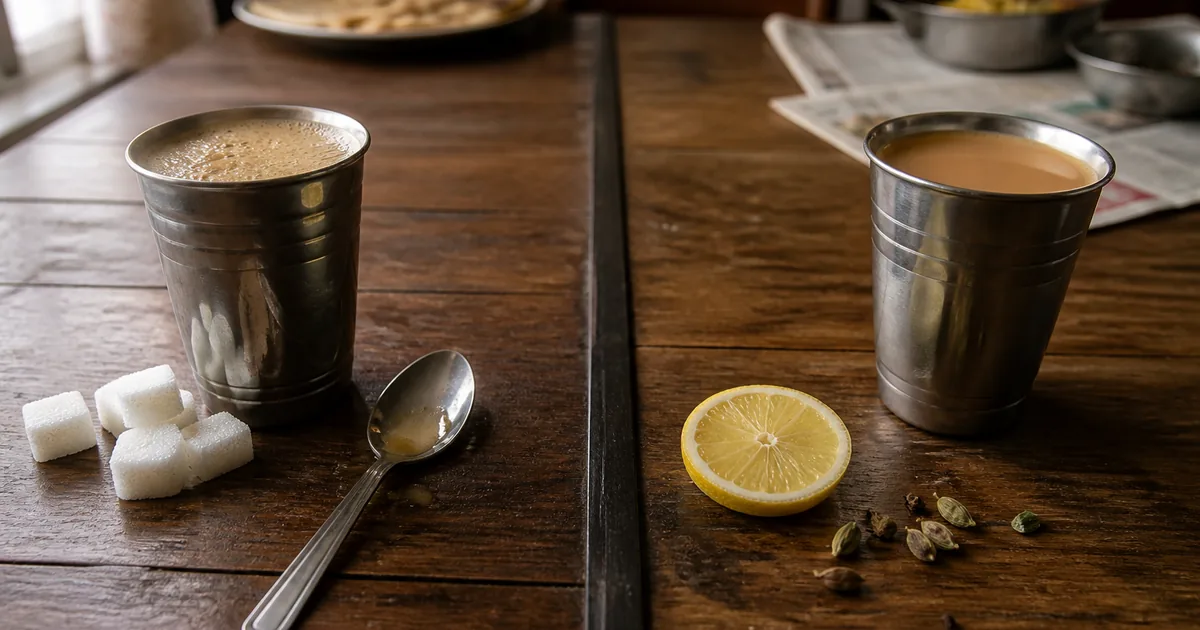
Two Different “Sugars” — Do Not Mix Them Up
| What people say | What they usually mean |
|---|---|
| Sugar kitna hona chahiye (food) | Added / free sugar in chai, mithai, cola, biscuits, ice cream — grams per day |
| Sugar kitna hona chahiye (report) | Blood glucose — fasting, post-meal (PP), random — in mg/dL, plus HbA1c in % |
Cutting table sugar helps both. A “sugar-free” dessert does not automatically fix a high fasting glucose. Fruit sugar inside a whole guava is not the same as the free sugar in a 300 mL juice tetra pack. WHO counts honey, gur (jaggery), fruit juice, and syrups as free sugars — the “natural” marketing on a jar does not create a medical exemption.
Sugar Kitna Hona Chahiye? Daily Food Limits
These are educational caps for added / free sugar in food and drinks — not a personal prescription. People with diabetes, fatty liver, PCOS, or kidney disease often need a tighter plan from their clinician.
What guidelines actually say
| Source | Practical cap (adults) | Notes |
|---|---|---|
| ICMR–NIN Dietary Guidelines for Indians, 2024 | Keep sugar under 5% of daily energy; many tables translate that to about 20–25 g/day (some meal plans show 25–30 g if you cut cereals to compensate) | No added sugar for children under 2 years |
| WHO | Free sugars under 10% of energy ( | Same 5% “preferable” band as ICMR’s direction of travel |
| American Heart Association (education) | About 25 g/day (6 tsp) for most women; about 36 g/day (9 tsp) for most men; children 2–18 often taught ~25 g | Useful teaspoon picture; India still follows ICMR/WHO first |
One teaspoon of table sugar is about 4 g. Six teaspoons is roughly 24–25 g — the whole day’s “preferable” budget for many adults.
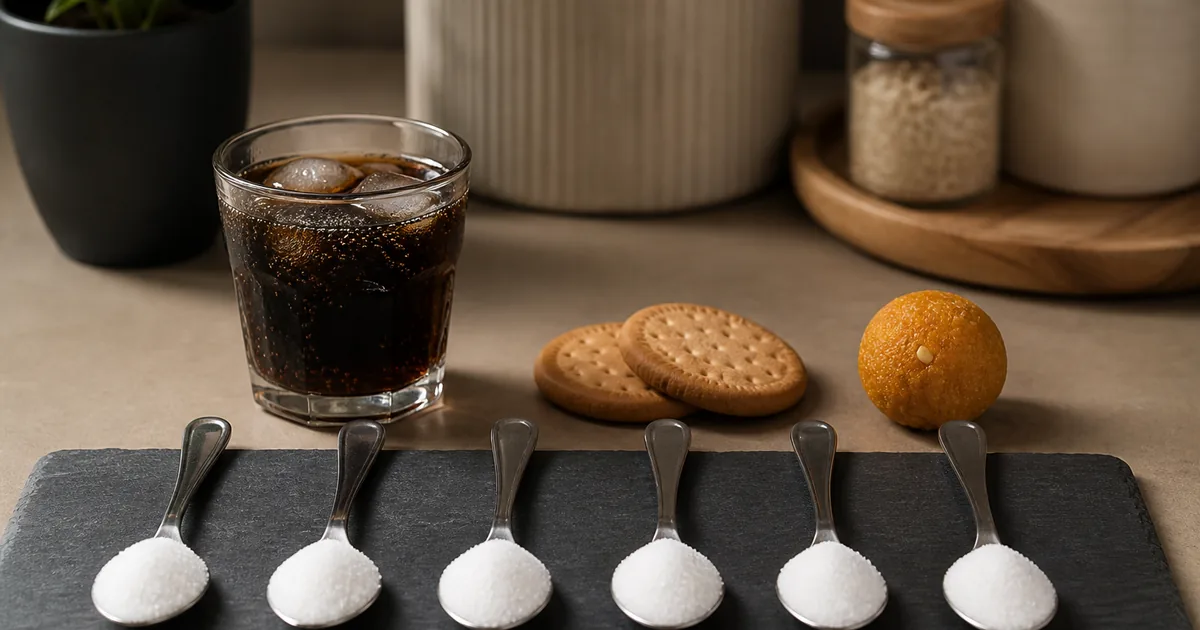
Where 25 g disappears in a normal Indian day
| Habit | Rough added sugar |
|---|---|
| Chai, 2 tsp × 3 cups | ~24 g — the day’s budget, gone before lunch |
| 300 mL cola / sweetened juice | often ~25–40 g |
| 2–3 glucose biscuits | often ~8–15 g |
| 1 scoop regular ice cream | often ~15–25 g depending on flavour |
| 1 small bar milk chocolate | often ~15–25 g |
| 1 piece mithai (ladoo / barfi) | easily 15–30 g+ |
If breakfast chai already used 25 g, the ice cream is not a “small treat.” It is a second day’s sugar in one evening.
Blood sugar kitna hona chahiye? (lab numbers)
Food grams and blood mg/dL are different units. For the report, Indian labs commonly use these adult educational bands (your printed range wins; pregnancy and children differ):
| Test | Typical “normal” | Prediabetes zone | Diabetes zone (with clinician confirmation) |
|---|---|---|---|
| Fasting plasma glucose | below 100 mg/dL | 100–125 | 126+ |
| PP / 2-hour post-meal | below 140 mg/dL | 140–199 | 200+ |
| HbA1c | below 5.7% | 5.7–6.4% | 6.5%+ |
A fasting value of 108 is not “a little sugar in chai.” It is prediabetes IFG until a doctor says otherwise. HbA1c is the 3-month average — see the HbA1c guide.
How to Reduce Sugar Intake (Without a 40-Day Detox)
The highest-yield cuts in Indian homes are drinks and “small” repeats, not one Diwali box.
1. Fix chai and coffee first
This is the single largest lever for most families. Drop 1 teaspoon per cup this week, another next week. Switch one cup to adrak-elaichi without sugar, or use a measured ½ tsp. Do not replace sugar with three spoons of honey or gur — that is still free sugar, often the same glucose hit.
Cold coffee, frappe, bottled iced tea, and “health” malt drinks are dessert in a glass. Check grams of sugar per serve, not per 100 mL, if the bottle is 300 mL.
2. Stop drinking sugar
Cola, packaged juice, energy drinks, sweet lassi from a shop, and most “vitamin” beverages. Plain soda with lime, chaas without sugar, coconut water as an occasional whole-food drink (still has natural sugar — not a free pass in large volumes), and water with jeera or saunf are the boring swaps that actually work.
If energy drinks are a habit, the caffeine and sugar story is separate — see the FSSAI energy-drink labelling guide.
3. Change the biscuit–namkeen loop
Office drawers and school tiffins run on glucose biscuits and “light” cookies. Swap to roasted chana, unsweetened peanuts, a fruit, or dahi. If you keep biscuits, put two on a plate and close the pack — grazing a family pack is how 15 g becomes 45 g.
4. Put protein and fibre on the plate before dessert
Dal, eggs, dahi, paneer, fish, chicken, salads, and millets slow the glucose rise from the rice or roti that follows. This is the same logic as the natural blood-sugar diet guide — here the point is narrower: a sweet on an empty stomach hits faster than the same sweet after a proper meal.
5. Walk 10–15 minutes after the sweetest meal
You cannot out-walk a litre of cola. You can blunt a birthday ice cream. Post-meal walking is one of the few habits that shows up on a glucometer the same afternoon.
6. Keep mithai as a date, not a drawer
Festival sweets belong on a calendar, not in a steel dabba on the dining table. Share the box the next morning. Frozen leftover mithai still counts.
7. Read “hidden sugar” names
On Indian packs, sugar hides as sugar, sucrose, glucose, fructose, maltose, dextrose, invert sugar, corn syrup, liquid glucose, malt extract, fruit juice concentrate. “No added sugar” can still mean lactose, fruit puree, or maltitol — turn the pack over.
Sugar-Free Ice Cream: What the Label Actually Means
Sugar-free on an Indian pack is a legal nutrient claim, not a diabetes certificate.
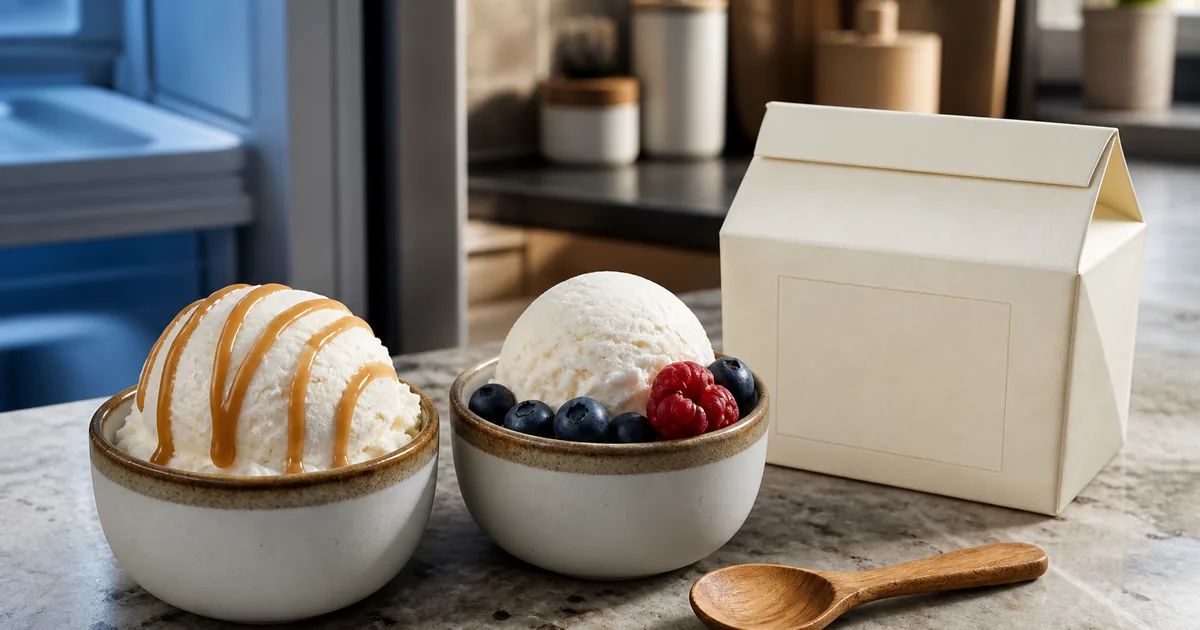
FSSAI wording vs what you swallow
Under the Food Safety and Standards (Advertising and Claims) Regulations, a “sugar-free” claim generally means the product has not more than 0.5 g of sugars per 100 g (solids) or per 100 mL (liquids). “Low sugar” is a different, higher ceiling (commonly not more than 5 g/100 g for solids). “No added sugar” means sucrose-type ingredients were not added in manufacturing — milk sugar (lactose) and fruit sugars can still be there, and the pack should not pretend otherwise.
So a sugar-free ice cream can still be:
| Still in the tub | Why it matters |
|---|---|
| Milk, cream, milk solids | Lactose is a sugar; FSSAI “sugar-free” is about total sugars on the nutrition table, not “this is keto” |
| Starch, polydextrose, fibres | Texture; some add carbohydrate even when sucrose is gone |
| Maltitol, sorbitol, erythritol, stevia, sucralose | Sweetness without (or with less) sucrose — not interchangeable for blood glucose or the gut |
| Fat | Many “diet” ice creams are still calorie-dense. Sugar-free ≠ weight-loss |
Sugar alcohols: the ice-cream plot twist
Most supermarket sugar-free ice creams in India are sweetened with polyols (often maltitol or a blend), sometimes plus stevia or sucralose.
| Sweetener (typical in frozen desserts) | Glucose effect (educational) | Gut |
|---|---|---|
| Sucrose / glucose syrup (regular ice cream) | Fast rise | Fine for most people in small amounts |
| Maltitol | Not zero — GI often cited around the mid-30s; still counts in a diabetes carb plan | Bloating, gas, laxative effect in a large bowl |
| Erythritol | Little to no glucose rise for most people | Large servings can still cause GI upset |
| Stevia / sucralose (high-intensity) | Generally no sucrose calories | Taste; some people get aftertaste or GI sensitivity |
FSSAI labelling commonly requires a laxative-effect warning when polyols are high (classically discussed around more than 10% of the food). If the pack says polyols may have a laxative effect, believe it before you eat half the tub.
Diabetes: sugar-free ice cream is not a free extra scoop. Count total carbohydrate on the nutrition panel, test with a glucometer if you use one, and dose insulin only as your team taught you. A “diabetic ice cream” sticker is marketing unless your endocrinologist signed off on that product.
Portion: 100 g of premium ice cream is not a “katori.” Weigh or use the serve size on the pack (often 60–100 mL). Two serves is two desserts.
Sugar-Free Chocolate: Maltitol Bar vs Actual Dark Chocolate
The aisle sells three different products with similar brown wrappers.
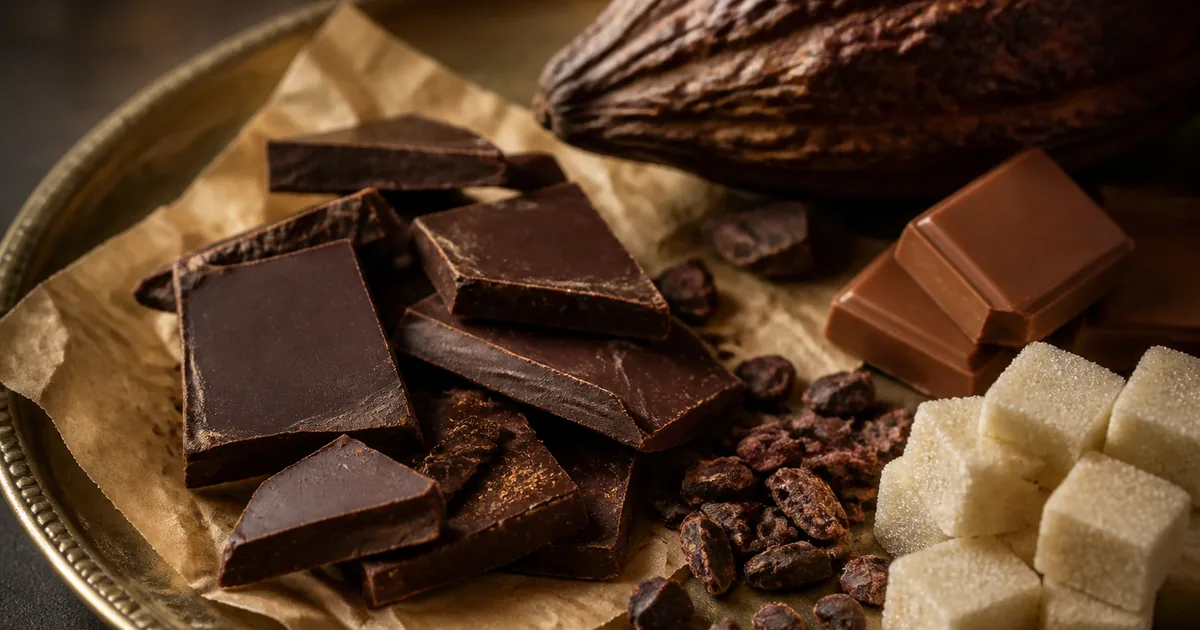
| Type | What it usually is | Blood-sugar honesty |
|---|---|---|
| Regular milk chocolate | Cocoa + lots of sugar + milk fat | Treat. One small bar can use most of a 25 g sugar budget |
| “Sugar-free” chocolate (common India SKU) | Often maltitol (or similar polyol) + cocoa + milk solids | Lower sucrose, not a free food. Maltitol still raises glucose more than stevia-only products. GI upset if you eat the whole bar |
| High-cocoa dark (70%+), no “diet” claim | Less room for sugar because cocoa mass takes space | Still has sugar unless the label says otherwise. A square or two after a meal is a different habit from a family pack of sugar-free “dairy milk style” bars |
| Stevia / erythritol dark (smaller brands, online) | Closer to “little sucrose, little maltitol” | Read carb and polyol lines; quality and aftertaste vary |
Practical pick: if the goal is less added sugar, a measured 2–3 squares of 70%+ dark chocolate after lunch beats a 100 g maltitol bar eaten because “it does not count.” If the goal is diabetes carb counting, the maltitol bar still belongs on the carbohydrate side of the notebook, not the vegetable side.
Kids: sugar-free chocolate is not a paediatric vitamin. Polyols in quantity cause diarrhoea. ICMR–NIN: no added sugar under age 2 — that includes “sugar-free” sweets used as a pacifier.
Allergies and additives: milk, soy lecithin, and nuts are common. Sugar-free does not mean hypoallergenic.
How to Read the Pack in 30 Seconds
- Serve size — multiply if you eat more than one serve.
- Total sugars — FSSAI “sugar-free” should sit at ≤ 0.5 g sugars / 100 g. Confirm on your pack.
- Total carbohydrate — this is what moves blood glucose more than the marketing strip.
- Ingredients — maltitol, sorbitol, lactitol, erythritol, stevia, sucralose, aspartame.
- Energy (kcal) — sugar-free ice cream can still be a 300+ kcal habit.
- Polyol warning — if it says laxative effect, do not treat the tub as a movie-night serving bowl.
Upload a confusing nutrition panel next to your lab PDF only if you are using scanura for the report. Food labels still need your eyes.
If Sugar Is a Daily Habit, Which Labs Matter?
Cutting teaspoons is the intervention. These tests show whether the pattern has already reached metabolism — they do not replace a doctor.
| Test | Why it sits next to a sugar article |
|---|---|
| Fasting glucose + HbA1c | Hidden prediabetes is common in Indian adults; see blood sugar levels |
| Lipids (especially triglycerides) | High triglycerides often travel with refined carbs and sugar — lipid profile |
| SGPT / fatty-liver context | Sweet drinks and desserts feed fatty liver conversations |
| Fasting insulin / HOMA-IR (if ordered) | Normal glucose with high insulin is a warning window — HOMA-IR guide |
Do not start or stop diabetes medicines because a sugar-free chocolate tasted “safe.”
When to Worry
See a clinician promptly if you have excessive thirst, frequent urination, unexplained weight loss, recurrent infections, or blurry vision — classic high-glucose symptoms — or if fasting sugar / HbA1c is already in the diabetes band. Hypoglycaemia (sweating, confusion, tremor) in someone on insulin or certain tablets is an emergency pathway, not a cue to eat a maltitol bar and wait.
Pregnancy, children, and people with kidney disease need individual sweetener advice — some polyols and high-intensity sweeteners are restricted or poorly studied in those groups.
How scanura Helps
If the reason you opened this page is a fasting sugar, PP, or HbA1c flag on a PDF, upload the report to scanura or create an account. scanura explains the glucose cluster in Hindi or English so you walk into the clinic knowing which row is prediabetes and which is already diabetes-range.
It does not count the maltitol in last night’s ice cream, and it does not replace a dietitian for a medical meal plan.
The blood test checker can range-check a single glucose or HbA1c value.
Key Takeaways
- Sugar kitna hona chahiye in food: ICMR–NIN / WHO prefer under ~5% of energy — about 20–25 g added sugar a day for many adults; no added sugar under age 2.
- Sugar kitna hona chahiye on a report: fasting below 100 mg/dL, PP below 140, HbA1c below 5.7% are the usual adult educational “normal” bands — confirm on your printout.
- Three cups of sweet chai can finish a whole day’s sugar budget before noon.
- Gur, honey, and brown sugar still count as free sugar.
- FSSAI sugar-free means ≤ 0.5 g sugars per 100 g/mL, not “zero carbohydrate, eat the tub.”
- Sugar-free ice cream is often maltitol + fat; watch carbs, serve size, and the laxative warning.
- Sugar-free chocolate is usually a polyol bar; measured dark chocolate is often the more honest treat.
- Walk after dessert, cut liquid sugar first, and upload glucose/HbA1c PDFs to scanura — then follow the clinician.
Disclaimer: This article is for educational purposes only. Dietary limits and lab ranges vary by age, pregnancy, illness, and laboratory method. scanura does not provide medical diagnosis or a personal diet prescription. Always consult a qualified clinician or registered dietitian for medical decisions, diabetes medication, and sweetener use in children or pregnancy.
Medical References
Step-by-Step Guide
- 1
Know the daily cap
ICMR–NIN and WHO prefer added/free sugar under about 5% of energy — roughly 20–25 g (5–6 teaspoons) a day for many adults. No added sugar for children under 2.
- 2
Cut liquid sugar first
Reduce teaspoons in chai, then drop cola, packaged juice, and sweet cold coffee. Three sweet chais can finish a whole day’s budget.
- 3
Read sugar-free ice cream as a claim, not a free pass
FSSAI sugar-free means ≤0.5 g sugars per 100 g/mL. Check total carbohydrate, serve size, maltitol/polyols, and any laxative warning.
- 4
Treat sugar-free chocolate the same way
Many Indian bars use maltitol. Prefer a few squares of 70%+ dark chocolate, or count the polyol bar as carbohydrate, not as a vegetable.
- 5
Walk after dessert and put protein on the plate
A 10–15 minute walk after the sweetest meal blunts the spike. Do not eat sweets on an empty stomach.
- 6
Check fasting sugar and HbA1c if intake has been high
Upload the PDF to scanura for a plain-language read, then follow your clinician — sugar-free desserts do not replace medicines.
📬 One health report guide, every week
Normal ranges, what your values mean, and what to ask your doctor — in plain language. Free, unsubscribe anytime.