🥤Energy Drinks in India 2026: FSSAI vs Red Bull, Sting, Monster
FSSAI told Red Bull, Sting, Monster, Campa and others to drop the “energy drink” label. Here is what the 90-day order actually means, caffeine and sugar on Indian cans, who should skip them, and which labs matter if it is a habit.
Scanura Editorial
Health Education Team
Written by Scanura Editorial for health education. This article is not a substitute for advice from a qualified doctor. About our editorial standards
Energy Drinks in India 2026: FSSAI vs Red Bull, Sting, Monster
In early July 2026, FSSAI issued show-cause notices to six high-caffeine brands sold as “energy drinks”: Red Bull, PepsiCo’s Sting and Adrenaline Rush, Reliance’s Campa Energy (Gold Boost), Hell Energy, and Coca-Cola-backed Monster Energy. The regulator’s point is legal, not a poison recall: India has not notified a standard named “energy drink.” Using that name — plus claims such as “vitalises body and mind” or “boost energy” — is being treated as misbranding.
By the first week of August 2026, Reuters and Indian papers reported that FSSAI would not stretch the private ~90-day window to a year, even after PepsiCo, Red Bull, and Monster executives met Food Processing Minister Chirag Paswan. Rajasthan had already seized thousands of Sting, Campa Energy, and Red Bull units. Maharashtra said Sting (and similar products) should not be sold within 500 metres of schools. Ladakh told Reuters it would seize non-compliant stock.
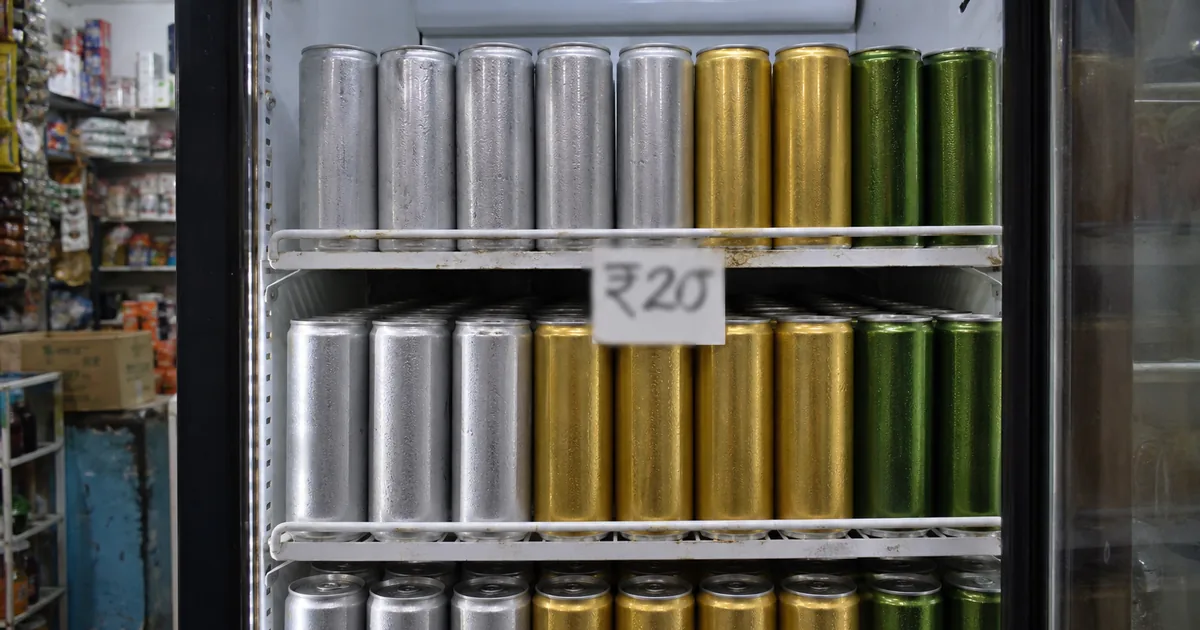
The drink in the kirana fridge did not become illegal overnight. What changed is the label and the claims. The metabolic story did not change at all: caffeine + sugar (or sweeteners) + taurine, often sold for ₹20 to teenagers.
This guide covers what FSSAI actually objected to, what a caffeinated beverage is allowed to be under regulation 2.10.6, typical caffeine and sugar on Indian packs, who should skip these cans, and which blood pressure and lab numbers matter if this is a daily habit — not a one-can cricket match.
Related reading: blood sugar and HbA1c, fasting sugar 100–125, triglycerides, blood pressure report, McCafé caramel sugar.
What FSSAI Is Actually Doing
This is labelling and claims, not a nationwide ban on caffeine in cans.
| What people think | What the notices and reporting say |
|---|---|
| “Energy drinks are banned in India.” | No. The products sit under caffeinated beverages. The fight is the name and the slogans. |
| “FSSAI found poison in Red Bull.” | No. The stated issue is no notified standard for “energy drink” and functional / therapeutic claims that food law does not allow. |
| “The Food Category System lets them print Energy Drink.” | FSSAI said that category list is for licensing classification, not for the name on the can. |
| “Shops can keep selling old stock forever.” | States have already seized labelled stock. The Centre’s private clock was about 90 days from July, and as of 7–8 August 2026 officials told Reuters they would not grant a one-year extension. |
Claims FSSAI listed as not allowed for these foods (wording from the notices as reported):
- “Vitalises body and mind”
- “Enhancing focus”
- “Boost energy levels”
- “Aid in general weakness”
- “Stimulates mind, energises body” (Sting)
A caffeine can that makes you feel alert is still caffeine. It is not a licensed medicine for weakness, exams, or gym PRs.
E-commerce: Rajasthan’s 8 July 2026 letter, as reported, told Amazon, Flipkart, Blinkit, and Instamart not to promote products as energy drinks. Listing names will lag the gazette. Trust the physical label, not the app tile.
England (context, not Indian law): high-caffeine energy drinks are due to be banned for under-16s from April 2027. India has not copied that statute. Maharashtra’s 500 m school buffer for Sting is the closest local analogue.
Caffeinated Beverage — The Category That Still Exists
FSSAI does standardise carbonated and non-carbonated caffeinated beverages. Industry and textbook summaries of sub-regulation 2.10.6 (2) (confirm on your pack; formulations change):
| Rule (typical) | Why it is on the can |
|---|---|
| Caffeine about 145–300 mg per litre | Floor so it is not a weak cola pretending to be a stimulant; ceiling so a 250 mL serve stays in a ~36–75 mg caffeine band at those concentrations. (An older 320 mg/L figure still circulates; reporting in 2026 describes the scientific panel cutting the cap to 300 mg/L.) |
| “Contains caffeine” + mg per serving | So you can add it to chai, coffee, and cola. |
| “Not to consume more than 500 mL per day” | Two 250 mL bottles is already the printed daily cap for this product class — not a dare. |
| Not recommended for children, pregnant or lactating women, or people sensitive to caffeine | The warning is not decoration. |
| Taurine / other actives | Extra declarations when those ingredients are used. |
300 mg/L × 250 mL = 75 mg caffeine at the legal ceiling for that volume. A 500 mL daily cap at 300 mg/L is 150 mg caffeine from this category alone — before tea and coffee.
Brand trademarks (Red Bull, Sting, Monster) are not automatically erased. The descriptor “Energy Drink” and the medical-sounding lines are what the 90-day exercise is about.
What Is in the Can
Read the pack in front of you. These are typical published ranges, not a lab certificate for every flavour.
| Product (typical India SKU) | Serve | Caffeine (approx.) | Sugar (approx.) | Why it matters |
|---|---|---|---|---|
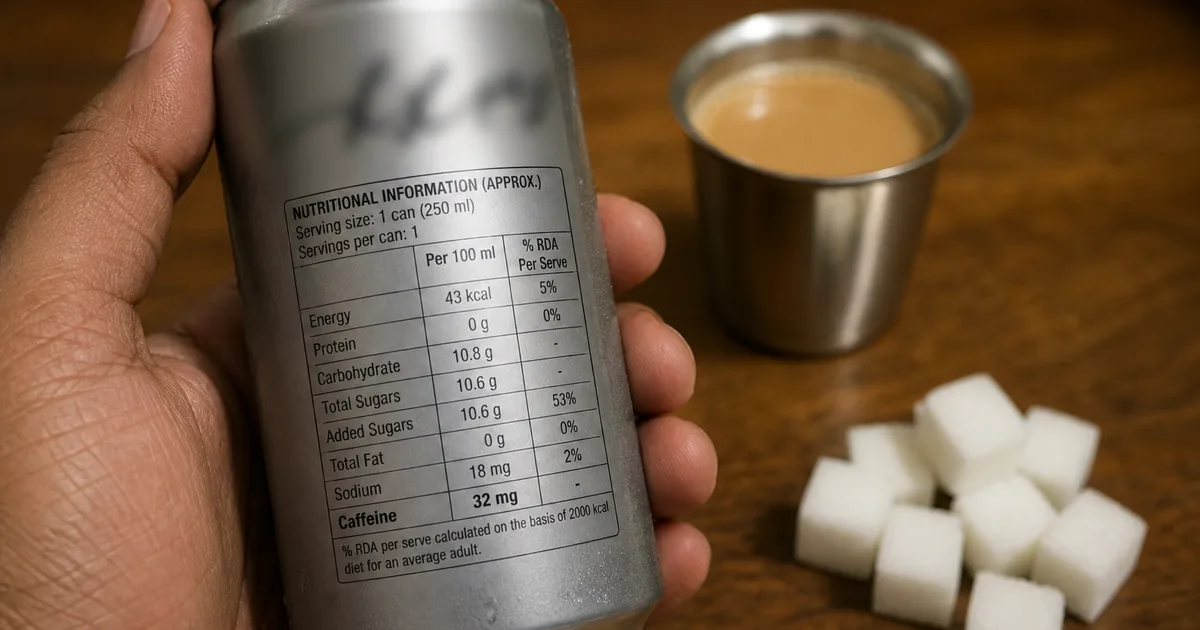
| Red Bull | 250 mL | ~80 mg | ~27 g | One strong coffee’s caffeine + a dessert’s sugar |
| Sting (₹20 PET, several flavours) | 250 mL | ~72–80 mg | ~17–28 g depending on variant | Same stimulant class, cheaper, aimed younger |
| Monster (larger can) | ~473–500 mL | ~160 mg | often 40 g+ on sugar versions | Two Red Bulls of caffeine in one sitting |
| Campa Energy / Hell / Adrenaline Rush | check the label | must fit 145–300 mg/L if licensed as this class | varies | Same legal box, different marketing |
A homemade chai is often 30–50 mg caffeine per cup; filter coffee can be 80–100 mg. The can’s extra problem is speed + sugar + a second can.
Other usual ingredients
| Ingredient | Role | Health note |
|---|---|---|
| Sugar and/or sucralose / acesulfame-K | Taste, “energy” calories or zero-cal sweetener | Sugar hits HbA1c and triglycerides. Sweeteners are not a free pass for kids or for “I can drink three.” |
| Taurine | Amino acid used in this category | EFSA did not find typical energy-drink taurine changes the caffeine safety numbers. It is not a protein shake. |
| Inositol, glucuronolactone, B vitamins | Label decoration / metabolism marketing | B vitamins do not cancel sugar or caffeine. |
| Acids, colours (e.g. 129), benzoate / sorbate | Shelf and look | Allergies and enamel are real; they are not the July 2026 legal fight. |
| Ginseng (some Sting SKUs) | Flavour/positioning | Still a caffeine drink. |
Alcohol + these cans is a separate, worse pattern (club, hostel, “I can drive”). Caffeine masks how drunk you feel. That is a safety issue, not an FSSAI naming issue.
Why Sugar Is Half the Story
FSSAI’s fight is the word energy. Your pancreas does not care about the word.
WHO asks adults and children to keep free sugars under 10% of energy (~50 g on a 2,000 kcal diet), with extra benefit under 25 g. A 250 mL can with 27 g sugar is already past the stricter daily target — before the next chai, cola, or mithai.
Liquid sugar does not fill you. Sting at ₹20 is easier to repeat than a ₹125 Red Bull. Two cheap bottles can be ~150 mg caffeine and 40–50 g sugar on a school or warehouse shift.
Sugar-free cans still have caffeine. They are not a children’s drink with a better slogan.
Caffeine: How Much Is “A Lot”?
EFSA (2015, still the number clinicians quote):
| Group | Intake that does not raise EFSA’s usual safety concern |
|---|---|
| Healthy non-pregnant adults | Up to 400 mg/day from all sources; single doses up to ~200 mg |
| Pregnancy | Up to 200 mg/day from all sources |
| Children / adolescents | No separate “safe can.” EFSA uses ~3 mg/kg body weight/day as a conservative yardstick |
Worked example: a 50 kg teenager × 3 mg/kg = 150 mg/day. That is two 250 mL cans at ~75 mg — and then tea is extra. FSSAI’s own 500 mL/day line on the pack is already in that danger zone for a slim 16-year-old who also drinks chai.
100 mg close to bedtime can wreck sleep in adults. A 4 p.m. Sting plus night-shift coffee is how palpitations get blamed on “weakness.”
Who Should Skip It (or Keep It Rare)
| Situation | Why |
|---|---|
| Children and school-age teens | FSSAI warning on the pack. Maharashtra’s school-radius rule exists for a reason. Sleep, anxiety, and sugar are the boring harms. |
| Pregnancy / breastfeeding | Caffeine budget is tight; sugar does not help gestational diabetes risk. |
| Known arrhythmia, uncontrolled BP, panic disorder | Caffeine is a stimulant. New palpitations after a can are not “the drink giving energy.” |
| Type 2 diabetes, prediabetes, fatty liver, PCOS | Sugar versions are a glucose event. |
| GERD / ulcer | Acid + caffeine. |
| On the road, then a second can | Jitters ≠ safe driving. Do not mix with alcohol. |
| GLP-1 medicines / trying to cut calories | Liquid sugar fights the plan; caffeine plus nausea is miserable. |
An occasional 250 mL can in a healthy adult who already drinks coffee is a different decision from a daily ₹20 bottle before class.
How to Read the Label After the Rebrand
When “Energy Drink” disappears, the chemistry may not.
- Find caffeine mg per serving and serving size. A 500 mL “one serve” is not a 250 mL serve.
- Find total sugars. If it is missing, treat it as a dessert until proven otherwise.
- Read the 500 mL/day and not for children / pregnancy lines. They were required before this news cycle.
- Ignore B-vitamin percentages as a health halo.
- Check the 14-digit FSSAI number on FoSCoS if the pack looks unofficial.
- If the app still says “energy drink” and the can does not, the can is what you swallowed.
Harm reduction if you still buy one: smallest pack, not on an empty stomach, not after 2 p.m. if you have insomnia, not stacked with shots of espresso, count it as dessert if it has sugar.
Blood Pressure and Labs — Only If This Is a Habit
You do not need a lab for one can at a match. You do need a clinician if cans are daily and you have palpitations, chest pain, fainting, severe anxiety, or thirst/weight gain.
| Check | Why it belongs |
|---|---|
| Blood pressure (clinic or validated home cuff) | Caffeine can nudge BP; the numbers matter more than the slogan |
| Fasting glucose + HbA1c | Daily sugar-sweetened cans show up over months |
| Lipid profile | Watch triglycerides |
| LFT (SGPT) | Urban India already has a high NAFLD burden |
| ECG | Only if a doctor is working up palpitations or syncope — not a DIY “caffeine test” |
There is no energy-drink blood test. Caffeine is not on a routine CBC.
If you already have PDFs, upload them to scanura or create an account. scanura explains HbA1c, triglycerides, SGPT, and BP-related labs in English or Hindi. It does not certify a can and it does not replace emergency care for chest pain.
You can type a flagged value into the blood test checker — still not a diagnosis.
When to Worry
| Situation | Action |
|---|---|
| Chest pain, fainting, severe palpitations, or stroke-like symptoms | Emergency care. Do not wait it out as “too much Sting.” |
| Child finished an adult can and is agitated, vomiting, or not sleeping | Call a doctor. Caffeine plus sugar is not a paediatric snack. |
| Known diabetes and a very high reading after a sugar can | Follow your hyperglycaemia plan; do not “fix” it with another caffeinated drink |
| Mixing cans with alcohol and you cannot keep fluids down | Urgent care — caffeine does not make alcohol safe |
Key Takeaways
- July 2026 FSSAI notices named Red Bull, Sting, Adrenaline Rush, Campa Energy, Hell, and Monster for “energy drink” labelling and functional claims — not a toxin recall.
- India does allow caffeinated beverages (~145–300 mg/L caffeine, ≤500 mL/day warning, not for children/pregnancy).
- As of early August 2026, officials said the ~90-day relabel clock would not become a year. Rajasthan seizures and Maharashtra’s school-radius rule are already live.
- A typical 250 mL can is ~75–80 mg caffeine; Monster-size cans can be ~160 mg. Sugar is often 17–27 g in 250 mL.
- EFSA’s adult 400 mg/day includes chai and coffee. Two cheap Stings plus tea can overshoot a teenager’s 3 mg/kg budget.
- Skip for children, pregnancy, arrhythmias, uncontrolled BP, and diabetes (sugar versions).
- After rebrand, read caffeine mg and sugar — the new name will not change the dose.
- Habit → BP, HbA1c, triglycerides, LFT. Upload the PDF to scanura. Chest pain still goes to the ER.
Disclaimer: This article is for educational purposes only. It summarises public reporting and FSSAI communications as of 20 August 2026. Notices, seizures, and the 90-day window can change; they are not a finding that every can on every shelf is unsafe or illegal to drink. Caffeine and sugar values vary by flavour, pack size, and recipe — read the label in your hand. scanura is not affiliated with FSSAI, PepsiCo, Red Bull, Monster, Reliance, Coca-Cola, or Hell Energy. Brand names are used for news identification. scanura does not provide medical diagnosis. If you have chest pain, fainting, or severe palpitations, seek emergency care. This is health-education coverage, not an official FSSAI order.
Medical References
- Economic Times / Reuters — FSSAI will not ease 90-day energy-drink label deadline (Aug 2026)
- CNBC-TV18 — FSSAI notices to six brands over energy-drink claims (July 2026)
- FSSAI — Food Safety and Standards (Food Products Standards and Food Additives) Regulations, 2011 (caffeinated beverages)
- EFSA — Scientific Opinion on the safety of caffeine (2015)
- WHO — Guideline: sugars intake for adults and children
Step-by-Step Guide
- 1
Separate the legal fight from the chemistry
FSSAI is objecting to the name “energy drink” and functional claims. Caffeinated beverages remain a legal category.
- 2
Read caffeine mg and sugar grams on the pack in your hand
A typical 250 mL can is about 75–80 mg caffeine. Sugar is often 17–27 g. Larger Monster-size cans can be about 160 mg caffeine.
- 3
Respect the printed 500 mL per day line
That cap is for this product class and does not include chai and coffee. It is easy to overshoot a teenager’s caffeine budget.
- 4
Skip for children, pregnancy, arrhythmias, and diabetes (sugar versions)
The pack already says not for children or pregnancy. Maharashtra has restricted Sting near schools.
- 5
After rebrand, ignore the new marketing name
If Energy Drink disappears from the can, the caffeine and sugar usually do not.
- 6
If cans are daily, check BP, HbA1c, triglycerides, and LFT
Upload the PDF to scanura. Chest pain or fainting is emergency care, not a blog.
📬 One health report guide, every week
Normal ranges, what your values mean, and what to ask your doctor — in plain language. Free, unsubscribe anytime.