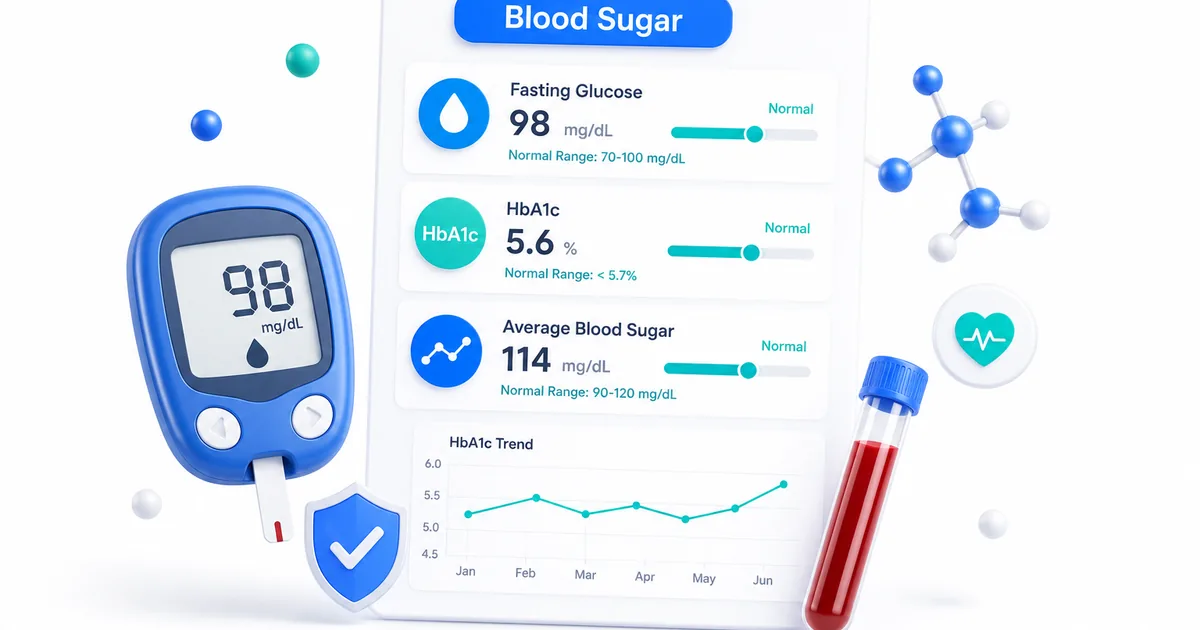
🩺Blood Sugar Levels Explained: Fasting, Post-Meal & HbA1c
Confused by fasting sugar, post-meal sugar, and HbA1c? Here's what each number means, the normal ranges, and when it's time to take action.
Scanura Editorial
Health Education Team
Written by Scanura Editorial for health education. This article is not a substitute for advice from a qualified doctor. About our editorial standards
Blood Sugar Levels Explained: Fasting, Post-Meal & HbA1c
India carries one of the world’s largest burdens of type 2 diabetes and prediabetes. Many people first learn their risk from a corporate checkup, a preoperative panel, or a random sugar done during illness. The report may list fasting plasma glucose, post-prandial glucose, random glucose, and HbA1c — each answering a different question.
This article explains how those numbers are usually read together, why HbA1c matters for long-term risk, and what “prediabetes” practically means. It cannot diagnose you; only a clinician can.
Why Multiple Sugar Tests Exist
A single random sugar can be skewed by a recent meal, stress, steroids, or infection. Doctors therefore use:
- Fasting plasma glucose (FPG / FBS) — overnight snapshot
- Post-prandial / 2-hour glucose (PPBS) — how you handle a meal or glucose load
- HbA1c — approximate average over ~2–3 months
- Sometimes OGTT (oral glucose tolerance test) when results conflict or in pregnancy protocols
Using more than one marker reduces false reassurance and false alarm.
Fasting Blood Sugar
Measured after about 8–12 hours without calories (water is usually allowed). Morning draws are easiest.
| Fasting plasma glucose | Common educational category |
|---|---|
| Below 100 mg/dL | Often considered normal |
| 100 – 125 mg/dL | Prediabetes / impaired fasting glucose |
| 126 mg/dL or higher (on repeat as advised) | Diabetes range |
Illness, overnight snacks, and lab timing errors can distort fasting values — confirm odd results before life-changing conclusions.
Post-Meal (Post-Prandial) Sugar
Usually checked 2 hours after the start of a meal (follow your lab’s exact instruction).
| 2-hour value | Common educational category |
|---|---|
| Below 140 mg/dL | Often normal |
| 140 – 199 mg/dL | Prediabetes / impaired glucose tolerance |
| 200 mg/dL or higher | Diabetes range |
White rice-heavy meals, sugary drinks, and large portions produce higher peaks. The test is about physiology, not moral failure — but meal composition does matter for day-to-day control.
HbA1c: The Longer View
HbA1c reflects the fraction of haemoglobin that has glucose attached. It estimates average glycaemia over roughly the lifespan of red cells (~2–3 months).
| HbA1c | Common educational category |
|---|---|
| Below 5.7% | Often normal |
| 5.7% – 6.4% | Prediabetes |
| 6.5% or higher | Diabetes range |
For many people already diagnosed, clinicians individualise targets (often near under 7%, but not always — age, hypoglycaemia risk, and comorbidities matter).
When HbA1c can mislead
HbA1c may be less reliable with significant anaemia, haemoglobin variants (including some thalassemia traits), recent transfusion, chronic kidney disease, or altered red-cell turnover. In those cases doctors lean more on glucose readings or alternative assays. If your CBC shows anaemia, mention it when discussing HbA1c.
Prediabetes: A Warning You Can Still Act On
Prediabetes means glucose regulation is impaired but not yet at the diabetes diagnostic threshold. It is common, often silent, and strongly linked to future type 2 diabetes and cardiovascular risk.
Evidence-based lifestyle change — weight reduction if overweight, regular activity, less refined carbohydrate load, sleep, and not smoking — can meaningfully lower progression risk for many people. Medicines are sometimes considered by doctors for higher-risk individuals; that is an individual clinical decision.
More detail: Managing blood sugar naturally and HbA1c explained.
Myths That Delay Care in India
“I’m thin, so I can’t have diabetes.” South Asian bodies often show higher metabolic risk at lower BMI (“thin-fat” phenotype). Waist size and family history matter.
“I never eat sweets.” Refined grains, sugary beverages, fruit juices, and large late dinners still raise glucose.
“One normal fasting means I’m safe forever.” Risk rises with age, weight gain, and inactivity — periodic screening is reasonable if you have risk factors.
“Insulin means the end.” Insulin is a tool. Some people need it temporarily around illness or pregnancy; others need it long term. Fear of insulin should not block necessary treatment.
Practical Testing Tips
- Schedule fasting tests in the morning; confirm package instructions (some add lipid/LFT fasting rules).
- Keep taking prescribed diabetes medicines unless your doctor said to hold them for a specific test.
- Bring prior HbA1c and glucose logs to show trajectory.
- If results conflict (normal fasting, high HbA1c), ask about repeat testing, anaemia, or OGTT rather than averaging them yourself.
Red Flags — Contact a Doctor Promptly
- Extreme thirst, frequent urination, unexplained weight loss, blurry vision
- Glucose readings repeatedly very high, or symptoms of ketoacidosis (vomiting, abdominal pain, deep breathing, confusion) — urgent care
- Pregnancy with abnormal sugars — obstetric protocols differ; do not self-manage
Questions for Your Clinician
- Do these results meet criteria for prediabetes or diabetes for me?
- What personal HbA1c or glucose targets should I aim for?
- Do I need eye, kidney, or foot screening?
- Should I start lifestyle therapy alone or add medication?
- How often should we recheck HbA1c?
Scanura’s Role
Scanura can help you read colour-coded flags on a diabetes panel and prepare clearer questions before your appointment. Treatment plans must come from a qualified clinician who knows your full history.
Building a Simple Monitoring Habit
If you already have diabetes, clinicians may recommend home glucose checks with a glucometer or, in selected cases, continuous glucose monitoring. Pattern management (fasting vs post-meal spikes) guides diet timing and medicine titration — your prescription still comes from the doctor.
Pair lab HbA1c with:
- Blood pressure and lipid control (heart and kidney protection)
- Annual urine albumin screening when indicated
- Eye checks on the schedule your doctor sets
- Foot care if you have neuropathy risk
Illness days
Fever, steroids, and hospital stays often raise sugars. “Sick day rules” (when to check more often, when to seek ER care) should be written down with your clinician before you need them.
Laboratory vs capillary numbers
Fingerstick glucometers approximate capillary glucose; lab venous plasma values are the reference for diagnosis. Do not diagnose yourself from three home readings alone if you have never been evaluated — get confirmatory laboratory testing.
Prediabetes Action Checklist (Discuss With Your Doctor)
- Measure waist circumference and BMI; set a realistic 5–7% weight-loss goal if advised.
- Walk or do comparable activity most days; break up long sitting blocks.
- Swap sugary drinks for water or unsweetened options; watch fruit juice portions.
- Prefer whole grains and dal/vegetable-forward plates over large refined-rice servings.
- Sleep 7+ hours when possible; untreated sleep apnoea worsens glucose control.
- Recheck labs on the schedule your clinician sets — often within 3–12 months.
Medication decisions (metformin and others) are individual. Do not start prescription drugs from a relative’s leftover strip.
Ramadan, festival seasons, and travel disrupt routines. Plan medication timing and meal structure with your clinician ahead of major schedule changes rather than improvising after glucoses run high for a week.
Educational only. Diagnostic cut-offs and treatment targets are set by your healthcare professional. Scanura does not diagnose diabetes.
Medical References
Step-by-Step Guide
- 1
Get fasting blood sugar test
Fast for 8-12 hours (water is okay). Visit a lab in the morning for accurate fasting glucose reading.
- 2
Check fasting glucose level
Below 100 mg/dL is normal. 100-125 is pre-diabetes. 126+ is diabetes.
- 3
Get post-meal sugar test
Eat a meal and test 2 hours after eating. Below 140 mg/dL is normal. 140-199 is pre-diabetes. 200+ is diabetes.
- 4
Check HbA1c
This shows average blood sugar over 2-3 months. Below 5.7% is normal. 5.7-6.4% is pre-diabetes. 6.5%+ is diabetes.
- 5
Monitor regularly
If pre-diabetic, retest every 3-6 months. If diabetic, target HbA1c below 7%.
- 6
Consult your doctor
Discuss results with your diabetologist. Use scanura for instant explanations and doctor questions.
📬 One health report guide, every week
Normal ranges, what your values mean, and what to ask your doctor — in plain language. Free, unsubscribe anytime.