🧂Hidden Salt in Namkeen & Packaged Food: Blood Pressure Guide
Light namkeen, instant noodles, papad and pickle quietly finish a day’s sodium. Here is salt kitna hona chahiye, how to read sodium on packs, and which BP and kidney checks matter.
Scanura Editorial
Health Education Team
Written by Scanura Editorial for health education. This article is not a substitute for advice from a qualified doctor. About our editorial standards
Hidden Salt in Namkeen & Packaged Food: Blood Pressure India Guide
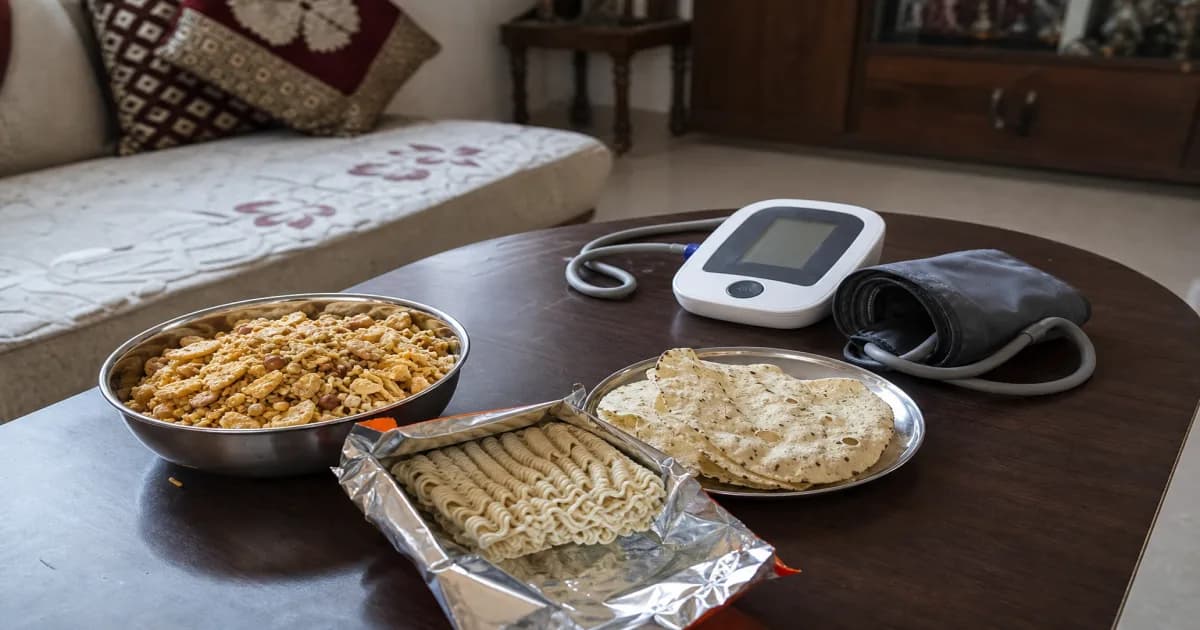
A steel dabba of “light” namkeen. Instant noodles for late work. A “healthy” soup powder. Pickle with every meal. By the time the BP machine at the chemist beeps 140/90, the house has been running a salt factory that never looked like a salt shaker.
This is a 2026 India guide to hidden salt in packaged food, how much is too much, how to read sodium on FSSAI labels, and which BP and blood tests matter when the numbers climb.
Related reading: blood pressure report, how to read food labels, electrolytes, young heart risk panel.
Salt Kitna Hona Chahiye?
| Source | Practical adult direction |
|---|---|
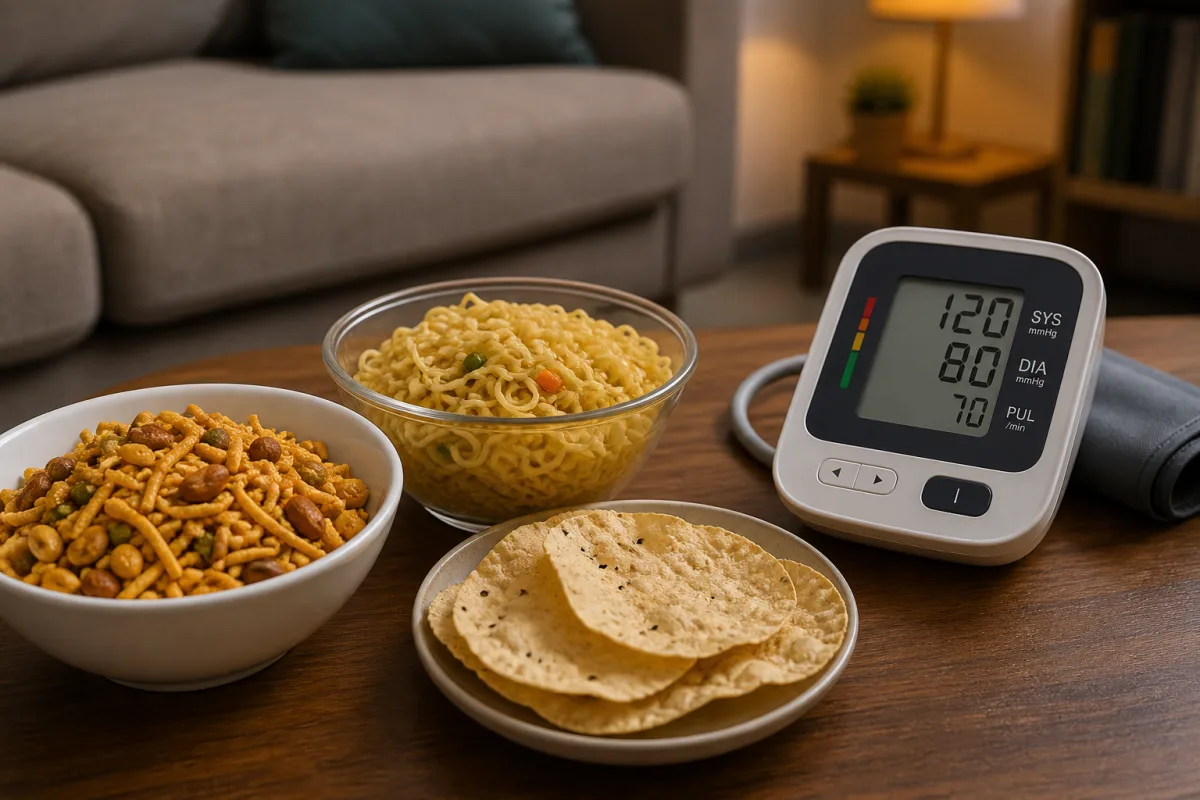
| WHO | Under 5 g salt/day (about one teaspoon), ≈ 2,000 mg sodium |
| Many Indian homes | Often 8–11 g+ when namkeen, papad, pickle, restaurant food, and bread are counted |
| People with hypertension / heart / kidney disease | Often need a tighter plan from their clinician — not a WhatsApp challenge |
Salt ≠ only the white crystals you sprinkle. Sodium arrives as salt, baking soda, MSG, cheese powder, soy sauce, and “flavour enhancer” blends.
Where Salt Hides in an Indian Day
| Food pattern | Why sodium climbs |
|---|---|
| Namkeen / chips / mixture | Designed to be addictive; per 100 g sodium is often brutal |
| Instant noodles + tastemaker | One block can use a large fraction of a day’s sodium |
| Papad, pickle, chutney powders | “Just a side” that is mostly salt + spice |
| Bread, pav, processed cheese | Quiet daily drip |
| Restaurant gravy / Chinese-style sauces | Hard to measure; easy to overshoot |
| “Healthy” soup cups & protein snacks | Marketing ≠ low sodium — read the panel |
How to Read Sodium on the Pack
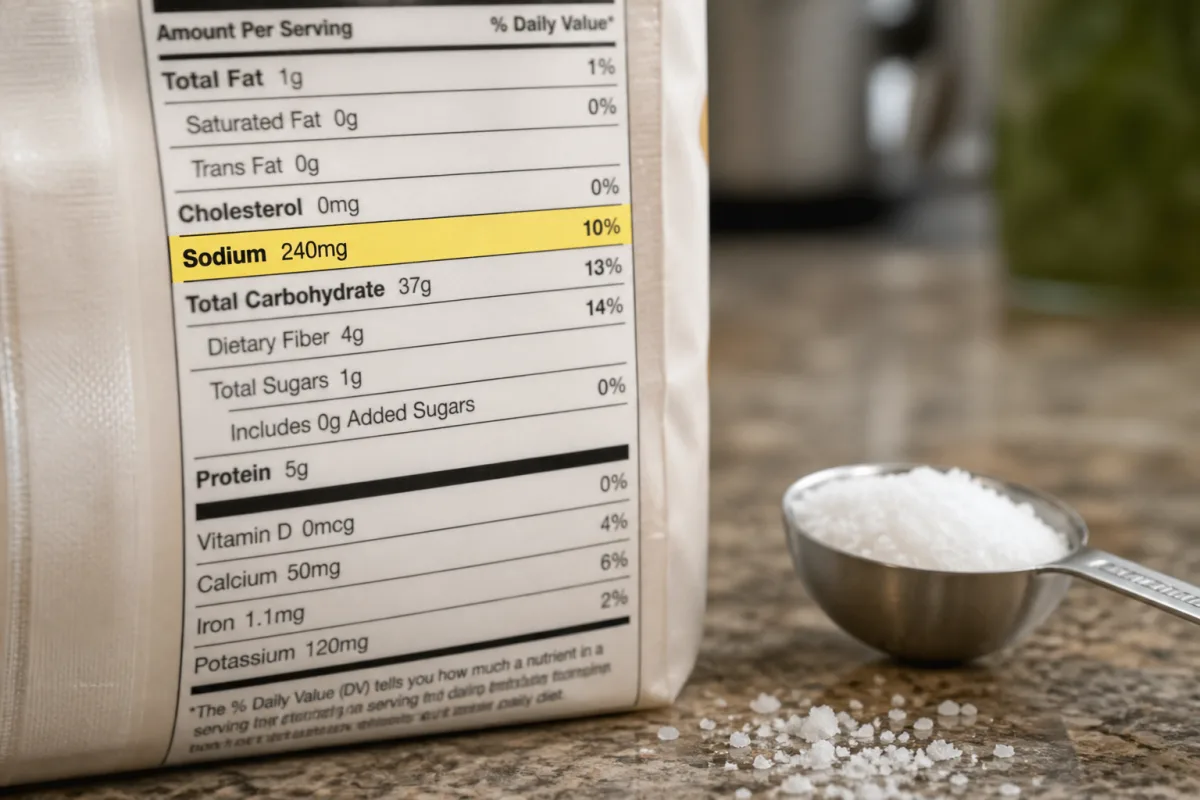
- Find sodium (mg) or salt (g) per 100 g and per serve.
- Multiply by how much you actually eat — not the fantasy serve of 10 chips.
- Compare two namkeens per 100 g.
- Ingredients: salt, rock salt, black salt, sodium chloride, MSG, yeast extract.
- “Low salt” / “less sodium” claims still need the number — claims have legal definitions, but your BP does not care about adjectives.
Rough education math many clinicians use: salt (g) ≈ sodium (mg) × 2.5 / 1000. Packs differ; prefer the printed unit.
Blood Pressure Bands (Adult Education)
Use your machine’s instructions and your clinician’s targets. Common adult clinic bands:
| Category | Approximate clinic SBP/DBP |
|---|---|
| Normal (educational) | under 120 / 80 |
| Elevated / pre-hypertensive zone | often 120–139 or diastolic 80–89 (guidelines vary by society) |
| Hypertension range | often ≥140 / 90 on repeated proper measurements |
One stressful reading in a queue is not a lifelong label. Repeated home or clinic readings are. See the full BP report guide.
If Salt Intake Is High, Which Labs / Checks?
| Check | Why |
|---|---|
| Home / clinic BP log | The primary outcome for salt reduction |
| Creatinine, eGFR, electrolytes | Kidneys and sodium/potassium balance — KFT context |
| Lipids + glucose/HbA1c | BP rarely travels alone in Indian adults |
| ECG / further cardiac tests | Only if the clinician orders — not a grocery-aisle package |
Do not stop BP medicines because you switched to “rock salt.” Rock salt is still sodium chloride with lore attached.
Practical Cuts That Work in Indian Kitchens
- Keep namkeen as a dated treat, not an open dabba on the TV table.
- Use half the tastemaker in instant noodles; add your own vegetables.
- Put roasted chana, cucumber, fruit, or dahi in the snack slot.
- Ask restaurants for less salt; share gravy-heavy dishes.
- Flavour with jeera, dhania, lemon, garlic, pudina before reaching for the shaker.
- If you pickle at home, make smaller jars and treat them like a condiment, not a side dish.
How scanura Helps
If a BP log, KFT, electrolyte, lipid, or glucose PDF is why you are here, upload it to scanura or create an account. scanura explains the cluster in Hindi or English so you can ask better questions about salt, kidneys, and cardiometabolic risk.
It does not measure the sodium in last night’s mixture, and it does not replace a clinician’s BP medication plan.
The blood test checker can range-check a single creatinine or sodium value.
Key Takeaways
- WHO-style adult cap is about 5 g salt/day (~2,000 mg sodium) — many Indian snack patterns blow past it.
- Namkeen, noodles, papad, pickle, and bread are the usual silent sources.
- Compare packs per 100 g; multiply by real portion size.
- Rock salt and black salt still count.
- Confirm high BP with repeat proper readings, not one chemist beep.
- Pair salt cuts with clinician advice; upload related PDFs to scanura when labs enter the story.
Disclaimer: This article is for educational purposes only. Blood-pressure targets and sodium limits vary by age, pregnancy, kidney disease, and clinical guidelines. scanura does not provide medical diagnosis or prescribe antihypertensives. Always consult a qualified clinician for BP treatment and personal diet limits.
Medical References
Step-by-Step Guide
- 1
Know the daily ballpark
WHO-style adult guidance is under about 5 g salt/day (~2,000 mg sodium). Many snack patterns exceed it.
- 2
Compare namkeen per 100 g
Ignore “light” on the front until the sodium row is checked.
- 3
Halve noodle tastemakers and close the namkeen dabba
Open dabbas and full masala sachets are how silent sodium wins.
- 4
Measure BP properly and repeatedly
One chemist beep is not a diagnosis. Log home or clinic readings.
- 5
Do not treat rock salt as a loophole
It is still sodium chloride with better storytelling.
- 6
Upload KFT/electrolyte/lipid PDFs when ordered
scanura explains the cluster; medicines stay with your clinician.
📬 One health report guide, every week
Normal ranges, what your values mean, and what to ask your doctor — in plain language. Free, unsubscribe anytime.