⚡Electrolyte Blood Test Explained: Sodium, Potassium & More
Sodium, potassium, chloride — your electrolyte report affects heart rhythm, muscle strength, and fluid balance. Here's what every value means and when abnormal results become emergencies.
Scanura Editorial
Health Education Team
Written by Scanura Editorial for health education. This article is not a substitute for advice from a qualified doctor. About our editorial standards
Electrolyte Blood Test Explained: Sodium, Potassium, Chloride & More
Electrolytes are minerals in your blood that carry an electric charge. They sound technical, but they control essentials: heart rhythm, muscle contraction, nerve signals, and fluid balance. When your doctor orders a serum electrolyte panel or RFT with electrolytes, the report lists sodium, potassium, chloride, and sometimes bicarbonate — often alongside kidney function tests.
Abnormal electrolytes can cause sudden cardiac arrhythmias, seizures, weakness, or confusion. Some abnormalities are mild and diet-related; others are medical emergencies. This guide explains each electrolyte, normal ranges in India, symptoms, causes, and when to act.
What Is an Electrolyte Panel?
A standard panel includes:
| Electrolyte | Symbol | Primary Role |
|---|---|---|
| Sodium | Na+ | Fluid balance, blood pressure, nerve function |
| Potassium | K+ | Heart rhythm, muscle function |
| Chloride | Cl- | Acid-base balance, fluid status |
| Bicarbonate | HCO3- | Acid-base balance (CO2 on some reports) |
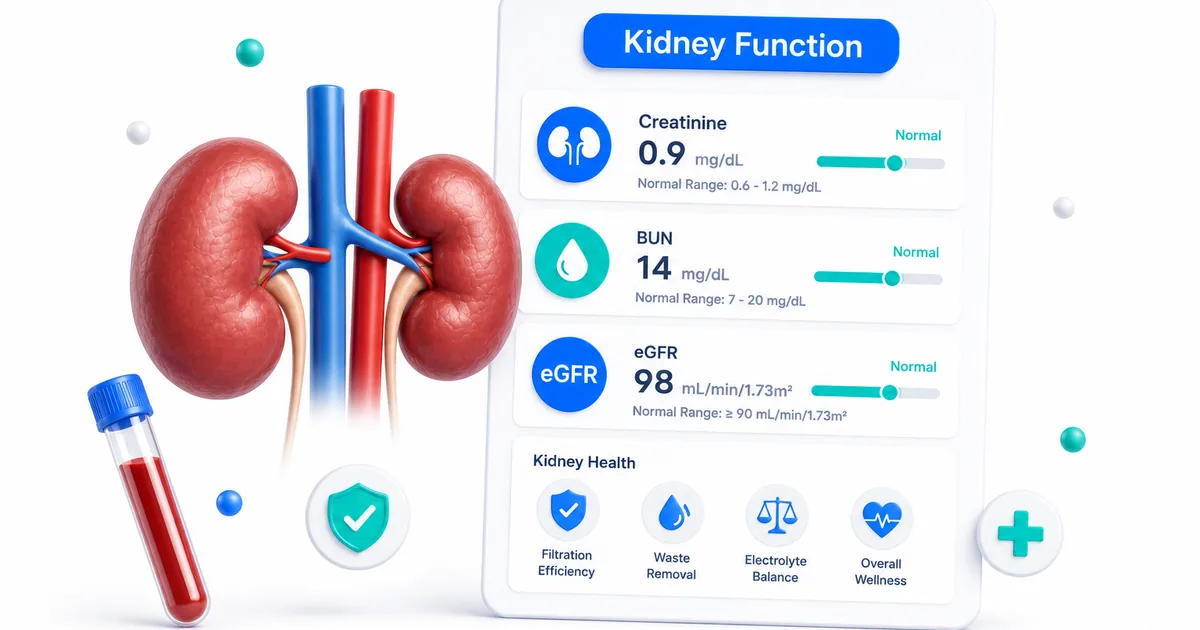
Electrolytes are closely tied to kidney function — kidneys filter and regulate them daily. See our kidney function test guide for creatinine and eGFR interpretation.
Sodium (Na+)
Normal Range
| Sodium | Level |
|---|---|
| Normal | 135–145 mEq/L (or mmol/L) |
| Mild hyponatremia | 130–135 |
| Moderate | 125–129 |
| Severe | Below 125 |
Low Sodium (Hyponatremia)
Causes:
- Drinking excessive water (psychogenic polydipsia, endurance sports without electrolytes)
- Diuretics ("water pills") — common in hypertension treatment
- Heart failure, liver cirrhosis, nephrotic syndrome (dilutional hyponatremia)
- SIADH (syndrome of inappropriate ADH) — various cancers, lung disease, medications
- Severe vomiting or diarrhoea
- Thyroid deficiency (hypothyroidism)
Symptoms: Nausea, headache, confusion, seizures (severe), coma
Indian context: Elderly patients on thiazide diuretics for blood pressure frequently develop mild hyponatremia. Hot weather plus heavy water intake without salt can contribute.
High Sodium (Hypernatremia)
Causes:
- Dehydration (inadequate water intake — common in elderly, infants)
- Uncontrolled diabetes (hyperglycemia pulls water out)
- Excessive salt intake (rare from diet alone)
- Diabetes insipidus
Symptoms: Thirst, restlessness, muscle twitching, confusion, seizures
Potassium (K+)
Normal Range
| Potassium | Level |
|---|---|
| Normal | 3.5–5.0 mEq/L |
| Mild low | 3.0–3.5 |
| Moderate low | 2.5–3.0 |
| Severe low | Below 2.5 |
| High | Above 5.0–5.5 (lab-dependent) |
Potassium is the most clinically urgent electrolyte — severe highs or lows can cause fatal arrhythmias.
Low Potassium (Hypokalemia)
Causes:
- Diuretics (furosemide, hydrochlorothiazide)
- Vomiting, diarrhoea, laxative abuse
- Excess insulin or alkalosis
- Primary aldosteronism (Conn's syndrome)
- Magnesium deficiency (makes hypokalemia hard to correct)
Symptoms: Muscle weakness, cramps, constipation, palpitations, paralytic ileus (severe)
Indian diet note: Coconut water is high in potassium — helpful for mild deficiency but not a substitute for medical treatment in severe cases.
High Potassium (Hyperkalemia)
Causes:
- Kidney failure — most common serious cause; potassium cannot be excreted
- ACE inhibitors, ARBs, spironolactone (common heart/kidney medications)
- Crush injuries, burns, massive haemolysis
- Adrenal insufficiency (Addison's disease)
- Pseudohyperkalemia (lab artefact from delayed sample processing — hemolysis)
Symptoms: Often none until dangerous — weakness, palpitations, cardiac arrest on ECG
Emergency: Potassium above 6.0–6.5 with ECG changes needs immediate hospital treatment.
Chloride (Cl-)
Normal Range
96–106 mEq/L
Chloride usually moves with sodium. It helps maintain acid-base balance.
- Low chloride — vomiting (loss of HCl), diuretics, SIADH
- High chloride — dehydration, kidney acidosis, hyperventilation compensation
Chloride alone is rarely the main story — doctors interpret it with sodium and bicarbonate.
Bicarbonate (HCO3-) / CO2
Normal Range
22–28 mEq/L
Reflects metabolic acid-base status:
| Pattern | Suggests |
|---|---|
| Low bicarbonate | Metabolic acidosis — diabetic ketoacidosis, kidney failure, lactic acidosis, diarrhoea |
| High bicarbonate | Metabolic alkalosis — vomiting, diuretics, excess antacids |
Combined with kidney and blood sugar tests, bicarbonate helps diagnose DKA in diabetes emergencies.
Anion Gap: The Hidden Calculation
Some reports mention anion gap = (Na + K) - (Cl + HCO3) — normally 8–16.
High anion gap metabolic acidosis suggests:
- Diabetic ketoacidosis
- Lactic acidosis (sepsis, shock)
- Toxins (methanol, ethylene glycol — rare)
- Kidney failure (uraemia)
This is mainly relevant in hospital/emergency settings but explains why electrolytes matter beyond individual numbers.
Who Needs Electrolyte Testing?
Routine situations:
- Part of kidney function panel (KFT/RFT)
- Before starting diuretics or ACE inhibitors
- Annual checkup in elderly or kidney disease
- During hospital admission
Urgent situations:
- Vomiting/diarrhoea unable to keep fluids down
- Confusion or seizures
- Known kidney disease with weakness
- Palpitations or ECG abnormalities
- Heat stroke or severe dehydration in summer
- Post-chemotherapy monitoring
Medications That Affect Electrolytes
| Medication Class | Electrolyte Effect |
|---|---|
| Thiazide / loop diuretics | Low Na, low K, low Mg |
| Spironolactone / eplerenone | High K |
| ACE inhibitors / ARBs | High K |
| Lithium | Affects sodium, kidney concentrating ability |
| Corticosteroids | Low K |
| Insulin | Shifts K into cells (lowers blood K) |
Always bring your medication list when interpreting electrolyte reports.
Electrolytes and Heart Health
Your heart's electrical system depends on potassium and calcium gradients. ECG changes with:
- High K — peaked T waves, widened QRS, sine wave pattern
- Low K — U waves, flattened T waves
- Low/high Ca — QT interval changes
If you have heart disease, electrolyte monitoring is especially important. Cross-reference with our ECG guide and blood pressure guide.
Correcting Electrolytes: Don't Self-Treat Severe Cases
Mild issues:
- Oral rehydration for dehydration
- Dietary potassium (bananas, coconut water, sweet potato) only if doctor approves
- Adjust diuretic dose under supervision
Severe issues (hospital only):
- IV potassium (never rapid bolus — dangerous)
- IV saline or hypertonic saline for severe hyponatremia (correct slowly — brain damage risk if too fast)
- Calcium gluconate for hyperkalemia cardioprotection
- Dialysis for refractory hyperkalemia in kidney failure
Never take potassium supplements without blood tests and doctor guidance — hyperkalemia kills silently.
Special Populations
Elderly
- Higher risk of hyponatremia on thiazides
- Reduced thirst sensation → hypernatremia with dehydration
- Multiple medications interacting
Diabetes
- DKA causes high K initially (shifts out of cells) then total body depletion
- Monitor with glucose and ketones in sick-day rules
Pregnancy
- Physiological changes alter electrolytes slightly
- Hyperemesis gravidarum → hypokalemia, alkalosis
- Pre-eclampsia monitoring includes kidney function and sometimes uric acid
Athletes / Heat
- Hyponatremia from overdrinking plain water during marathons
- Use electrolyte drinks in prolonged exertion in Indian summer
Reading Your Report: Practical Steps
- Check kidney function (creatinine, eGFR) on the same report
- Identify the out-of-range electrolyte
- Review medications — diuretics? ACE inhibitors?
- Match symptoms — weakness, confusion, palpitations?
- Repeat if lab error suspected — hemolysis falsely raises potassium
- Ask about correction speed — chronic hyponatremia must be corrected slowly
Questions to Ask Your Doctor
- "Which electrolyte is abnormal — and how severe?"
- "Could my blood pressure medicines be causing this?"
- "Do I need an ECG before correcting potassium?"
- "Should I stop any supplements or salt substitutes?"
- "When should we repeat the test?"
How scanura Helps
Upload your electrolyte and kidney panel to scanura for:
- Plain-language explanation of each value
- Combined interpretation with creatinine and other tests
- Medication-aware questions for your doctor
- Trend tracking across reports
Key Takeaways
- Sodium controls fluid balance — low causes confusion; high causes dehydration effects
- Potassium affects the heart — severe abnormalities are emergencies
- Electrolytes link to kidneys — always read with creatinine/eGFR
- Diuretics and ACE inhibitors commonly alter electrolytes in India
- Don't self-supplement potassium without medical guidance
- Correct chronic hyponatremia slowly — rapid correction is dangerous
- Repeat hemolysed samples if potassium seems unexpectedly high
Common Indian Clinical Scenarios
Hypertension Treatment and Electrolytes
Millions of Indians take chlorthalidone, hydrochlorothiazide, or torsemide for blood pressure. These commonly lower potassium and sodium. If you develop leg cramps on BP medication, ask for electrolyte testing — don't just accept cramps as normal.
CKD Stage 3–5: Potassium Is the Killer
Chronic kidney disease patients must limit high-potassium foods (coconut water, raw banana, jackfruit in excess) when advised. Salt substitutes often contain potassium chloride — dangerous if you have kidney disease. Read labels on "low sodium" products carefully.
Diarrhoea During Travel (Delhi Belly, Monsoon GI Illness)
Traveller's diarrhoea causes sodium and potassium loss. ORS (WHO formula) replaces both. Plain water alone does not replace sodium adequately in severe diarrhoea — this worsens hyponatremia risk.
Fasting During Ramadan or Ekadashi
Prolonged fasting with inadequate fluid intake in summer can cause hypernatremia (dehydration) or hypotension. Elderly diabetics on diuretics need special medical guidance before extended fasts.
IV Drip "Recovery" Clinics
Unregulated IV vitamin and electrolyte drips are popular in some Indian cities. Unsupervised potassium or magnesium infusion can cause cardiac arrest. Only receive IV electrolytes in licensed medical facilities with monitoring.
Magnesium: The Forgotten Electrolyte
Magnesium is sometimes tested separately but is tightly linked to potassium:
| Magnesium | Level |
|---|---|
| Normal | 1.7–2.2 mg/dL (0.7–0.9 mmol/L) |
Low magnesium causes refractory hypokalemia — potassium supplements won't work until magnesium is corrected. Common causes: diuretics, alcohol, proton pump inhibitors (omeprazole long-term), and malnutrition.
Symptoms: Muscle cramps, tremors, arrhythmias, seizures (severe)
If your potassium stays low despite replacement, ask your doctor to check magnesium.
Calcium and Phosphorus (Often on the Same Panel)
| Mineral | Normal Range (approx.) |
|---|---|
| Calcium | 8.5–10.5 mg/dL |
| Phosphorus | 2.5–4.5 mg/dL |
High calcium with low phosphorus may suggest hyperparathyroidism. Low calcium with tingling around the mouth and muscle spasms (tetany) can occur after thyroid surgery or vitamin D deficiency.
In chronic kidney disease, phosphorus rises and calcium drops — contributing to bone disease. Nephrologists manage this with diet, binders, and vitamin D analogues.
Disclaimer: This article is for educational purposes only. scanura does not provide medical diagnosis. Severe electrolyte abnormalities require emergency medical care.
Medical References
Step-by-Step Guide
- 1
Read electrolytes with kidney function
Sodium and potassium are regulated by kidneys. Always interpret alongside creatinine and eGFR on the same report.
- 2
Check sodium (135–145 mEq/L)
Low sodium causes confusion and seizures. High sodium reflects dehydration. Elderly on diuretics are high-risk for low sodium.
- 3
Check potassium (3.5–5.0 mEq/L)
Potassium affects heart rhythm. Below 3.5 or above 5.5 needs medical attention. Severe highs are emergencies.
- 4
Review your medications
Diuretics lower potassium. ACE inhibitors and spironolactone raise potassium. Bring your full drug list to the doctor.
- 5
Repeat if sample may be hemolysed
Crush injuries or delayed samples can falsely elevate potassium. Repeat before urgent treatment if result unexpected.
- 6
Never self-supplement potassium
Potassium supplements without monitoring can cause dangerous hyperkalemia. Only take if prescribed with follow-up tests.
📬 One health report guide, every week
Normal ranges, what your values mean, and what to ask your doctor — in plain language. Free, unsubscribe anytime.