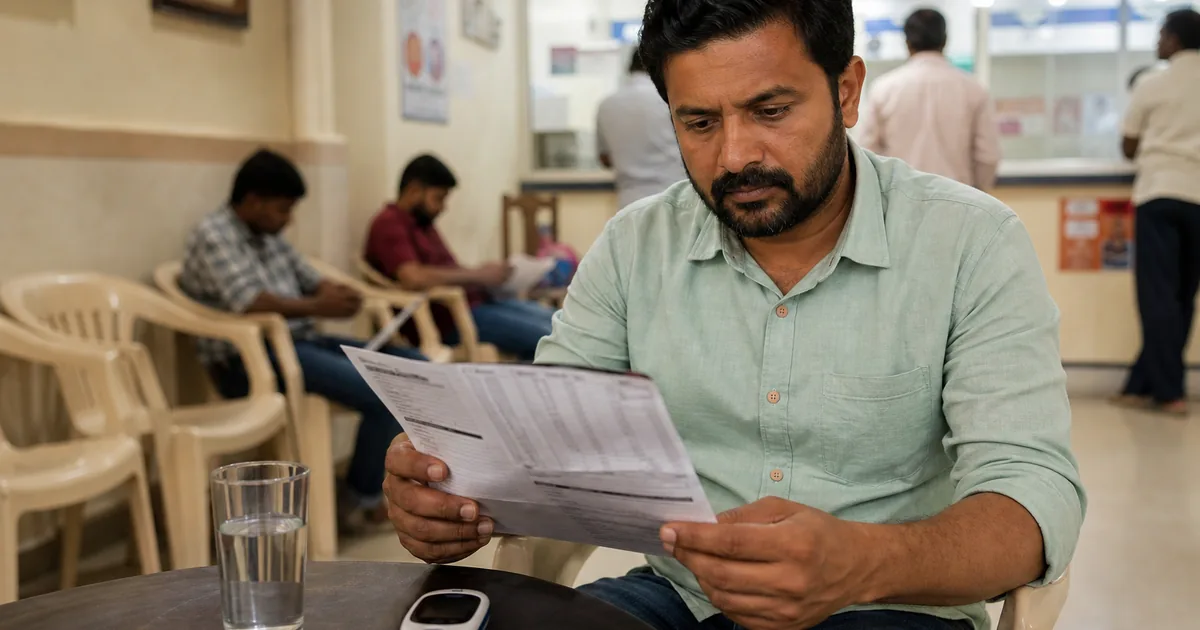
🩸Why HbA1c Alone Can Mislead Diabetes Tests in India
A 2026 Lancet analysis warned HbA1c-only diabetes calls can misclassify South Asians. Here is how anaemia, G6PD and variants distort the number — and which tests to pair with it.
Scanura Editorial
Health Education Team
Written by Scanura Editorial for health education. This article is not a substitute for advice from a qualified doctor. About our editorial standards
Why HbA1c Alone Can Mislead Diabetes Tests in India
You fasted, gave blood, and the lab printed one number that feels like a verdict: HbA1c. In India that number is used for diagnosis, insurance paperwork, and “how is my sugar” WhatsApp debates. In 2026, a Lancet Regional Health – Southeast Asia analysis warned that HbA1c-only diabetes decisions can misclassify large groups of South Asians — especially where anaemia, haemoglobin variants, and G6PD deficiency are common.
This is a 2026 India guide to why HbA1c can mislead, when fasting glucose or an OGTT still matter, and how to read the cluster — not a single percentage.
Related reading: HbA1c explained, blood sugar: fasting, PP, HbA1c, CBC / haemoglobin, iron-deficiency anaemia, thalassemia / Hb electrophoresis.
What HbA1c Actually Measures
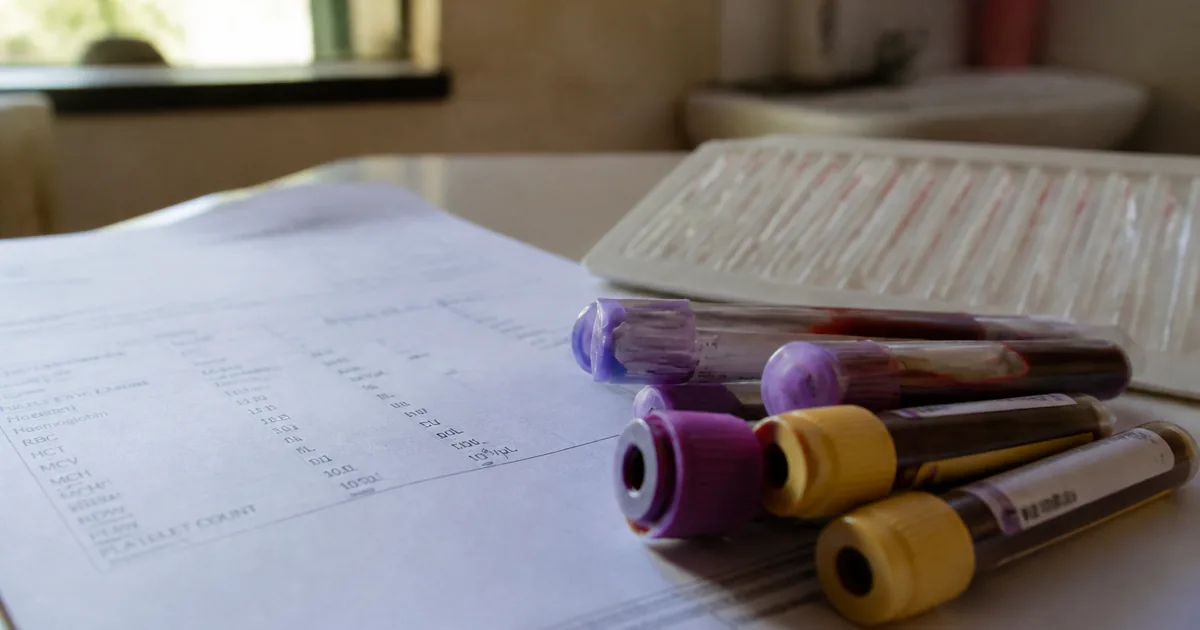
HbA1c (glycated haemoglobin) estimates how much glucose has been stuck to haemoglobin over roughly the lifespan of red blood cells — often summarised as a 2–3 month average. Labs report it as a percentage (NGSP) and sometimes as mmol/mol (IFCC).
It is useful because you do not need to be fasting, and it is less jumpy than a single glucometer beep. It is not a photograph of today’s breakfast. It is also not independent of the red cell.
Anything that changes how long RBCs live, how much haemoglobin you have, or which haemoglobin variant you carry can nudge the percentage away from true average glucose.
Usual Cut-offs (Education Only)
Use the range printed on your report. These ADA-style bands are what Indian clinicians often discuss:
| HbA1c (NGSP) | Common educational meaning |
|---|---|
| Below 5.7% | Usual “non-diabetes” band if the test is reliable in you |
| 5.7% – 6.4% | Prediabetes range — confirm with glucose tests if the story is unclear |
| 6.5% or higher | Diabetes-range if the method is valid and a clinician confirms |
| Known diabetes, many adults | Individual target (often around 7%) — not a DIY medicine change |
A “perfect” HbA1c with high fasting glucose, or a scary HbA1c with anaemia, is a pattern, not a personality flaw.
Why India Is a Special Case in 2026
The Lancet Regional Health – Southeast Asia paper (February 2026) argued that relying on HbA1c alone for diagnosis or monitoring is often questionable in South Asia because:
| Problem common in India | What it can do to HbA1c |
|---|---|
| Iron-deficiency anaemia (NFHS-5: over half of women, about one in four men) | Often raises HbA1c relative to true glucose — over-calling diabetes or looking “worse” than the glucometer |
| Haemolysis / shorter RBC life (including some G6PD deficiency) | Often lowers HbA1c — missed or delayed diabetes. Authors flagged delays of up to about four years in some men with undetected G6PD if HbA1c is the only tool |
| Haemoglobin variants / thalassaemia trait | Some assays interfere; you need a method that your lab validates for variants |
| Lab method quality | Cheap or poorly standardised assays add noise on top of biology |
Public-health surveys that use only HbA1c can also mis-estimate India’s diabetes burden. For you as a patient, the practical line is simpler: do not treat one percentage as a courtroom.
HbA1c vs Fasting Glucose vs OGTT
| Test | What it captures | Strength | Weakness in Indian clinics |
|---|---|---|---|
| HbA1c | ~2–3 month glycation | No fasting; good for tracking when valid | Distorted by anaemia, variants, G6PD, some CKD |
| Fasting plasma glucose | Overnight glucose | Cheap, widely available | Misses isolated post-meal spikes; need a true fast |
| 2-hour OGTT | How you handle a glucose load | Still the reference when HbA1c is untrustworthy | Time, nausea, lab quality of the draw |
| Glucometer / CGM | Day-to-day pattern | Catches highs the average hides | Not a substitute for a diagnostic protocol |
When clinicians often add glucose tests: anaemia on CBC, known haemoglobinopathy, pregnancy (HbA1c is not the usual GDM screen), unexplained mismatch between symptoms and HbA1c, or a family story of “my A1c is always low but sugar is high.”
Related: fasting 100–125 / prediabetes.
What to Look at on the Same PDF
| Row | Why it sits next to HbA1c |
|---|---|
| Haemoglobin / CBC | Anaemia is the first “is this A1c honest?” check |
| Ferritin / iron studies | Iron deficiency is the common Indian distorting factor |
| Creatinine / eGFR | Advanced kidney disease can affect interpretation — eGFR guide |
| Fasting glucose ± PP | Reality-check the average |
| Hb electrophoresis | If variant or thalassaemia is suspected — electrophoresis guide |
Do not start or stop diabetes medicines from a blog table. Pregnancy, steroids, and acute illness need a clinician, not a comment section.
What You Can Do This Week
- If you only have HbA1c, ask whether a CBC was done in the same season.
- If haemoglobin is low, do not panic-titrate sugar tablets off A1c alone — take the pair to the doctor.
- If A1c is “normal” but you have thirst, weight loss, or high glucometer readings, ask about fasting glucose / OGTT.
- Known diabetes: keep the same lab method when possible so trends are comparable.
- G6PD is a doctor-ordered test in selected cases — not a mall add-on for everyone.
How scanura Helps
If your PDF has HbA1c plus glucose, CBC, or kidney rows, upload it to scanura or create an account. scanura explains the cluster in Hindi or English so you can walk in asking “is this A1c trustworthy given my haemoglobin?” instead of arguing with one circled percentage.
It does not diagnose diabetes, interpret G6PD genetics, or replace an endocrinologist.
The blood test checker can range-check a single value while you wait.
Key Takeaways
- HbA1c is an average, not a daily sugar photograph.
- In India, anaemia, haemoglobin variants, and G6PD can push A1c up or down versus true glucose.
- 2026 analyses argued HbA1c-only diagnosis can misclassify South Asians.
- Fasting glucose and OGTT still matter when the red cell story is messy.
- Read HbA1c with CBC — especially in women of reproductive age.
- Upload the full PDF to scanura; treatment stays with your clinician.
Disclaimer: This article is for educational purposes only and summarises publicly discussed 2026 research on HbA1c limitations in South Asia. Assay interference, diagnostic cut-offs, and pregnancy protocols are individual. scanura does not provide medical diagnosis. Always consult a qualified clinician for diabetes testing and treatment.
Medical References
Step-by-Step Guide
- 1
Do not treat HbA1c as a courtroom
It is a 2–3 month average that assumes typical red cells.
- 2
Read haemoglobin / CBC on the same season’s labs
Anaemia is the first Indian reason an A1c can look ‘too high’ or untrustworthy.
- 3
Add fasting glucose or OGTT when the story mismatches
Low A1c with high glucometer readings, variants, or pregnancy-style questions need glucose tests.
- 4
Ask about assay interference if you have a haemoglobin variant
Some methods mis-read thalassaemia trait or other haemoglobins.
- 5
Keep the same lab method if you already have diabetes
Trends beat one-off shopping across cheap assays.
- 6
Upload HbA1c + CBC + glucose PDFs to scanura
Plain Hindi/English cluster explanation; diagnosis stays with your clinician.
📬 One health report guide, every week
Normal ranges, what your values mean, and what to ask your doctor — in plain language. Free, unsubscribe anytime.