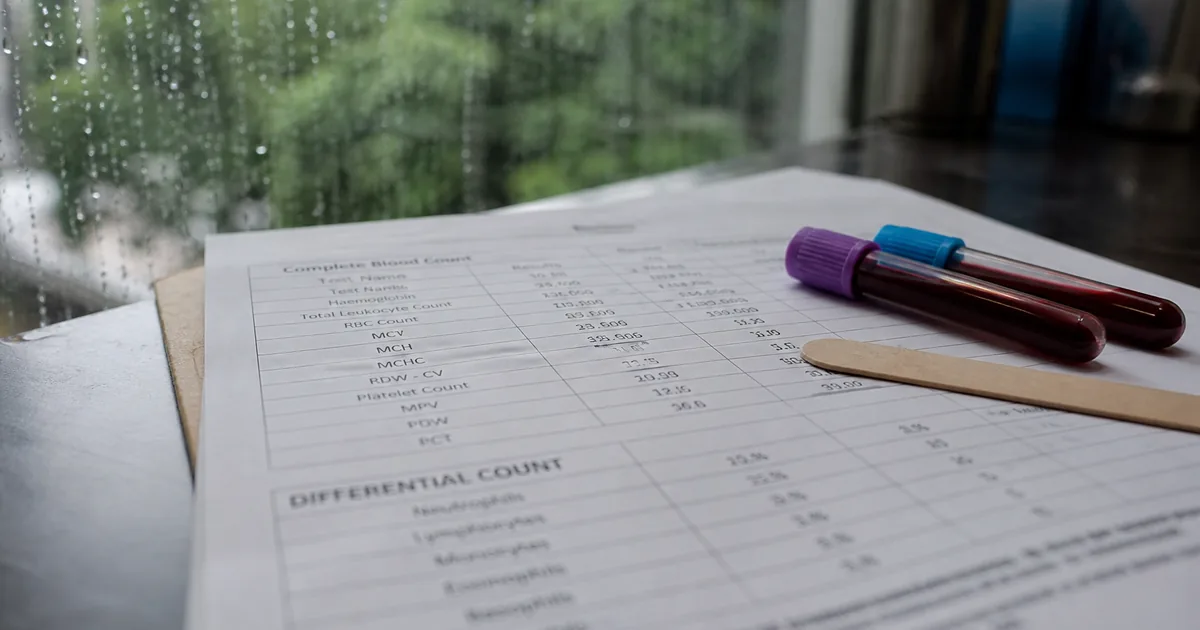
🩸Lymphocytes High or Low on CBC: Meaning, Causes & What To Do
One red lymphocyte line after monsoon fever is usually viral — not a cancer Google spiral. Here is ALC vs %, dengue follow-up, and when to repeat the CBC.
Scanura Editorial
Health Education Team
Written by Scanura Editorial for health education. This article is not a substitute for advice from a qualified doctor. About our editorial standards
Lymphocytes High or Low on CBC: Meaning, Causes & What To Do
You opened a CBC after monsoon fever — or a routine package — and one line is red: lymphocytes. The report may say LYM %, lymphocyte count, or absolute lymphocyte count (ALC). Google says “immunity problem.” A neighbour says dengue. You want the same plain answer you wanted for SGPT: what this number is, how high is high, what usually causes it in India, and when to worry.
Lymphocytes are a type of white blood cell (with T cells, B cells, and NK cells in the mix). They rise and fall with viral infections, recovery, some medicines, and — rarely — blood disorders. A single flagged percentage during a viral week is extremely common. It is not, by itself, a cancer diagnosis.
This guide follows the same shape as our SGPT high explainer: definition, Indian ranges, mild vs marked change, causes, monsoon/dengue follow-up, what to read with it, and next steps. For the full count, see the CBC guide. Neutrophils (the usual partner line): what neutrophils mean. Eosinophils: AEC high.
Monsoon companions: dengue platelets and NS1, chikungunya vs dengue, monsoon fever panel.
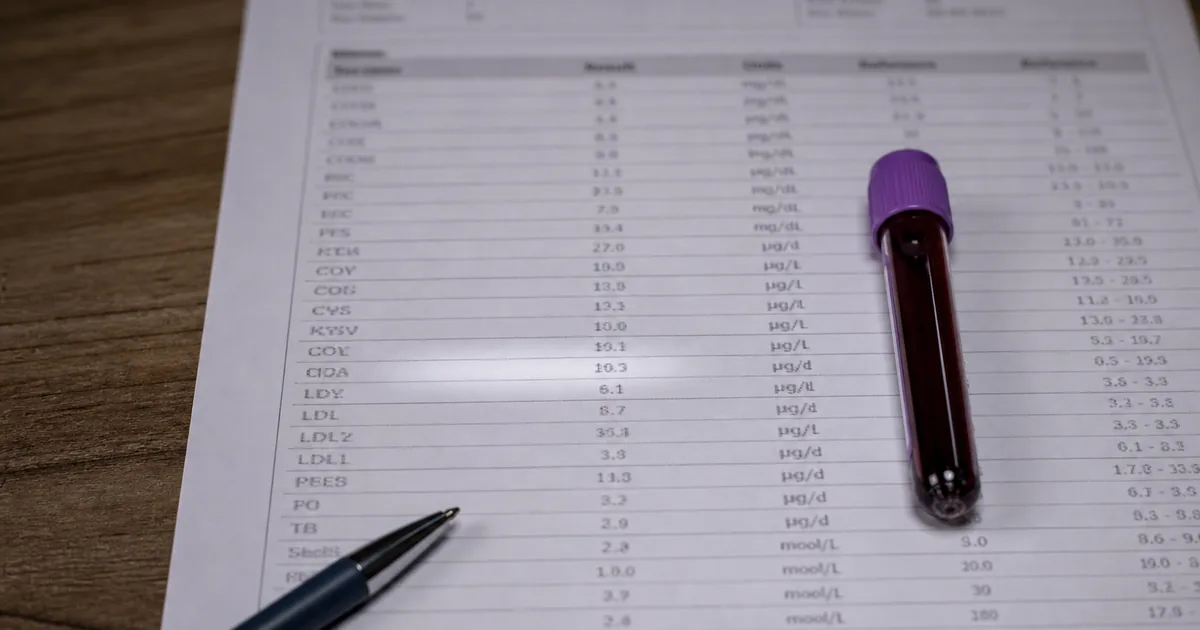
What Lymphocytes Are on a CBC
Your differential count splits WBC into neutrophils, lymphocytes, monocytes, eosinophils, and basophils.
| Name on the report | What it is |
|---|---|
| Lymphocytes % / LYM % / Lymph % | Share of total WBC |
| Absolute lymphocyte count (ALC) | Actual number per µL (or ×10⁹/L) |
| Atypical / reactive lymphocytes | Often noted on smear during viral recovery (including dengue) |
ALC is more meaningful than % when total WBC is very high or very low. Example: WBC 3,000/µL and lymphocytes 50% looks “high %” but the absolute count may be normal or low. The reverse happens in high-WBC bacterial infections: lymphocyte % looks low because neutrophils dominate.
If the report only prints percentages, your clinician can still interpret them with the total WBC. Prefer absolute numbers when both are printed.
Lymphocyte Normal Range in India
Always use the interval printed on your report. Analysers and age bands differ (Thyrocare, Dr Lal PathLabs, SRL, hospital labs).
| Group | Typical educational range (absolute) | Typical % of WBC (adults) |
|---|---|---|
| Adults | about 1,000–4,000 /µL (1.0–4.0 ×10⁹/L) | about 20–40% |
| Children | Higher lymphocytes are normal — do not use adult % on a toddler | Age-specific |
| Pregnancy | Mild shifts happen — obstetric context | Lab-specific |
How High Is “High”? How Low Is “Low”?
Doctors think in absolute counts and trend + symptoms, not one red font.
| ALC (adult, educational) | Rough reading |
|---|---|
| Mildly above range (e.g. just over 4,000/µL) | Common after viral illness or in recovery; often observe and repeat |
| Clearly high (e.g. >5,000–10,000/µL) persisting | Needs a reason — chronic infection, smoking in some, or haematology review if unexplained and lasting |
| Very high with anaemia / low platelets / huge spleen / night sweats | Prompt medical review — not a DIY label |
| Mildly below range | Common in acute viral illness (including dengue), brief stress, or steroids |
| ALC <1,000 /µL | Lymphopenia — correlate with infection, HIV risk questions (clinician), medicines, nutrition |
| ALC <500 /µL | More significant immunosuppression risk — fever here is a clinical problem, not a wait-and-see WhatsApp |
A percentage of 45% with a normal WBC after a cold is not the same as ALC 18,000/µL on three CBCs.
What Causes High Lymphocytes?
1. Viral infections and recovery — the #1 monsoon story
Many viruses push lymphocytes up during recovery, even if they dipped in the first febrile days. Reactive (“atypical”) lymphocytes on a smear are a viral clue, not a diagnosis of a named virus.
India context: influenza-like illness, COVID-19, viral hepatitis recovery, EBV-like syndromes, and post-dengue CBCs.
2. Other infections
Tuberculosis, some chronic infections, and recovery from bacterial illness can shift the differential. The clinical picture (cough, fever pattern, weight loss) decides the next test — not the lymphocyte line alone.
3. Smoking
Some adults who smoke have a persistently higher lymphocyte or WBC baseline. Mention smoking on the form.
4. Stress, exercise, splenectomy
Transient shifts happen. A CBC the morning after a night shift is a snapshot.
5. Less common — needs a doctor, not Google
Autoimmune disease, certain medicines, and lymphoproliferative disorders (including CLL in older adults) can raise lymphocytes. These are pattern + smear + repeat diagnoses. A mildly high LYM% in a 28-year-old after viral fever is not this category.
What Causes Low Lymphocytes?
1. Acute viral illness — including dengue
Early dengue often shows leukopenia. Neutrophils and lymphocytes can both fall; relative lymphocyte % may look high while absolute counts are low. As fever settles, reactive lymphocytes often appear. Watch platelets and haematocrit more than one lymphocyte star — dengue guide.
COVID-19, influenza, and many “viral fevers” do the same: transient lymphopenia, then recovery.
2. Medicines
Steroids, some immunosuppressants, chemotherapy, and a few other prescriptions lower lymphocytes. Never stop a prescribed drug because of one CBC without medical advice.
3. Nutrition, alcohol, chronic illness
Severe undernutrition, uncontrolled diabetes stress, and chronic kidney or liver disease can contribute. Context first.
4. HIV and other immunodeficiencies
Persistent unexplained lymphopenia with risk history or other clues is a clinician-directed conversation (including HIV testing where appropriate). It is not a conclusion from a single monsoon CBC.
5. Rare marrow or autoimmune problems
When Hb, platelets, and neutrophils are also abnormal, the story is bigger than “viral lymphocytes.”
Monsoon, Dengue, and the Lymphocyte Line
| CBC pattern | More consistent with… | Do not do |
|---|---|---|
| Fever day 2–4, low WBC, falling platelets | Dengue (among other viruses) — time NS1/PCR | Diagnose from LYM% alone |
| Reactive lymphocytes + recovering platelets | Viral recovery, including post-dengue | Repeat NS1 forever |
| High neutrophils, left shift, local bacterial signs | Bacterial pathway — lymphocytes may look “low %” | Assume dengue |
| Joint pain, less platelet crash | Consider chikungunya testing | NSAIDs until dengue is reasonably off the table |
| Normal lymphocytes, still exhausted at week 3 | Post-viral fatigue; not every tired day needs a new CBC | Daily CBCs “for immunity” |
Platelets decide dengue watching more than lymphocytes. Day of fever decides NS1 vs IgM. Lymphocytes are a supporting actor.
AQI-season cough and viral CBCs will look similar in October — same rule: trend + symptoms, not one % .
What Other Tests Help?
| If this is going on | Tests clinicians often add |
|---|---|
| Monsoon fever | CBC serials, dengue NS1/IgM per day, malaria, typhoid as indicated — fever panel |
| Persistent lymphocytosis | Repeat CBC, peripheral smear; then specialist tests if still unexplained |
| Persistent lymphopenia | Repeat; medicines review; further infection/immune tests as advised |
| High eosinophils too | Allergy/parasite story — AEC |
| SGPT also high after viral fever | Liver involvement or medicines — SGPT high |
Repeat a mildly odd lymphocyte count after 1–2 weeks if you feel well, or sooner if your doctor is tracking dengue. Trends beat one printout.
Symptoms vs the Number
Mild lymphocyte changes often cause no extra symptoms beyond whatever infection you already have.
Worry more about the person than the font colour:
- Breathing trouble, bleeding, severe abdominal pain, inability to drink → emergency (dengue warning / other)
- Fever in someone with very low neutrophils or lymphocytes after chemotherapy → urgent pathways
- Painless lumps, drenching night sweats, unexplained weight loss with a persistently abnormal CBC → timely physician, not another home CBC kit
You can have a scary Google result with a trivial ALC shift, and you can have a normal lymphocyte % with dangerous dengue leak. Numbers and symptoms together.
How to Lower or Raise Lymphocytes
There is no lymphocyte tonic. Treatment targets the cause.
- Viral illness → time, fluids, paracetamol as advised; no random antibiotics
- Dengue → monitoring plan from the clinician; not papaya-leaf protocols as treatment
- Steroid-related changes → the prescriber adjusts
- Smoking-related baseline → stopping helps general health; do not expect overnight CBC cosmetics
“Immunity booster” packets will not correct a meaningful lymphopenia and can harm the liver.
When to Worry
Seek urgent care if you have:
- Dengue warning signs (bleeding, persistent vomiting, severe pain, cold hands, collapse)
- Fever with known severe immunosuppression or chemotherapy
- CBC with very low counts across lines (Hb + platelets + WBC)
See a physician soon (days, not months) if:
- Lymphocytes stay clearly high or low on two CBCs weeks apart without a viral story
- Abnormal lymphocytes plus anaemia or low platelets without a recent infection
- Unexplained lumps, night sweats, weight loss
Questions to Ask Your Doctor
- “Is this the percentage or the absolute count — and is WBC low or high?”
- “Could this just be viral / dengue recovery?”
- “When should we repeat the CBC?”
- “Do I need NS1, IgM, or a smear — or only observation?”
- “Could any medicine be doing this?”
- “Is there any reason to see a haematologist, or is that overkill for this value?”
How scanura Helps
Upload the CBC PDF — especially serial monsoon CBCs — to scanura or create an account. scanura explains lymphocytes with WBC, neutrophils, and platelets in plain Hindi or English, and flags when the pattern looks more dengue-watch than “immunity problem.”
It does not replace daily dengue monitoring, and it does not diagnose lymphoma from one LYM%.
The blood test checker can range-check a single value. A differential needs the whole CBC.
Key Takeaways
- Lymphocytes are viral-response cells on the CBC — high or low is common around monsoon illness.
- Prefer absolute count (ALC) over % when WBC is far from normal.
- Mild elevation after a virus is usually observation, not a cancer workup.
- Low lymphocytes in early dengue/viral fever are expected; platelets and haematocrit decide danger.
- Children have higher lymphocyte % — use paediatric ranges.
- Steroids and other drugs change the number — list them.
- No immunity syrup fixes a lab flag — treat the cause.
- Upload serial CBCs to scanura, then follow the clinician — bleeding and shock still go to hospital.
Disclaimer: This article is for educational purposes only. Reference ranges and analyser methods vary. scanura does not provide medical diagnosis. Dengue and other infections can be life-threatening. Always consult a qualified clinician for interpretation of your CBC.
Medical References
Step-by-Step Guide
- 1
Find lymphocytes and the total WBC
Look for LYM %, lymphocyte count, or ALC. Percentage misleads when WBC is very high or very low.
- 2
Prefer the absolute count
Adult ALC is often about 1,000–4,000/µL. Use the printed range; children run higher.
- 3
Match the day of fever and platelets
Early dengue often lowers WBC; recovery can show reactive lymphocytes. Platelets and haematocrit decide watching more than one LYM% flag.
- 4
List medicines, especially steroids
Do not stop prescribed drugs because of one CBC without medical advice.
- 5
Repeat mild flags instead of Googling cancer
A viral week commonly moves lymphocytes. Persistently very high or very low counts with other line abnormalities need a physician.
- 6
Upload serial CBCs to scanura
Plain-language differential with neutrophils and platelets. Bleeding or shock is the ER, not a PDF.
📬 One health report guide, every week
Normal ranges, what your values mean, and what to ask your doctor — in plain language. Free, unsubscribe anytime.