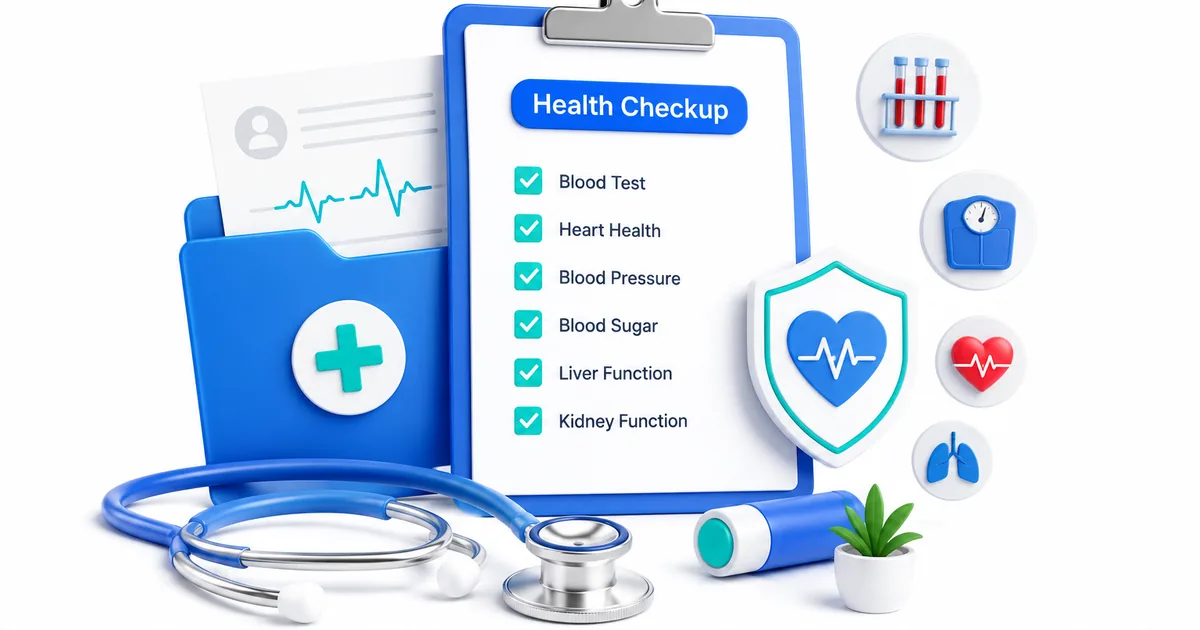
🏥Preparing for a Complete Health Checkup: What to Expect
Planning a full body checkup? Here's what tests are included, how to prepare, and how to understand the results — so you walk in confident and walk out informed.
Scanura Editorial
Health Education Team
Written by Scanura Editorial for health education. This article is not a substitute for advice from a qualified doctor. About our editorial standards
Preparing for a Complete Health Checkup: What to Expect
An annual or periodic health checkup is less about collecting a thick PDF and more about catching silent risks — high sugar, rising blood pressure, anaemia, abnormal lipids, thyroid shifts — while they are still easier to manage. In India, packages range from basic blood panels to “executive” bundles with ECG and ultrasound. Knowing what is inside the carton, how to prepare, and how to read results with your doctor prevents both false panic and false comfort.
This guide covers common test menus, fasting rules, cost bands, and a calm post-report workflow.
Why Checkups Matter Earlier Than People Think
Type 2 diabetes, hypertension, fatty liver, and premature heart disease appear at younger ages in many Indian families. Waiting for dramatic symptoms often means arriving late. A structured checkup helps you:
- Establish baseline numbers you can compare next year
- Spot prediabetes, anaemia, vitamin deficits, and thyroid issues
- Prepare better questions for your family physician
- Coordinate care if you already take long-term medicines
Checkups do not replace symptom-driven visits. New chest pain, neurological deficits, heavy bleeding, or high fever need care now — not the next festive-season package.
What Typically Sits in an Indian Health Package
Core blood work
| Test | Why it is included |
|---|---|
| CBC | Anaemia, infection clues, platelet issues |
| Fasting glucose ± HbA1c | Diabetes / prediabetes |
| Lipid profile | Cardiovascular risk markers |
| TSH (± Free T4) | Thyroid screening |
| LFT | Liver enzymes, bilirubin, albumin |
| KFT / RFT | Creatinine, urea/BUN, electrolytes, eGFR |
| Vitamin D / B12 | Common deficiencies |
| Iron studies | Especially useful when anaemia is suspected |
Often added in mid/premium packages
| Test | Role |
|---|---|
| Urine routine | Infection, protein, sugar clues |
| ECG | Rhythm / ischemic clues (not a full heart clearance) |
| Chest X-ray | Selected packages |
| Abdominal ultrasound | Fatty liver, stones, kidney size — operator-dependent |
| BMI, waist, blood pressure | Essential vitals many people skip at home |
Women’s packages may add TSH emphasis, iron studies, or age-appropriate screening referrals (mammography/Pap are usually separate clinical pathways, not automatic in every blood package).
How to Prepare the Day Before and Morning Of
Fasting and intake
- Many comprehensive packages need 8–12 hours fasting because glucose and lipids are included. Water is usually allowed; confirm tea/coffee rules with the lab.
- Avoid alcohol for 24–48 hours.
- Skip unusually intense gym sessions the evening before if AST/muscle enzymes might be drawn.
- Take chronic medicines as advised — some blood-pressure or thyroid medicines are continued with a sip of water; diabetes medicines may need special instructions to avoid hypoglycaemia while fasting. Ask your doctor, not the courier app FAQ.
Practical checklist
- Carry ID and previous reports (especially HbA1c, lipids, creatinine).
- Wear short sleeves; note any fasting duration on the form.
- List allergies, surgeries, pregnancy/breastfeeding status.
- Mentally note supplements (biotin can interfere with some immunoassays).
After the draw
Eat a balanced breakfast, hydrate, and resume medicines as instructed. Results may arrive in same day to 48 hours depending on whether specialised assays are batched.
Understanding “High” and “Low” Without Spiralling
Labs print reference intervals for a general population. Your personal target may differ (pregnancy, athletic muscle mass, chronic kidney disease, age).
- One borderline value rarely equals a lifelong disease label.
- Trends across years beat a single screenshot.
- Symptoms + numbers beat numbers alone.
- Critical panic values (very high potassium, extremely low glucose, etc.) should trigger phone contact with a clinician — not forum debates.
Educational deep-dives that pair well with checkup PDFs: CBC guide, blood sugar, LFT, KFT, thyroid.
Typical Price Bands in India (Approximate)
| Package style | What you often get | Ballpark |
|---|---|---|
| Basic | CBC, sugar, lipids, urine | roughly ₹500 – ₹1,500 |
| Comprehensive | Adds thyroid, LFT, KFT, vitamins | roughly ₹1,500 – ₹4,000 |
| Executive | Adds ECG / imaging | roughly ₹3,000 – ₹8,000+ |
Prices swing with city, brand discounts, and home collection fees. Cheapest is not always best if sample handling is poor; the most expensive package is not automatically thorough for your risks (for example, a smoker may need different counselling than a vitamin-D-focused panel provides).
After You Receive the Report
- Skim for values marked abnormal, but wait for clinical interpretation.
- Book a review with a physician who can see the whole set — not five different WhatsApp forwards.
- Ask which findings need repeat testing vs lifestyle change vs medicines.
- Store PDFs securely; bring them to every future visit.
- If you use Scanura, upload the file for plain-language explanations and suggested doctor questions — still verify decisions with your clinician.
Smart questions for the follow-up visit
- Which three findings matter most for me this year?
- What targets should I hit for sugar, BP, LDL, and weight?
- Which tests should I repeat in 3 months vs 12 months?
- Do any medicines or supplements interact with these results?
Who May Need Checkups More Often
People with diabetes, hypertension, chronic kidney or liver disease, heart disease, pregnancy planning, strong family history of early heart attacks, or significant obesity often need individualised schedules, not a once-in-five-years approach. Your doctor sets the cadence.
Choosing a Package Without Overbuying
Match the package to your risk profile:
- Family history of early heart disease → ensure lipids + sugar + BP; ask about further cardiac advice separately
- Heavy periods / fatigue → CBC + iron studies matter
- Long-term diabetes risk → HbA1c beats random sugar alone
- Known thyroid disease → include Free T4, not only TSH
Add-ons like tumour-marker panels in asymptomatic young adults are frequently low-value and anxiety-inducing — discuss necessity with a physician rather than ticking every optional box on a lab portal.
Home collection tips
Verify fasting instructions in writing, check sample labelling with your name, and store previous PDFs in one folder. If a value looks wildly inconsistent with last year, ask for a repeat before starting lifelong therapy.
Emotional Side of Reports
It is normal to feel anxious waiting for PDFs. Mitigate spiral risk by: scheduling the doctor review when you book the package, avoiding late-night Google of rare diseases, and bringing one trusted family member to the consult if that helps you remember advice.
Employers sometimes mandate checkups. You still control who sees detailed medical data beyond what HR legitimately requires — read consent forms carefully and prefer sharing summaries when appropriate.
Finally, treat the checkup as the start of a year-long plan: one improved habit (walking, salt awareness, sleep) beats collecting abnormal flags you never act on. Ask your doctor to help you prioritise a single change if the report feels overwhelming.
Educational only. Package menus and reference ranges vary. Scanura does not replace a physician consultation or emergency care.
Medical References
Step-by-Step Guide
- 1
Choose a health checkup package
Select from basic (CBC, sugar, lipids), comprehensive (add thyroid, LFT, KFT, vitamins), or executive (add ECG, X-ray, ultrasound).
- 2
Fast for 8-12 hours
Avoid food and drinks (except water) for 8-12 hours before the test. Avoid alcohol for 24-48 hours.
- 3
Get tested in the morning
Visit the diagnostic centre in the morning when fasting is easier. Carry previous reports if available.
- 4
List medications and supplements
Inform the lab about all medications and supplements you currently take.
- 5
Wait for results
Results typically come in 24-48 hours. Don't Google your results — let your doctor interpret them.
- 6
Upload to scanura
Upload your reports to scanura for instant plain-language explanations in your preferred language.
📬 One health report guide, every week
Normal ranges, what your values mean, and what to ask your doctor — in plain language. Free, unsubscribe anytime.