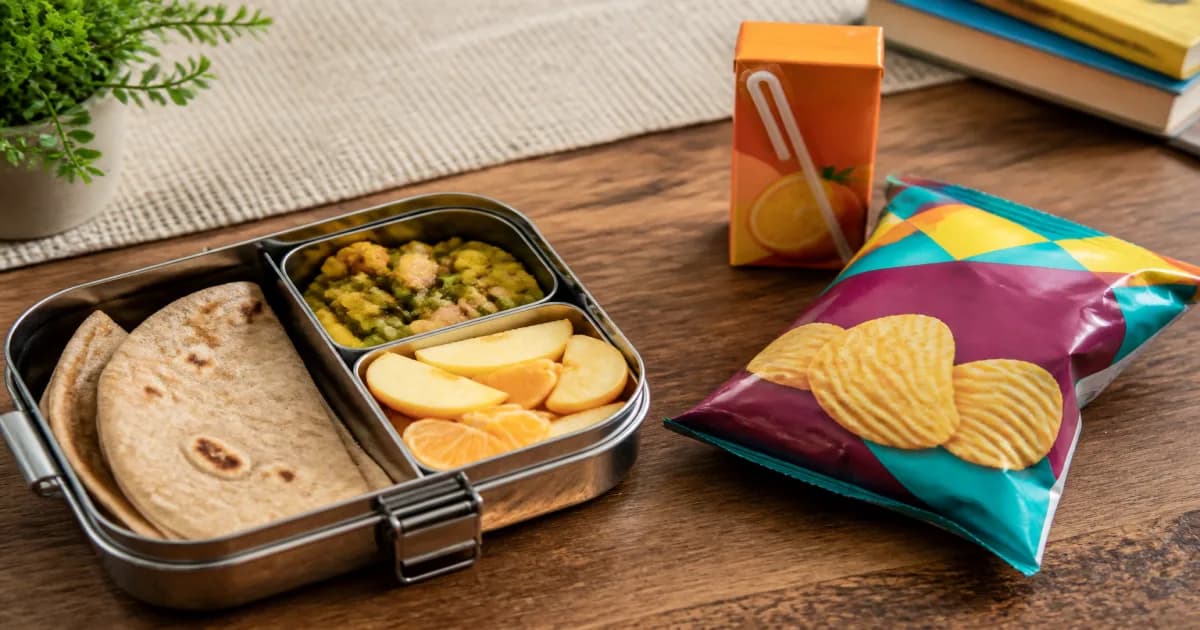
🎒Kids Packaged Snacks in India: HFSS, Colours & Label Tips
Tiffin chips, juice boxes, and cartoon packs sit at the centre of India’s HFSS label debate. Here is how parents can spot sugar, salt and ultra-processed patterns — without a moral panic.
Scanura Editorial
Health Education Team
Written by Scanura Editorial for health education. This article is not a substitute for advice from a qualified doctor. About our editorial standards
Kids Packaged Snacks in India: HFSS, Colours & What Parents Should Check
School tiffin. Birthday return gifts. Quick-commerce “kids combo.” The Supreme Court’s FoPL hearings keep returning to one line: children are the ones filling carts with high-fat, high-sugar, high-salt (HFSS) snacks while labels stay hard to decode. Restaurant colour crackdowns (“Mundhe Effect”) made artificial dyes a dinner-table topic too.
This is a 2026 parent guide to kids’ packaged snacks in India: how to spot HFSS patterns, what ultra-processed means in practice, colour and claim red flags, and which growth or blood checks belong with a paediatrician — not with a snack brand.
Related reading: how to read food labels, reduce sugar, hidden salt & BP, ORS vs electrolyte drinks.
What HFSS Means in Plain Language
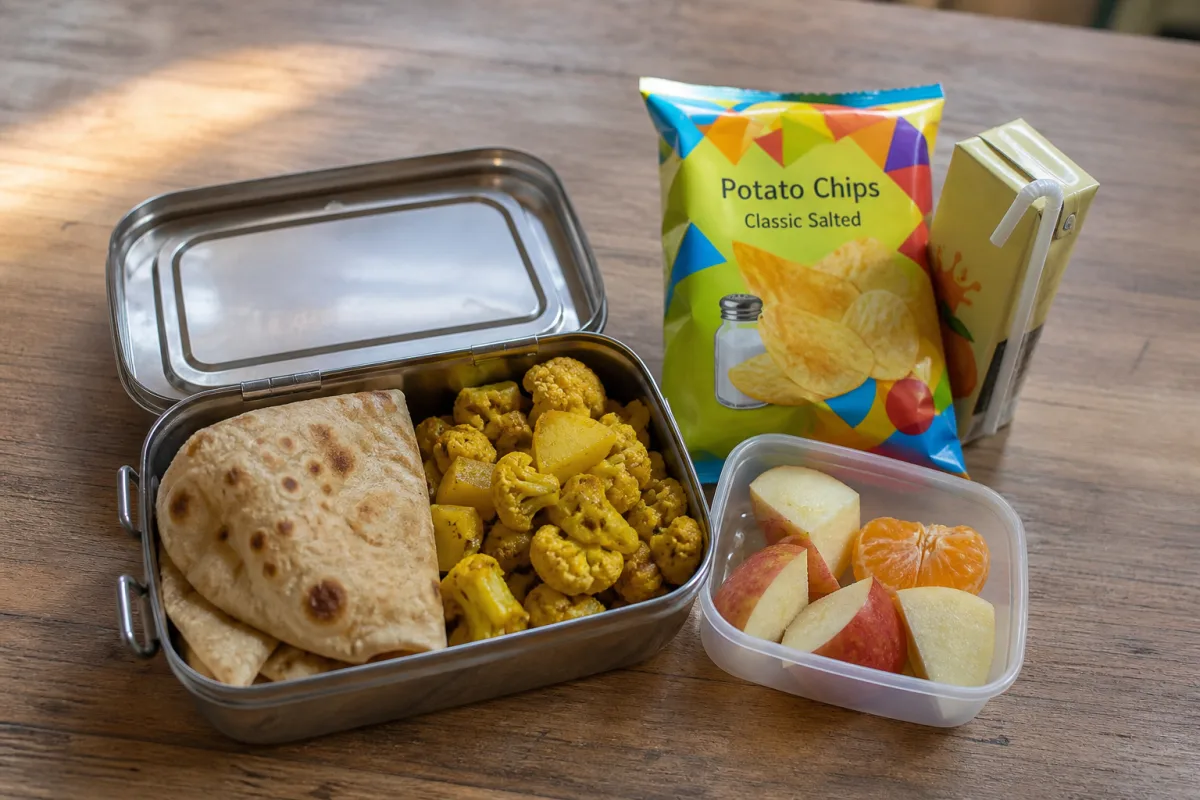
HFSS = foods high in fat, sugar, and/or salt relative to public-health thresholds used in labelling debates. A cartoon mascot does not make HFSS disappear.
| Pattern | Typical kid-cart examples | Parent move |
|---|---|---|
| High sugar | Juice boxes, flavoured milk, cream biscuits, cereal bars | Prefer water + whole fruit; check sugars per serve × serves |
| High salt | Puffs, chips, noodles, cheese crackers | Compare sodium per 100 g |
| High saturated fat | Many cream biscuits, frosted bakery packs | Check fat table + palm oil in ingredients |
| Ultra-processed | Long ingredient lists, colours, flavours, emulsifiers | Not automatically “toxic,” but easy to overeat |
ICMR–NIN guidance: no added sugar for children under 2. For older kids, treats work better as dated events than as daily tiffin filler.
Ultra-Processed Is a Pattern, Not a Moral Panic
Ultra-processed foods are usually industrial formulations — refined starches, added sugars, salts, oils, colours, flavours — designed for long shelf life and repeat purchase. India has seen rapid growth in snack and sweetened-beverage sales. The fix is not shaming one birthday cake; it is stopping daily UPF from becoming the default calorie source.
Colours, Claims & the “Look Healthy” Trap
| Front of pack | Back of pack habit |
|---|---|
| “Made with real fruit” | Often sugar + flavour; fruit % may be tiny |
| “Vitamin fortified” | Fortification ≠ balanced diet |
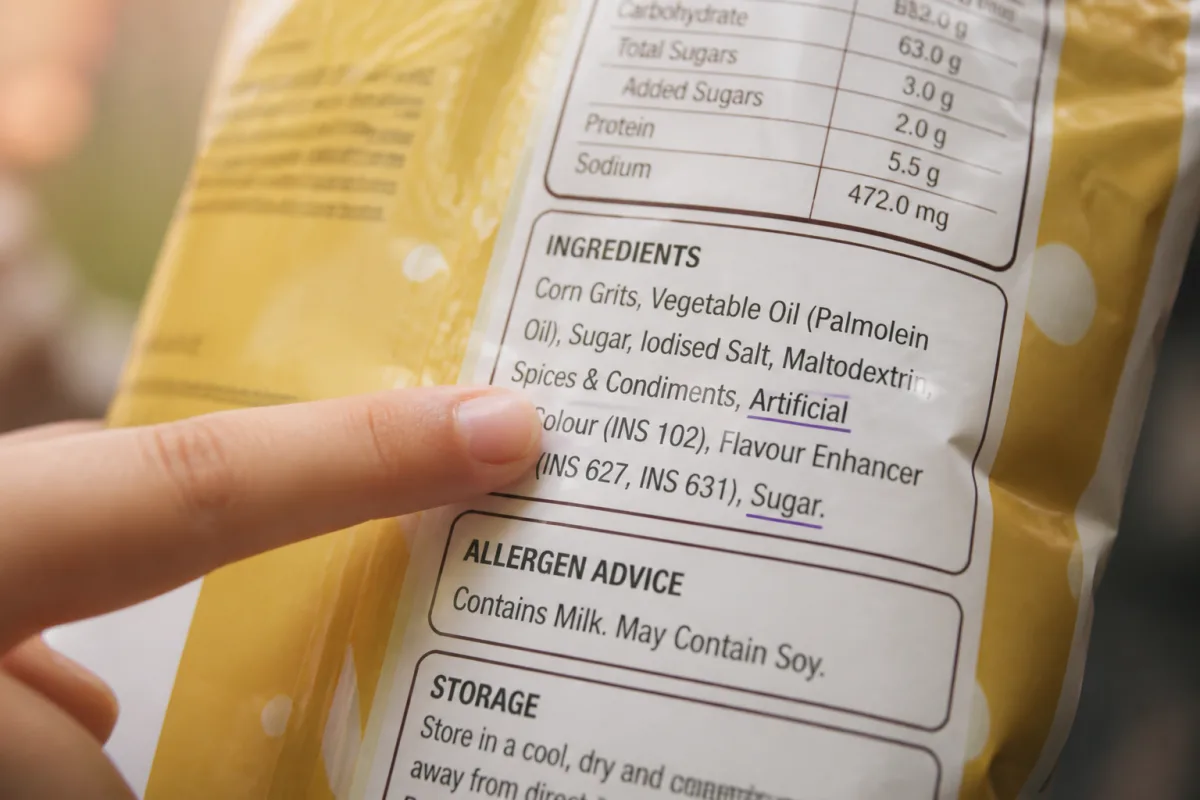
| Bright orange/red snacks | Check permitted colours and amounts; homemade food rarely needs neon |
| “ORS / electrolyte” kids drinks | Do not confuse with medical ORS — see ORS guide |
| Influencer “healthy kids snack” | Apply the claims checklist |
Restaurant and mithai colour crackdowns do not mean every packaged colour is illegal — they mean parents should read, not assume.
A Practical Tiffin Swap Ladder
- Water bottle non-negotiable — juice is a dessert.
- One fresh item daily — fruit, cucumber, carrot sticks.
- Protein/fibre anchor — dal paratha, egg, paneer roll, chana, curd.
- Packaged snack = labelled day, not every day.
- Birthday policy — enjoy the cake; do not double with a sugar drink and cream biscuits.
- Let older kids compare two packs per 100 g — label literacy is a life skill.
When to Talk to a Paediatrician (Not a Snack Brand)
| Concern | What may be discussed |
|---|---|
| Rapid weight gain / obesity markers | Diet pattern, activity, possible glucose/lipids if indicated |
| Slow growth / fatigue | Clinical exam ± iron studies, B12, vitamin D, thyroid as indicated |
| Extreme picky eating + UPF-only pattern | Behaviour + nutrition plan — not a random “immunity” syrup |
| Family early heart disease / diabetes | Long-term habits; adult-style panels are not automatic for every child |
Children are not small adults for lab shopping. Avoid influencer “full body packages” for a five-year-old.
How scanura Helps
If a paediatrician already ordered blood work — CBC, iron, vitamin D, glucose, thyroid — upload the PDF to scanura or create an account. scanura explains values in Hindi or English so parents walk into the follow-up with clearer questions.
It does not replace paediatric advice, school policy, or FSSAI. It does not “approve” snacks.
The blood test checker can range-check a single value from a report you already have.
Key Takeaways
- Kids’ snacks are central to India’s HFSS / front-of-pack debate for a reason — habit starts early.
- Judge packs by sugar, sodium, saturated fat, and ingredient length, not cartoon mascots.
- No added sugar under age 2 (ICMR–NIN direction).
- Juice boxes and “vitamin” drinks are often liquid candy.
- Medical ORS ≠ grocery electrolyte branding.
- Use scanura only for lab PDFs your clinician ordered — food rules stay with parents and paediatric guidance.
Disclaimer: This article is for educational purposes only. Paediatric nutrition and lab decisions are individual. Front-of-pack rules and colour enforcement evolve. scanura does not provide medical diagnosis or child-feeding prescriptions. Always consult a qualified paediatrician for growth, illness, and testing decisions.
Medical References
Step-by-Step Guide
- 1
Judge packs by sugar, sodium, and fat — not mascots
HFSS patterns hide behind cartoons and “vitamin fortified” banners.
- 2
Make water the default drink
Juice boxes are dessert. ICMR–NIN: no added sugar under age 2.
- 3
Put a protein/fibre anchor in the tiffin
Dal, egg, paneer, chana, curd beat a daily puff-and-biscuit pattern.
- 4
Treat packaged snacks as dated, not daily
Birthday cake is fine; daily UPF as the calorie base is the problem.
- 5
Do not confuse grocery electrolytes with medical ORS
Diarrhoea needs WHO-formula ORS guidance — see the ORS article.
- 6
Upload paediatric lab PDFs only when ordered
scanura explains CBC/vitamin/glucose reports; it does not approve snacks.
📬 One health report guide, every week
Normal ranges, what your values mean, and what to ask your doctor — in plain language. Free, unsubscribe anytime.