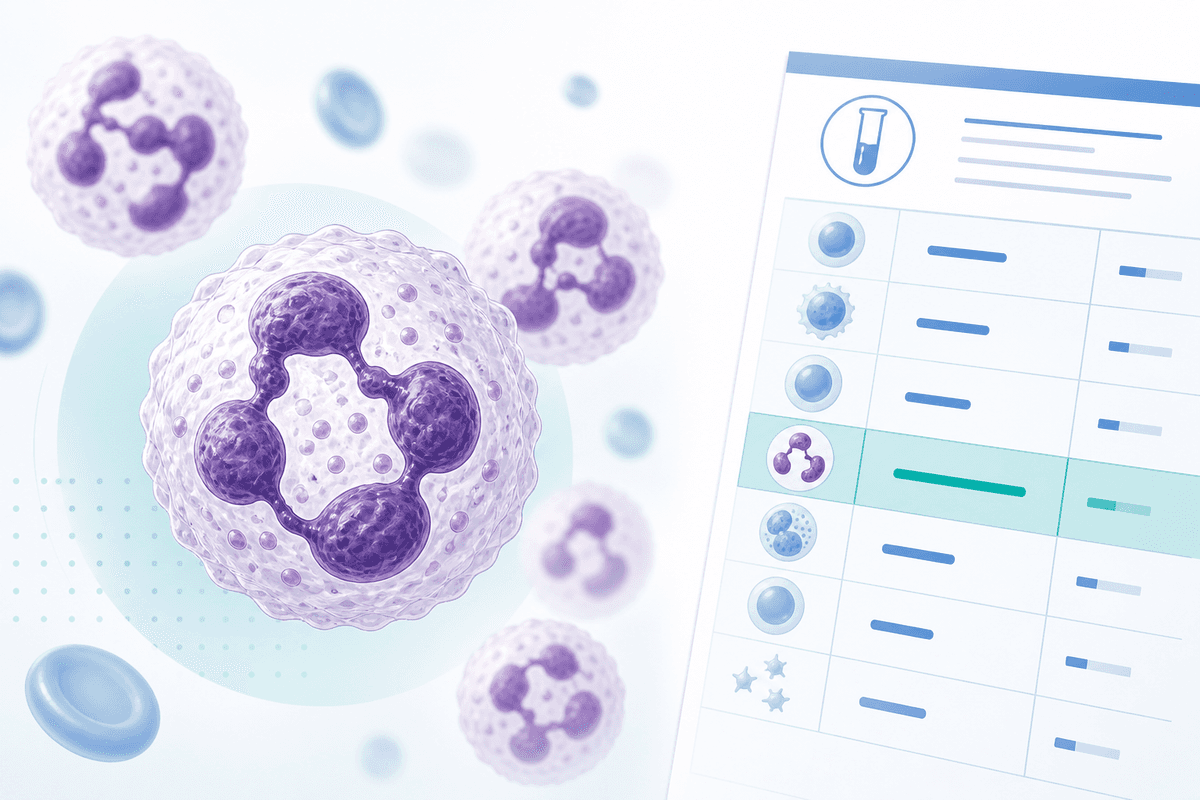
🛡️What Is Neutrophils in Blood Test? High & Low Explained
Neutrophils are your blood’s front-line infection fighters on a CBC report. Here’s what high or low neutrophils mean, normal ranges, ANC vs percentage, and when to see a doctor.
Scanura Editorial
Health Education Team
Written by Scanura Editorial for health education. This article is not a substitute for advice from a qualified doctor. About our editorial standards
What Is Neutrophils in Blood Test? High & Low Levels Explained
Your CBC (Complete Blood Count) report came back with a row labelled neutrophils — or NEUT, Neut %, Absolute Neutrophil Count (ANC) — and a number marked high or low. Friends say "infection hai." Google says "immunity problem" or worse. You just want a plain answer: what are neutrophils in a blood test, and what do high or low values mean?
Neutrophils are the most common type of white blood cell (WBC). They are your body's front-line soldiers against bacterial infection. This guide explains what they do, how Indian labs report them, normal ranges, causes of high and low neutrophils, when to worry, and how to read the result with the rest of your CBC. For the full blood count panel, see our CBC report guide.
Quick Answer
| Finding | Plain meaning |
|---|---|
| Neutrophils | A type of WBC that fights bacteria and acute inflammation |
| High neutrophils (neutrophilia) | Often infection, stress, steroids, smoking, or inflammation |
| Low neutrophils (neutropenia) | Can mean viral illness, medicines, bone-marrow stress, or nutritional issues |
| Most important number | Absolute neutrophil count (ANC) — not percentage alone |
A single mild change without fever or other symptoms is often temporary. Trend + symptoms + total WBC matter more than one isolated percentage.
What Are Neutrophils?
Your white blood cells include several types. On a differential count you typically see:
| Cell type | Main job |
|---|---|
| Neutrophils | Rapid response to bacterial infection and tissue injury |
| Lymphocytes | Viral defence and adaptive immunity |
| Monocytes | Cleanup and chronic inflammation |
| Eosinophils | Allergy and some parasites |
| Basophils | Allergy / histamine responses |
Neutrophils make up roughly 40–70% of circulating WBCs in healthy adults. They are made in the bone marrow, circulate briefly in blood, then move into tissues when infection or injury signals appear.
Think of them as a rapid-response team: they arrive first, engulf bacteria (phagocytosis), and release chemical signals that recruit more help.
How Neutrophils Appear on Your Report
Indian labs may print neutrophils in different ways:
| Label | What it means |
|---|---|
| Neutrophils % / Neut % / Polymorphs / PMN | Percentage of total WBC that are neutrophils |
| Absolute Neutrophil Count (ANC) | Actual number of neutrophils per microlitre (or ×10⁹/L) |
| Segmented neutrophils | Mature neutrophils (most of the circulating pool) |
| Bands / stab cells | Immature neutrophils — rise when marrow is pushing out new cells fast (e.g. bacterial infection) |
Percentage vs absolute count: If total WBC is very low or very high, the percentage alone can mislead. Doctors prefer ANC.
Simple ANC estimate (when only % is given):
ANC ≈ Total WBC × (Neutrophil % ÷ 100)
Example: WBC 8,000/µL and neutrophils 60% → ANC ≈ 4,800/µL.
Neutrophil Normal Range
Always use the reference interval printed on your lab slip. Typical adult examples:
| Measure | Typical adult range |
|---|---|
| Neutrophil % | About 40 – 70% (some labs 40–75%) |
| ANC | About 1,500 – 8,000 /µL (1.5 – 8.0 × 10⁹/L) |
Neutropenia severity (ANC)
| ANC | Category |
|---|---|
| 1,000 – 1,500 /µL | Mild neutropenia |
| 500 – 1,000 /µL | Moderate neutropenia |
| Below 500 /µL | Severe neutropenia — higher infection risk |
Children, pregnancy, ethnicity, and lab analysers can shift "normal." Some people of African or Middle Eastern ancestry have lower baseline neutrophil counts without disease (ethnic neutropenia) — interpretation still needs a clinician.
High Neutrophils (Neutrophilia): Common Causes
High neutrophils usually mean the body is responding to something. Common causes in India:
1. Bacterial infections
Pneumonia, urinary tract infection, skin abscess, appendicitis, typhoid complications, dental infection — classic neutrophilia, often with raised total WBC and sometimes "left shift" (more bands).
2. Acute stress and inflammation
Trauma, surgery, burns, heart attack, gout flare, and severe inflammatory illness can push neutrophils up quickly.
3. Steroids and other medicines
Corticosteroids (prednisolone, dexamethasone) commonly raise neutrophil counts by releasing them from vessel walls into circulating blood — even without infection.
4. Smoking
Chronic smokers often have mildly higher neutrophil and WBC counts.
5. Physical or emotional stress
Intense exercise, seizures, panic, or labour can cause a temporary rise.
6. Other causes
- Tissue necrosis
- Some cancers and myeloproliferative disorders (less common; other CBC clues usually present)
- Diabetic ketoacidosis and other metabolic crises
- Recovery phase after marrow suppression
| Pattern | What doctors often think |
|---|---|
| High neutrophils + fever + local symptoms | Look for bacterial infection |
| High neutrophils on steroids, no fever | Medicine effect until proven otherwise |
| Very high WBC with immature forms | Needs urgent haematology review |
Low Neutrophils (Neutropenia): Common Causes
1. Viral infections
Dengue, influenza, COVID-19, viral hepatitis, and many "viral fevers" can temporarily lower neutrophils or total WBC. See our dengue blood test guide when monsoon fever and platelets are also abnormal.
2. Medicines
Chemotherapy is the classic cause. Other drugs that can lower neutrophils include some antibiotics, antithyroid drugs, immunosuppressants, and rarely other prescriptions — never stop a medicine without medical advice.
3. Nutritional deficiencies
Severe vitamin B12 or folate deficiency, and sometimes copper deficiency, can affect white-cell production. Related reading: Vitamin B12 deficiency guide.
4. Autoimmune and bone-marrow problems
Autoimmune destruction, aplastic anaemia, leukaemia, and marrow infiltration are less common but important when neutropenia is severe, persistent, or accompanied by anaemia and low platelets.
5. Hypersplenism
An enlarged spleen can sequester neutrophils.
6. Post-infection recovery
Counts often rebound after the illness settles — repeating the CBC in context is useful.
Neutrophils vs Other WBC Types (Quick Comparison)
| If this is high… | Think about… |
|---|---|
| Neutrophils | Bacterial infection, steroids, stress, smoking |
| Lymphocytes | Viral illness, chronic inflammation, some leukaemias |
| Eosinophils | Allergy, asthma, parasites, some drug reactions |
| Monocytes | Recovery from infection, TB, chronic inflammation |
Doctors read the whole differential, not one cell in isolation. High neutrophils with very low lymphocytes tells a different story from isolated mild neutrophilia in a well smoker.
Symptoms That May Accompany Abnormal Neutrophils
Neutrophil numbers themselves do not cause symptoms — the underlying condition does.
| Situation | Possible clues |
|---|---|
| High neutrophils + infection | Fever, chills, localised pain, cough, burning urination, wound redness |
| Severe neutropenia | Recurrent infections, mouth ulcers, fever without obvious source |
| Medicine-related | Recent steroid course, chemo, new antibiotic or antithyroid drug |
| Viral pattern | Fever, body ache, falling platelets (e.g. dengue season) |
When to Worry
Seek prompt medical care if you have:
- Fever with ANC below 1,000 /µL (especially below 500)
- Rapidly rising WBC with severe illness
- Neutropenia plus low haemoglobin and low platelets together
- Mouth sores, unexplained bruising, night sweats, or marked weight loss with abnormal counts
- Neutrophil changes after starting a new high-risk medicine
Mild neutrophilia after a known infection that is improving, or mild changes on a routine checkup in someone who feels well, are often monitored with a repeat CBC rather than panic testing.
What to Do If Your Neutrophils Are Abnormal
- Read ANC and total WBC, not percentage alone.
- Match with symptoms — fever, cough, UTI symptoms, recent steroids?
- List medicines and recent illnesses for your doctor.
- Repeat if borderline — many viral-related dips recover in days to weeks.
- Do not self-start antibiotics based only on a high neutrophil %.
- Upload the full CBC to scanura for a plain-language walkthrough before your appointment.
Related guides: CBC explained · CRP and ESR · MCV, MCH, MCHC
Key Takeaways
- Neutrophils are the main bacterial-fighting white blood cells on your CBC differential.
- Labs report % and/or absolute neutrophil count (ANC) — ANC is more meaningful.
- Adult neutrophil % is often ~40–70%; ANC typically ~1,500–8,000 /µL (use your lab's range).
- High neutrophils commonly reflect infection, inflammation, steroids, stress, or smoking — not automatically "blood cancer."
- Low neutrophils can follow viral illness, medicines, nutrition gaps, or marrow problems.
- Fever + severe neutropenia needs urgent care.
- Interpret neutrophils with the full CBC, symptoms, and clinical history.
- Use scanura to decode the report in plain language, then confirm the plan with your doctor.
Disclaimer: This article is for educational purposes only and is not a diagnosis or treatment plan. Neutrophil reference ranges vary by laboratory, age, and clinical context. Always discuss your CBC results with a qualified doctor — especially if you have fever, severe neutropenia, or multiple abnormal blood counts.
Medical References
Step-by-Step Guide
- 1
Find neutrophils on your CBC
Look for Neut %, NEUT, polymorphs/PMN, or Absolute Neutrophil Count (ANC) on the differential section of your complete blood count.
- 2
Prefer ANC over percentage alone
Multiply total WBC by neutrophil percentage (as a decimal) if ANC is not printed. Absolute count is more meaningful when WBC is very high or low.
- 3
Compare with your lab’s range
Adult neutrophil % is often about 40–70%. ANC is commonly about 1,500–8,000/µL — always use the reference on your report.
- 4
Match the result with symptoms
Fever, local infection signs, recent steroids, viral illness, or new medicines help explain high or low neutrophils.
- 5
Repeat if borderline and you feel well
Mild temporary changes after infection or stress are common. Your doctor may repeat the CBC before extensive testing.
- 6
Seek care for red flags
Fever with severe neutropenia (especially ANC below 500), or abnormal neutrophils with anaemia and low platelets, needs prompt medical review.
📬 One health report guide, every week
Normal ranges, what your values mean, and what to ask your doctor — in plain language. Free, unsubscribe anytime.