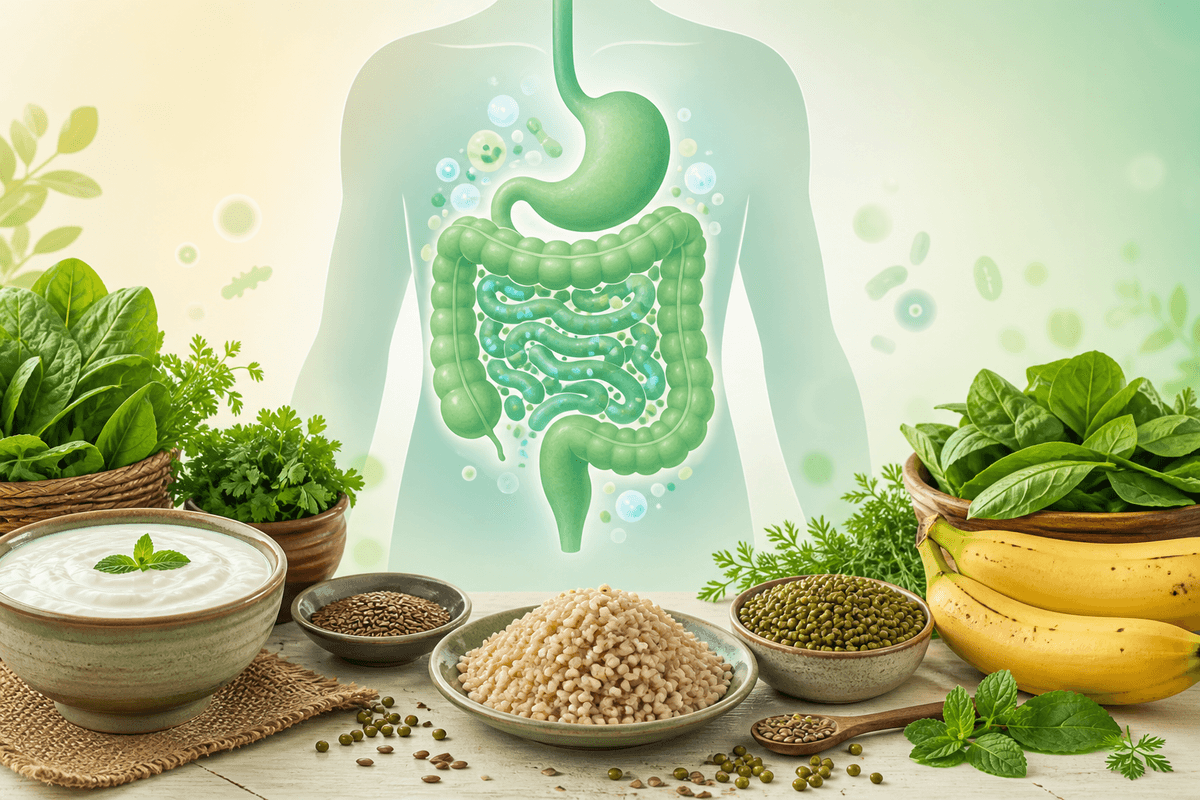
🦠How to Improve Gut Health: Diet, Habits & Labs That Matter
Bloating, irregular stools, and post-meal fatigue often start in the gut. Here’s a practical 2026 guide to improving gut health with Indian foods, fibre, fermented dairy, sleep, and when to get tested.
Scanura Editorial
Health Education Team
Written by Scanura Editorial for health education. This article is not a substitute for advice from a qualified doctor. About our editorial standards
How to Improve Gut Health: Diet, Habits & Labs That Matter
Bloating after every meal. Constipation that comes and goes. Sudden urgency before a meeting. Or that vague "pet heavy" feeling Indians know too well after a late dinner and three cups of sugary chai.
Gut health is not a wellness buzzword — it is the daily work of trillions of microbes, gut lining, nerves, and digestion enzymes that influence immunity, mood, energy, and even blood sugar. You do not need a fridge full of imported "gut shots" to start improving it. Most gains come from food patterns, fibre, fermented dairy, sleep, movement, and knowing when symptoms need a doctor — not another Google spiral.
This guide covers what a healthy gut actually does, practical Indian-friendly steps to improve gut health, probiotics vs prebiotics, habits that quietly damage the microbiome, red-flag symptoms, and lab tests worth discussing. Related reading: stool occult blood screening and managing blood sugar naturally.
Quick Answer: What Actually Improves Gut Health?
| Do more of this | Why it helps |
|---|---|
| Fibre from dals, millets, veggies, fruit | Feeds beneficial bacteria; improves stool form |
| Fermented foods (dahi, chaas, idli/dosa) | Adds live cultures and metabolic by-products |
| Diverse plant foods | Different fibres → more diverse microbiome |
| Regular meal timing + overnight rest | Supports gut motility and circadian rhythm |
| Sleep, walking, stress control | Gut–brain axis: nerves and hormones link mood and digestion |
| Judicious antibiotics / PPIs | Protects microbiome and nutrient absorption |
| Cut back on this | Why it hurts |
|---|---|
| Ultra-processed snacks, maida, sugary drinks | Low fibre, feeds less helpful microbes |
| Chronic late heavy dinners | Reflux, poor overnight recovery |
| Unnecessary antibiotics | Can wipe out diversity for weeks–months |
| Ignoring red flags | Misses infection, IBD, coeliac, cancer risk |
What Is "Gut Health," Really?
Your gut is not only a food tube. It includes:
- Digestion and absorption — breaking food into nutrients the body can use
- The microbiome — bacteria, fungi, and other microbes living mainly in the large intestine
- The gut barrier — a lining that lets nutrients in and keeps many toxins/pathogens out
- The enteric nervous system — a dense nerve network nicknamed the "second brain"
- Immune tissue — a large share of immune activity sits in and around the gut
When this system is balanced, stools are usually soft and formed, gas is manageable, energy after meals is steadier, and infections are handled without constant gut drama. When it is off, you may see bloating, constipation, diarrhoea, reflux, food sensitivities, skin flares, or fatigue — though not every symptom with "gut" in the Google search is a microbiome crisis. Thyroid disease, anaemia, medicines, anxiety, and infections can look similar.
Signs Your Gut May Need Attention
Common (often lifestyle-related):
- Frequent bloating or excessive gas after meals
- Constipation (hard stools, straining, fewer than ~3 bowel movements/week for some people)
- Loose stools or urgency without clear food poisoning
- Heartburn / acidity that keeps returning
- Feeling "foggy" or drained after large carb-heavy meals
Red flags — see a doctor promptly:
- Blood in stool (visible or occult)
- Unexplained weight loss
- Persistent vomiting or inability to keep food down
- Severe abdominal pain, fever, or night sweats
- Black, tarry stools or pale clay-coloured stools
- Symptoms waking you at night, or new symptoms after age 50
- Family history of colon cancer / IBD with changing bowel habits
Blood in stool needs evaluation — start with understanding stool occult blood testing, then follow your clinician’s plan.
1. Eat More Fibre — But Increase It Slowly
Fibre is the single most reliable dietary lever for gut health. Beneficial bacteria ferment certain fibres into short-chain fatty acids (like butyrate) that nourish the gut lining and support metabolic health.
Daily target
Most adults do well aiming for roughly 25–30 g fibre/day (exact needs vary). Indian plates can hit this easily if white rice, maida, and fried snacks are not the entire day.
| Food | Practical tip |
|---|---|
| Dals & legumes | Moong, masoor, chana, rajma — soaked and cooked well |
| Millets | Ragi, jowar, bajra, foxtail — swap for some white rice |
| Vegetables | Sabzi with peel where edible; salads if digestion allows |
| Fruits | Apple/guava/pear with peel; banana, papaya for gentler fibre |
| Seeds | 1 tsp flax or chia (soaked) if tolerated |
| Whole grains | Atta over maida; brown rice or mixed grain rice in moderation |
Avoid the classic fibre mistake
Jumping from 10 g to 40 g overnight causes gas and cramps. Increase over 2–3 weeks, and drink more water. People with active IBD flares, strictures, or certain post-surgical guts need personalised advice — do not force high fibre during acute illness.
2. Use Fermented Foods You Already Know
You do not need expensive imported kefir first. Traditional Indian fermentation is already gut-friendly:
| Food | How to use |
|---|---|
| Homemade dahi | ½–1 bowl daily if dairy is tolerated |
| Chaas / buttermilk | After meals in hot weather; less sugar |
| Idli / dosa batter | Fermented batter meals a few times a week |
| Kanji / pickles | Small amounts; watch salt and spice tolerance |
| Dhokla / fermented snacks | Better than deep-fried maida when steamed |
Probiotic supplements can help in specific situations (antibiotic-associated diarrhoea, some IBS cases) — but strain, dose, and indication matter. Food-first is safer for most healthy people. If you buy a capsule, choose products with clear strain names (e.g. Lactobacillus, Bifidobacterium) and discuss with a doctor if you are immunocompromised.
Prebiotics vs probiotics (plain language)
| Term | Meaning | Examples |
|---|---|---|
| Probiotics | Live beneficial microbes | Dahi cultures, some supplements |
| Prebiotics | Fibres that feed good microbes | Onion, garlic, banana, oats, dals, resistant starch in cooled rice/potato |
| Synbiotics | Combination of both | Fermented food + fibre-rich meal |
Cooling cooked rice or potatoes and reheating can increase resistant starch — a prebiotic-like fuel for gut bacteria — useful if portions stay controlled for blood sugar.
3. Build a Diverse Plant Plate (Not Perfection)
Microbiome research repeatedly links dietary diversity — especially plant diversity — with richer microbial communities. You do not need 30 exotic superfoods. Rotate:
- Different dals through the week
- Seasonal sabzi (lauki, bhindi, tori, palak, cabbage, beans)
- One millet day + rice/roti days mixed
- Fruits you actually eat (consistency beats Instagram bowls)
Ultra-processed "gut health" cookies with little fibre and lots of sugar rarely help.
4. Fix Meal Timing and Late-Night Eating
The gut has a circadian rhythm. Late heavy dinners, constant grazing, and sleep-disrupting reflux all stress digestion.
Practical pattern many people tolerate:
- Finish the last large meal 2–3 hours before bed (longer if reflux is bad)
- Keep dinner lighter than lunch when possible
- Avoid lying down immediately after eating
- Sip water through the day; do not slam litres only at night
If you are exploring shorter eating windows for metabolic or cognitive reasons, see our guide on time-restricted eating and brain health — and clear it with a doctor if you have diabetes or take glucose-lowering medicines.
5. Move Daily — Especially After Meals
Gentle movement stimulates gut motility. A 10–15 minute walk after lunch and dinner often reduces bloating and helps blood sugar — a dual win if you also watch glucose. For sugar-specific habits, see managing blood sugar naturally.
Yoga poses that many find soothing (if joints allow): gentle twists, child’s pose, legs-up-the-wall. Avoid aggressive core work during an acute gut flare.
6. Sleep and Stress: The Gut–Brain Axis
Anxiety and poor sleep amplify IBS-type symptoms through the gut–brain axis. Cortisol, altered motility, and sensitivity to normal gas/stretch can make ordinary meals feel dramatic.
Helpful basics:
- Sleep 7–8 hours on a consistent schedule
- Limit caffeine after mid-afternoon if it worsens anxiety or reflux
- 5 minutes of slow breathing before meals if you eat in a rush
- Treat chronic stress as a medical-lifestyle issue, not a character flaw
Medicines for anxiety/depression can also change bowel habits — tell your doctor if stools shifted after a new prescription.
7. Protect Your Microbiome From Unnecessary Damage
Antibiotics
Life-saving when needed — disruptive when casual. Only take courses prescribed for a clear indication. If you need antibiotics, ask about food strategies (dahi during/after, fibre) and whether a specific probiotic is useful for your situation.
Acid suppressants (PPIs)
Long-term PPI use can alter gut flora and affect absorption of nutrients such as magnesium, calcium, and B12. Do not stop prescribed medicines abruptly — review need and dose with your doctor. If fatigue or neuropathy symptoms appear on long-term PPIs, discuss Vitamin B12 testing.
Alcohol, smoking, and excess sugar
All harm barrier function or microbial balance over time. Cutting evening drinks and cigarette exposure often improves reflux and stool regularity within weeks.
Painkillers
Frequent NSAIDs can irritate the stomach lining. Use the lowest effective dose for the shortest time, with medical advice.
An India-Friendly One-Day Gut Pattern (Example)
This is not a medical diet — just a template to adapt:
| Time | Idea |
|---|---|
| Morning | Warm water; breakfast of vegetable oats / millet porridge / 2 idlis + sambar |
| Mid-morning | Fruit (papaya/guava/apple) or buttermilk |
| Lunch | 1–2 rotis (atta) or millet + dal + sabzi + salad + dahi |
| Evening | Chaas or roasted chana; short walk |
| Dinner | Lighter: khichdi with vegetables, or grilled/steamed protein + sabzi; finish early |
| Throughout | Water; limit sugary packaged drinks |
Adjust for diabetes, kidney disease, food allergies, or religious fasting under clinician/dietitian guidance.
Foods That Often Trigger Symptoms (Individual)
Common triggers — not universal villains:
- Very spicy oily restaurant meals
- Excess tea/coffee on empty stomach
- Artificial sweeteners in some people
- Large portions of onion/garlic/crucifers during IBS flares (FODMAP-sensitive)
- Lactose (milk) if intolerant — dahi/chaas sometimes better tolerated
- Gluten — only restrict long-term if coeliac or wheat sensitivity is diagnosed
Elimination diets should be time-limited and supervised so you do not create nutrient gaps.
Lab Tests That Can Clarify Persistent Gut Issues
Lifestyle first is right for mild, intermittent symptoms. If problems last weeks, worsen, or include red flags, ask your doctor about:
| Test | Why it may be ordered |
|---|---|
| Stool routine / O&P | Infection, parasites (common in India) |
| Stool occult blood | Hidden bleeding — see guide |
| Faecal calprotectin | Gut inflammation — helps separate IBS vs IBD patterns |
| CBC | Anaemia, infection clues |
| CRP / ESR | Systemic inflammation context — CRP & ESR explained |
| TSH | Hypothyroidism can slow the gut — thyroid guide |
| Vitamin B12 / D | Deficiency linked to diet, PPIs, absorption issues |
| Blood sugar / HbA1c | Metabolic health affects the gut–metabolism loop |
| H. pylori testing | When ulcer-type pain / chronic acidity suspected |
| Coeliac serology | If malabsorption, anaemia, or strong suspicion |
Upload reports to scanura for plain-language explanations in English and Hindi before your appointment — then confirm the plan with your doctor.
Myths About Gut Health
| Myth | Reality |
|---|---|
| "I need a cleanse / detox juice" | Your liver and kidneys already detox. Extreme cleanses can harm electrolytes. |
| "All bacteria are bad" | Most gut microbes are helpful or neutral when balanced. |
| "Probiotic pills fix everything" | Strain-specific; food + fibre + habits matter more for most people. |
| "Zero gas means perfect gut" | Some gas is normal fermentation — a sign fibre is being used. |
| "Gluten-free is healthier for everyone" | Only clearly indicated for coeliac / diagnosed sensitivity. |
| "Constipation always means toxins in blood" | Uncomfortable, yes — mystical "toxin blood" claims, no. See a doctor for chronic change. |
7-Day Starter Plan
- Day 1–2: Add one fermented serving (dahi/chaas) and one extra vegetable portion.
- Day 3–4: Swap one refined grain meal for millet or extra dal; walk 10 minutes after dinner.
- Day 5: Finish dinner earlier; note sleep and morning stool form.
- Day 6: Drink water steadily; cut one sugary packaged snack.
- Day 7: Review symptoms. If red flags or no improvement over 2–4 weeks of consistent habits, book a medical review and relevant tests.
Track simply: stool form (Bristol chart if useful), bloating (0–10), energy, and sleep — not obsessive calorie apps.
When to See a Gastroenterologist
- Red-flag symptoms listed above
- Symptoms lasting >4–6 weeks despite diet/lifestyle changes
- Suspected IBD, coeliac disease, chronic pancreatitis, or biliary disease
- Unexplained iron deficiency anaemia
- Need for colonoscopy based on age/family history/symptoms
Bring a medicine list, prior reports, and a 1-week food–symptom note. That saves time and improves diagnosis quality.
Key Takeaways
- Gut health = digestion + microbiome + barrier + nerves + immunity — not a single magic supplement.
- Fibre (25–30 g/day) from dals, millets, vegetables, and fruit is the foundation — increase slowly with water.
- Traditional fermented foods (dahi, chaas, idli/dosa) beat random "gut product" shopping for most people.
- Meal timing, walking after meals, sleep, and stress control strongly affect symptoms via the gut–brain axis.
- Use antibiotics and long-term PPIs thoughtfully; protect B12 and other nutrients when relevant.
- Red flags (blood, weight loss, severe pain, black stools) need doctors — not detox teas.
- Persistent symptoms deserve targeted labs (stool tests, calprotectin, thyroid, B12, occult blood) interpreted with a clinician.
- Decode reports with scanura, then confirm next steps with your doctor.
Disclaimer: This article is for educational purposes only and is not personalised medical advice, diagnosis, or a treatment plan. Gut symptoms have many causes. Consult a qualified doctor or gastroenterologist for persistent, severe, or red-flag symptoms, and before starting supplements or restrictive diets.
Medical References
Step-by-Step Guide
- 1
Increase fibre gradually
Aim for 25–30 g fibre/day from dals, millets, vegetables, fruits with peel, and whole grains. Increase slowly and drink more water to avoid gas.
- 2
Add fermented foods daily
Include homemade dahi, chaas, or idli/dosa batter regularly. These support beneficial gut bacteria better than random supplement hopping.
- 3
Cut ultra-processed food and late heavy dinners
Limit maida snacks, sugary drinks, and very late heavy meals. Give your gut a consistent overnight rest.
- 4
Move, sleep, and manage stress
Walk after meals, sleep 7–8 hours, and use simple breathing or yoga — stress and poor sleep directly worsen IBS-type symptoms.
- 5
Use antibiotics and PPIs carefully
Take antibiotics only when prescribed. Long-term acid suppressants can affect microbiome and nutrient absorption — review with your doctor.
- 6
Get tested if symptoms persist
Ask about stool tests, calprotectin, CBC, thyroid, B12, or occult blood if you have red flags. Upload reports to scanura for plain-language explanations.
📬 One health report guide, every week
Normal ranges, what your values mean, and what to ask your doctor — in plain language. Free, unsubscribe anytime.