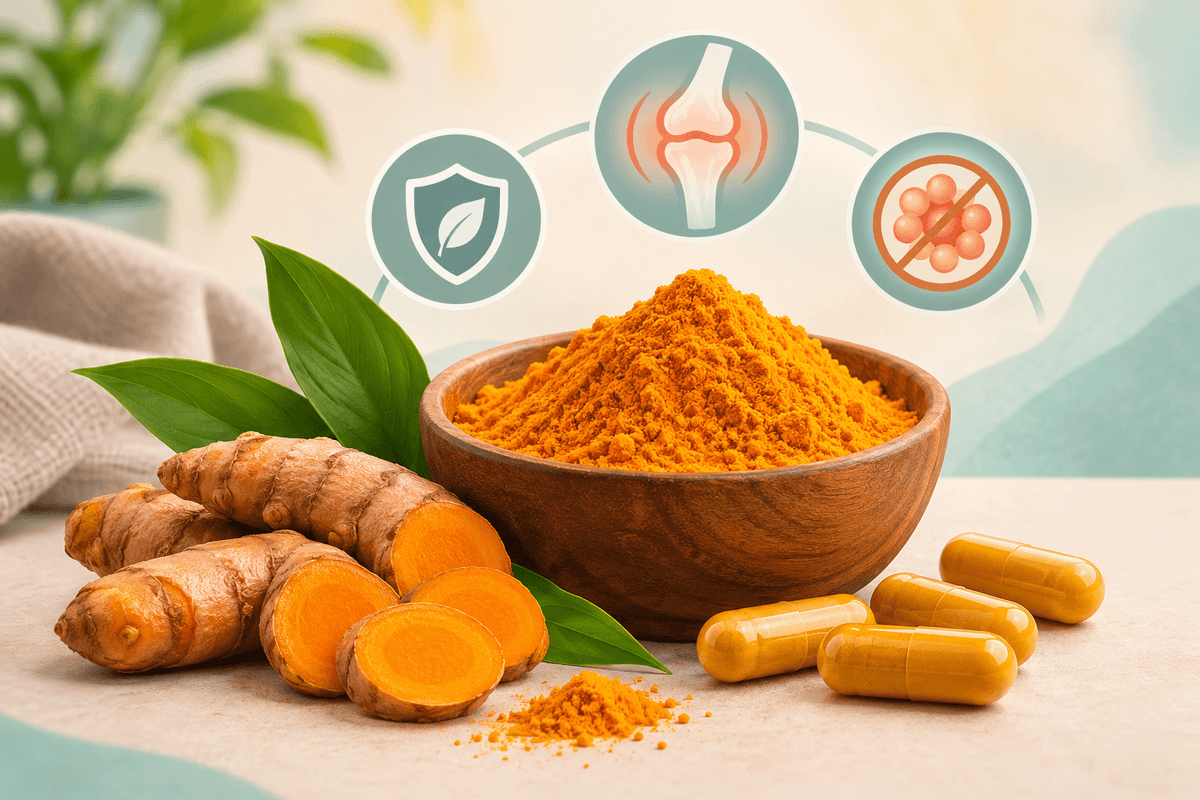
🌿Turmeric and Curcumin: Anti-Inflammatory Benefits and Limits
Turmeric's curcumin is widely marketed for inflammation and joint pain. Learn what clinical trials and NCCIH say, where evidence is strong, and safety cautions.
Scanura Editorial
Health Education Team
Written by Scanura Editorial for health education. This article is not a substitute for advice from a qualified doctor. About our editorial standards
Turmeric and Curcumin: Anti-Inflammatory Benefits and Limits
Turmeric is a kitchen staple in India, and its active compound curcumin is sold as a supplement for inflammation, joint pain and "immunity." The evidence is mixed: small trials show modest benefits, but curcumin is poorly absorbed and many studies are small or industry-funded. This guide explains what NCCIH and clinical trials actually show.
It is educational, not medical advice.
Direct Answer: Does Turmeric Reduce Inflammation?
Possibly, modestly, in some people — but it is not a proven treatment. Curcumin has anti-inflammatory activity in laboratory studies, and some clinical trials report small improvements in osteoarthritis pain and inflammatory markers. However, NCCIH notes that curcumin is difficult to study because it is unstable and poorly absorbed, and the evidence is not strong enough to recommend it as a proven anti-inflammatory therapy.
Think of turmeric as a food spice with possible mild benefits, not a medicine.
What the Evidence Shows
| Claim | Evidence status |
|---|---|
| Osteoarthritis joint pain | Moderate — small trials show modest pain reduction |
| Inflammatory markers (CRP, etc.) | Mixed — some trials show small reductions |
| General "immunity" or detox | Weak — no solid clinical proof |
| Cancer prevention / treatment | Weak — lab data only, not proven in people |
| Brain health / Alzheimer's | Weak — early research, not established |
Absorption Is the Big Problem
Curcumin is poorly absorbed from the gut and quickly eliminated. Strategies that may improve absorption:
- Black pepper (piperine) — can increase absorption substantially
- Fat with the meal — curcumin is fat-soluble
- Phytosome or nanoparticle formulations — marketed as higher absorption, but cost more and have less long-term data
Cooking with turmeric in oil (as in Indian tempering) is a practical, food-based way to consume it.
Safety and Cautions
Turmeric as a cooking spice is safe for most people. Supplement doses are another matter:
- Gut upset — nausea or diarrhea at high doses
- Gallbladder problems — may worsen gallstones or bile-duct obstruction
- Blood thinners — may increase bleeding risk with warfarin, aspirin, clopidogrel
- Diabetes medicines — may lower blood sugar too much when combined
- Acid-reflux drugs — possible interaction with PPIs
- Iron absorption — high doses may reduce iron absorption
High doses of curcumin supplements have been linked to rare liver injury; stop and seek care if you develop jaundice, dark urine or abdominal pain.
Key Takeaways
- Turmeric as a cooking spice is safe and part of a healthy diet.
- Curcumin may modestly reduce osteoarthritis pain — evidence is small and mixed.
- Curcumin is poorly absorbed; black pepper and fat help.
- It is not a proven anti-inflammatory medicine or cancer treatment.
- High-dose supplements can interact with blood thinners and diabetes medicines.
- Rare liver injury has been reported — stop and seek care for jaundice or dark urine.
- Talk to a clinician before taking concentrated curcumin supplements.
Sources and Further Reading
- NCCIH — Turmeric
- PubMed — Curcumin supplementation and human disease: scoping review
- PubMed — Oral turmeric/curcumin effects on inflammatory markers
This article is for educational purposes only. Scanura does not provide medical diagnosis or treatment advice. Always consult your doctor before starting supplements.
Medical References
Step-by-Step Guide
- 1
Use turmeric as a food spice first
Cooking with turmeric is safe for most people and part of a balanced Indian diet.
- 2
Pair with black pepper and fat
Piperine and dietary fat improve curcumin absorption if you use supplements.
- 3
Choose standardized curcuminoids
Look for supplements that state curcuminoid content and third-party testing.
- 4
Watch dose and duration
High doses or long-term use can cause gut upset; follow label or clinician advice.
- 5
Get medical advice if on medicines
Curcumin can interact with blood thinners, diabetes medicines and acid-reflux drugs.
📬 One health report guide, every week
Normal ranges, what your values mean, and what to ask your doctor — in plain language. Free, unsubscribe anytime.