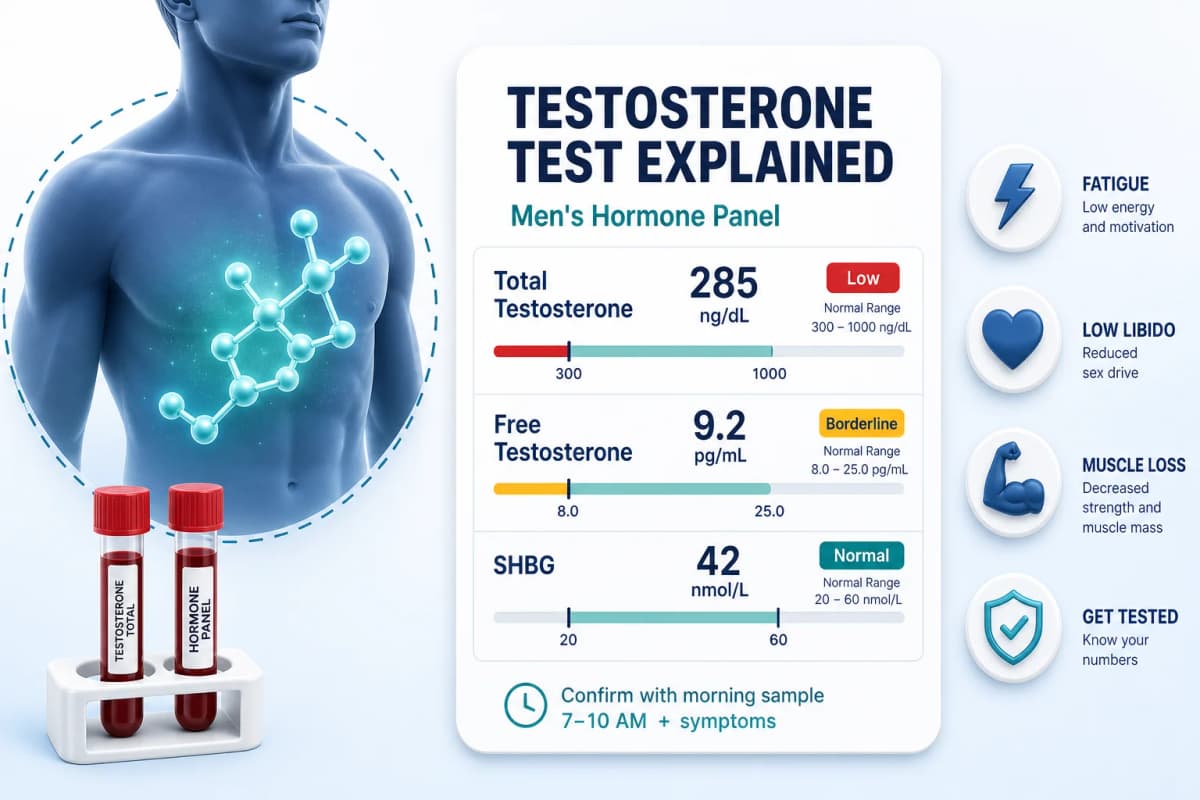
💪Testosterone Test Explained for Men: Low T Guide
Fatigue, low libido, and 'low T' ads are everywhere — but testosterone testing requires morning samples and symptoms, not just one borderline number.
Scanura Editorial
Health Education Team
Written by Scanura Editorial for health education. This article is not a substitute for advice from a qualified doctor. About our editorial standards
Testosterone Test Explained for Men: Low T, Symptoms & Treatment
Testosterone is the primary male sex hormone — essential for libido, muscle mass, bone density, mood, and energy. Men increasingly ask about "low T" after seeing ads for testosterone gels and clinics. But interpreting a testosterone blood test is trickier than it looks: levels vary by time of day, age, and lab method.
This guide explains total vs free testosterone, normal ranges, symptoms of deficiency, causes, and treatment decisions in the Indian context.
What Testosterone Does
| Function | Effect of Low Testosterone |
|---|---|
| Libido and erections | Reduced sex drive, erectile dysfunction (multiple causes) |
| Muscle and fat | Muscle loss, increased belly fat |
| Bone | Osteoporosis risk |
| Mood | Fatigue, irritability, low motivation |
| Haemoglobin | Anaemia possible |
| Sperm production | Infertility |
Low testosterone is one cause of these symptoms — not the only one. Depression, thyroid disease, diabetes, and sleep apnoea mimic "low T."
Total vs Free vs Bioavailable Testosterone
| Test | What It Measures |
|---|---|
| Total testosterone | All testosterone in blood — bound + free |
| SHBG | Sex hormone binding globulin — binds testosterone |
| Free testosterone | Unbound, active fraction — ~2–3% of total |
| Calculated free T | Derived from total T + SHBG + albumin |
Free testosterone matters when SHBG is abnormal:
- High SHBG (ageing, hyperthyroidism) — total T normal but free T low
- Low SHBG (obesity, diabetes) — total T may look low-normal but free T adequate
Normal Testosterone Ranges
| Age | Total Testosterone (approx.) |
|---|---|
| 20–30 years | 300–1000 ng/dL |
| 40–50 years | Gradual decline — ~1% per year after 30 |
| 70+ years | Lower normal acceptable |
Lab reference ranges vary. Indian men may have slightly different population norms — use your lab interval.
When Is It "Low"?
Generally below 300 ng/dL on two morning samples with symptoms suggests hypogonadism. Borderline 300–400 needs clinical context.
When to Draw Blood
| Rule | Why |
|---|---|
| Morning sample (7–10 AM) | Testosterone peaks early morning |
| Fasting not required | But consistent conditions help |
| Repeat abnormal | Single low value insufficient for diagnosis |
| Before starting TRT | Baseline + LH, FSH, prolactin |
Afternoon tests often show falsely low testosterone.
Types of Hypogonadism
Primary (Testicular Problem)
- High LH/FSH, low testosterone
- Causes: Klinefelter syndrome, testicular injury, mumps orchitis, chemotherapy, ageing
Secondary (Pituitary/Hypothalamic)
- Low or low-normal LH/FSH, low testosterone
- Causes: pituitary tumour, obesity, opioids, steroids, chronic illness
Mixed / Functional
- Obesity, diabetes, sleep apnoea suppress testosterone — often reversible with weight loss and CPAP
Symptoms vs Numbers
Diagnosis requires symptoms + repeatedly low morning testosterone — not number alone.
| Symptom | Also Caused By |
|---|---|
| Fatigue | Anaemia, thyroid, depression, poor sleep |
| Low libido | Stress, relationship issues, medications |
| ED | Vascular disease, diabetes, anxiety |
| Low muscle | Inactivity, poor protein intake, ageing |
Check thyroid, HbA1c, and CBC before blaming testosterone.
Treatment: Testosterone Replacement Therapy (TRT)
Candidates
- Confirmed hypogonadism with symptoms
- No untreated prostate cancer or high haematocrit
- Fertility preservation discussed (TRT suppresses sperm)
Forms
| Form | Notes |
|---|---|
| Gel | Daily application — transfer risk to partners/children |
| Injections | Weekly/biweekly — peaks and troughs |
| Patches | Skin irritation common |
| Pellets | Subcutaneous implant — specialist procedure |
Monitoring on TRT
- Testosterone level mid-cycle
- PSA — see PSA guide
- Haematocrit — TRT raises red cell count; polycythaemia risk
- Lipids and liver function
Risks
- Infertility
- Acne, fluid retention
- Sleep apnoea worsening
- Prostate enlargement symptoms
- Cardiovascular risk debated — discuss with endocrinologist/urologist
Natural Testosterone Support
For borderline low T with obesity:
- Weight loss — most effective non-drug intervention
- Resistance exercise — compound lifts, progressive overload
- Sleep 7–8 hours — sleep apnoea treatment if present
- Adequate protein and zinc — avoid megadose supplements
- Limit alcohol — suppresses testosterone
"Testosterone Booster" Supplements
Most lack robust evidence. Ashwagandha shows modest effects in small trials — not replacement for diagnosed hypogonadism. Beware products with hidden steroids (harmful).
Anabolic Steroid Abuse in Indian Gyms
Exogenous testosterone and steroids shut down natural production — testicular shrinkage, infertility, mood swings, liver damage. "Gym supplements" with undisclosed steroids cause crash in natural testosterone when stopped. Never use without medical supervision.
Testosterone and Fertility
TRT suppresses sperm production. Men planning children should not start TRT without fertility counselling. Clomiphene or hCG may preserve fertility in some secondary hypogonadism cases — fertility specialist input needed.
Questions to Ask Your Endocrinologist
- "Was my blood drawn in the morning?"
- "Do I need free testosterone and SHBG?"
- "Is this primary or secondary hypogonadism?"
- "Will TRT affect fertility?"
- "Can we try weight loss before TRT?"
How scanura Helps
Upload hormone panel for plain-language testosterone interpretation with related metabolic tests.
Key Takeaways
- Test morning testosterone twice before diagnosing low T
- Symptoms + low levels required — not number alone
- Free T matters when SHBG abnormal
- Obesity and sleep apnoea common reversible causes
- TRT needs monitoring — PSA, haematocrit, fertility discussion
Disclaimer: Educational only. Hormone therapy requires specialist prescription and monitoring.
Medical References
Step-by-Step Guide
- 1
Test in the morning
Draw blood 7–10 AM when testosterone peaks. Afternoon samples run falsely low.
- 2
Confirm with repeat test
Two low morning values plus symptoms needed for diagnosis.
- 3
Check free testosterone and SHBG
Total T alone misleading when binding proteins abnormal.
- 4
Rule out other causes
Thyroid, diabetes, depression, and sleep apnoea mimic low T symptoms.
- 5
Try lifestyle if borderline
Weight loss and exercise raise testosterone in obese men.
- 6
Monitor on TRT
PSA, haematocrit, and fertility discussion before starting therapy.
📬 One health report guide, every week
Normal ranges, what your values mean, and what to ask your doctor — in plain language. Free, unsubscribe anytime.