🪑Sitting Disease: Health Risks of Prolonged Sitting and How to Counter Them
Prolonged sitting raises risk of heart disease, type 2 diabetes and earlier death — even if you exercise. Learn what the evidence shows and practical ways to sit less and move more.
Scanura Editorial
Health Education Team
Written by Scanura Editorial for health education. This article is not a substitute for advice from a qualified doctor. About our editorial standards
Sitting Disease: Health Risks of Prolonged Sitting and How to Counter Them
You sit at a desk, in a car or train, at meals, and in front of screens. By the end of the day, many adults have been sitting for eight to ten hours or more. If you have wondered whether all that sitting is quietly harming your health, the short answer is yes — prolonged sedentary time is linked to several chronic diseases, and that risk exists separately from whether you exercise.
This guide explains what "sitting disease" means, what the evidence shows, who should be most cautious, and practical, realistic ways to sit less and move more. It is educational, not a substitute for clinical advice.
What "Sitting Disease" Actually Means
"Sitting disease" is a popular phrase, not a formal medical diagnosis. The clinical term is sedentary behaviour: waking time spent sitting or reclining with very low energy expenditure — roughly at or below 1.5 METs (metabolic equivalents). Common examples include desk work, driving, watching television, and scrolling on a phone.
It is distinct from physical inactivity. You can meet the recommended weekly exercise target and still be highly sedentary if you sit for most of the rest of the day. Researchers sometimes call this the "active couch potato" pattern: a daily workout does not fully erase the effects of ten hours of uninterrupted sitting.
Direct Answer: Is Prolonged Sitting Harmful?
Yes. Sitting for long, uninterrupted stretches is associated with higher risk of:
- Cardiovascular disease and cardiovascular death
- Type 2 diabetes
- Some cancers (including colon, endometrial, and lung)
- Obesity and weight gain
- Musculoskeletal problems (neck, shoulder, and lower-back pain)
- Earlier death from all causes
The risk rises with total daily sitting time and with how long you go without breaking it up. Importantly, these associations are seen even in people who exercise regularly, although exercise substantially lowers the overall risk.
What the Evidence Says
The 2020 World Health Organization (WHO) guidelines on physical activity and sedentary behaviour conclude that higher amounts of sedentary behaviour are associated with detrimental health outcomes in adults, including all-cause mortality, cardiovascular disease mortality, cancer mortality, and type 2 diabetes incidence.
WHO therefore recommends:
- Limiting sedentary time, especially screen time.
- Replacing sedentary time with physical activity of any intensity (even light).
- Adults who do large amounts of sedentary behaviour should aim to exceed the moderate-intensity activity recommendations to reduce the risk.
Key points:
- Dose-response: more sitting generally tracks with higher risk.
- Breaking it up: interrupting sitting every 30 to 60 minutes with brief standing or walking improves post-meal blood glucose and may help blood pressure.
- Mostly observational: much of the evidence comes from observational studies, so sitting is a risk marker as well as a likely contributor. It is one piece of a larger picture that includes diet, sleep, smoking, and existing conditions.
Health Risks at a Glance
| Health outcome | What the evidence shows with prolonged sitting |
|---|---|
| Heart disease and stroke | Higher risk of cardiovascular events and cardiovascular mortality |
| Type 2 diabetes | Poorer blood-sugar control and higher diabetes risk |
| Some cancers | Higher risk of colon, endometrial, and lung cancers |
| Weight and obesity | Lower energy expenditure and greater weight-gain risk |
| Musculoskeletal pain | Neck, shoulder, lower-back, and postural strain |
| Earlier death | Higher all-cause mortality risk, graded with sitting time |
These are population-level associations; your individual risk depends on age, genetics, existing conditions, diet, sleep, and overall activity.
Indian Context: Desk Jobs, Heat, and Commute
In India's growing services and IT sectors, desk-based roles and long commutes make prolonged sitting common. Hot weather and limited walkable infrastructure in many cities can reduce outdoor activity, while home-cooked meals still offer an advantage over ultra-processed diets. Practical adaptations include using cooler morning or evening hours for walking, taking advantage of office stairwells, and standing during long train or bus waits when safe. Even in air-conditioned offices, the principle is the same: break up long sitting spells.
Practical Ways to Sit Less
You do not need a gym membership or a standing desk to reduce sedentary risk. Small, repeated breaks add up.
During work or study
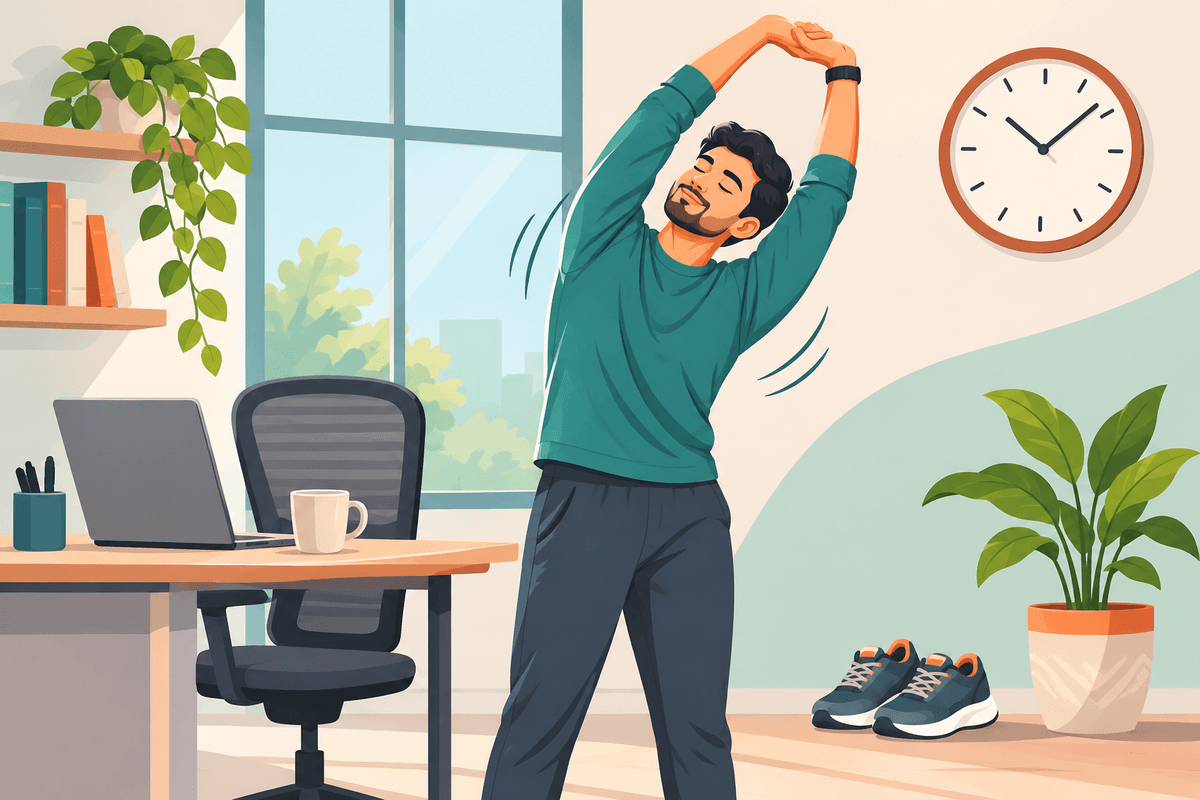
- Stand or move every 30 to 60 minutes. Set a gentle timer or use a recurring calendar reminder.
- Take phone calls standing or walking when possible.
- Hold walking or standing meetings for one-on-one discussions.
- Walk to a colleague's desk instead of messaging.
- Use a printer or water station farther away to add steps.
At home and during commute
- Stand or do light stretches while watching TV or during ad breaks.
- Take the stairs instead of the lift for two to three floors.
- Get off public transport one stop early and walk the rest, when practical.
- Do light housework — folding, tidying, cooking — counts as movement.
Build activity gradually
- Aim for at least 150 minutes of moderate-intensity aerobic activity per week (for example, brisk walking 30 minutes on five days), as recommended by WHO.
- Add muscle-strengthening activity on two or more days a week.
- If you are currently sedentary, start with five- to ten-minute walks and increase slowly.
Safety, Limitations, and When to Seek Care
- Not medical advice. This article is educational. Your doctor can assess your personal risk, especially if you have diabetes, heart disease, obesity, or are pregnant.
- Start gradually. Sudden, intense activity after long inactivity can cause injury. Increase duration and intensity over weeks.
- Watch for warning signs. Chest pain, severe shortness of breath, dizziness, fainting, or unusual pain during or after activity needs prompt medical assessment.
- Sitting less is not a substitute for managing medical conditions. Blood-pressure, blood-sugar, and cholesterol care should follow your clinician's plan.
Frequently Asked Questions
Is standing all day better than sitting? Not necessarily. Prolonged standing can cause its own discomfort — varicose veins, foot and back pain. The goal is to alternate positions and move regularly, not to replace sitting with static standing.
Does exercise undo the harm of sitting? Partially. Regular exercise lowers overall risk substantially, but it does not fully eliminate the additional risk from long, uninterrupted sitting. Both reducing sitting and exercising matter.
How often should I break up sitting? Aim to stand or move briefly every 30 to 60 minutes. Even one to three minutes of light movement helps.
Does this apply to children too? Yes. Children and adolescents should limit recreational screen time and break up long sitting periods with active play, consistent with WHO guidelines for younger age groups.
Key Takeaways
- Prolonged sitting is a real health risk — linked to heart disease, type 2 diabetes, some cancers, weight gain, and earlier death.
- Sitting risk is separate from exercise risk — you can exercise and still be highly sedentary.
- WHO recommends limiting sedentary time and replacing it with any-intensity movement.
- Break up sitting every 30–60 minutes with short walks or stretches to help blood-sugar and blood-pressure control.
- Build toward 150 minutes of moderate activity per week plus muscle-strengthening twice weekly.
- Small changes count — standing during calls, taking stairs, walking meetings.
- Alternate sitting and standing rather than standing all day statically.
- Seek care for warning symptoms — chest pain, severe breathlessness, dizziness, or fainting during activity.
Sources and Further Reading
- World Health Organization — Guidelines on physical activity and sedentary behaviour
- World Health Organization — Physical activity fact sheet
- MedlinePlus — Health risks of an inactive lifestyle
- Cleveland Clinic — Sedentary lifestyle health effects
- Harvard T.H. Chan School of Public Health — Physical activity
This article is for educational purposes only. Scanura does not provide medical diagnosis or treatment advice. Always consult your doctor for personal health decisions, especially before starting a new activity program if you have a chronic condition.
Medical References
Step-by-Step Guide
- 1
Set a movement reminder
Stand or walk briefly every 30 to 60 minutes during desk work or screen time.
- 2
Take calls standing or walking
Use phone calls as a cue to get out of your chair, even for a few minutes.
- 3
Add daily walking
Build toward 30 minutes of brisk walking on most days, starting with five to ten minutes if needed.
- 4
Use stairs and active errands
Take the lift less for short trips and walk part of your commute when practical.
- 5
Build weekly activity
Aim for 150 minutes of moderate activity weekly plus muscle-strengthening twice a week, increasing gradually.
- 6
Check warning signs
Stop and seek medical care for chest pain, severe breathlessness, dizziness, or fainting during activity.
📬 One health report guide, every week
Normal ranges, what your values mean, and what to ask your doctor — in plain language. Free, unsubscribe anytime.