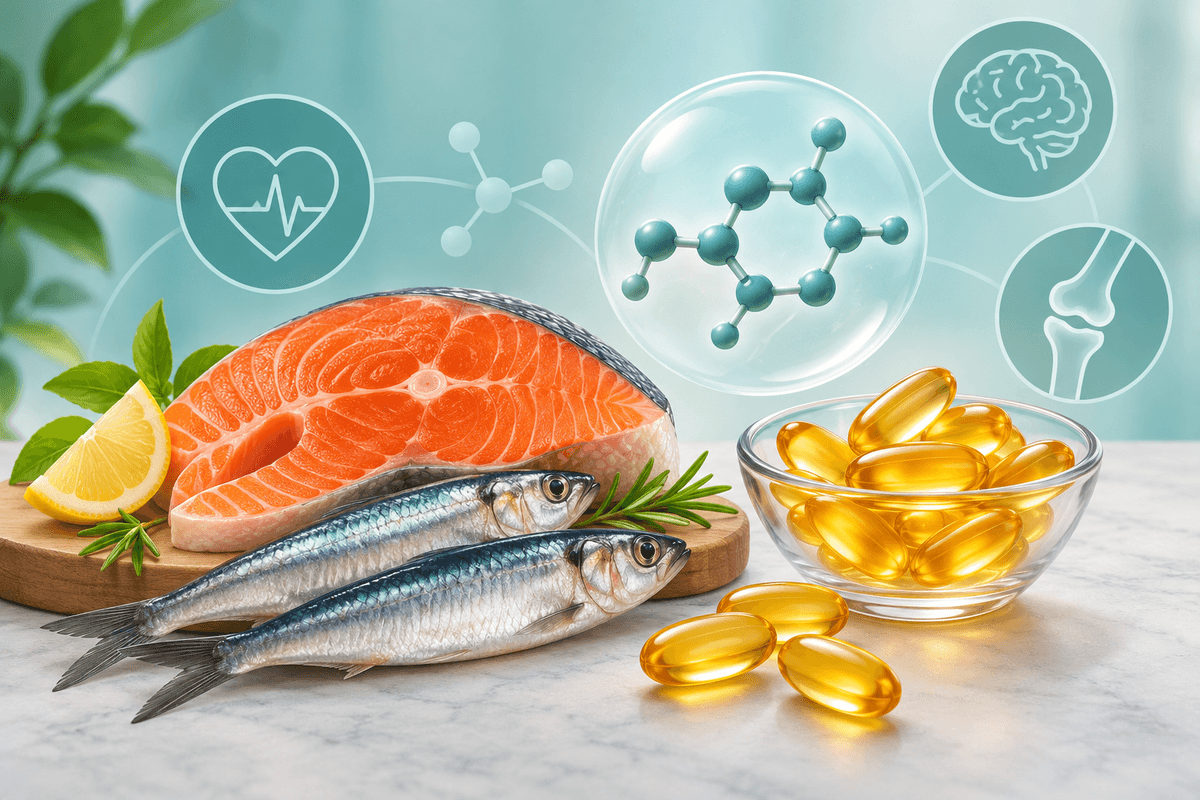
🐟Omega-3 Fish Oil: Heart and Brain Benefits, Evidence and Limits
Fish oil is popular for heart and brain health. Learn what the AHA and NIH say about EPA/DHA, who might benefit, and why eating fish may be better.
Scanura Editorial
Health Education Team
Written by Scanura Editorial for health education. This article is not a substitute for advice from a qualified doctor. About our editorial standards
Omega-3 Fish Oil: Heart and Brain Benefits, Evidence and Limits
Fish oil is one of the world's most popular supplements, promoted for heart health, brain function and inflammation. The evidence is nuanced: eating fatty fish is clearly beneficial, but fish oil supplements show mixed results. This guide explains what the American Heart Association (AHA) and NIH actually recommend.
It is educational, not medical advice.
Direct Answer: Should You Take Fish Oil?
For most healthy people, eating fatty fish is better than taking a supplement. Large trials in the general population have not shown consistent cardiovascular benefit from fish-oil pills. The AHA reserves supplement recommendations mainly for people with existing coronary heart disease, and only after consulting a clinician.
If you do not eat fish, a supplement may be reasonable — but discuss it with your doctor first.
What the Evidence Shows
| Area | What research shows |
|---|---|
| Eating fatty fish | Consistently linked to lower heart-disease death |
| Fish-oil supplements in healthy people | No clear cardiovascular benefit in large trials |
| Fish-oil supplements in existing heart disease | May reduce cardiac death (about 1 g/day EPA+DHA) |
| Brain health / dementia | Mixed; observational links, no proven prevention |
| Triglycerides | Prescription high-dose omega-3 lowers triglycerides |
| Dry eyes / rheumatoid arthritis | Modest, inconsistent benefit |
Fish vs Supplements
Whole fish provides EPA and DHA plus protein, vitamin D, selenium and other nutrients. Supplements provide only the oil. The AHA recommends about two servings of fatty fish per week for the general population — salmon, sardines, mackerel, herring and albacore tuna are good choices.
If you take a supplement, check the label for combined EPA + DHA, not total "fish oil." For existing heart disease, the AHA has cited roughly 1 g/day EPA+DHA, preferably from fish, with supplements considered in consultation with a physician.
Safety and Side Effects
Fish oil is generally well tolerated. Possible issues:
- Fishy aftertaste / burping — common, reduced by refrigeration or taking with meals
- Digestive upset — nausea or loose stools at high doses
- Bleeding risk — high doses may increase bleeding; tell your doctor or surgeon before procedures
- Atrial fibrillation — some trials of high-dose prescription omega-3 showed a small increase in AFib
- Rancidity — fish oil oxidizes; store in a cool, dark place or refrigerator and discard if it smells strong
There is no official Recommended Dietary Allowance for EPA/DHA, so "dose" varies by product and purpose.
Key Takeaways
- Eating fatty fish twice a week is the best-supported omega-3 strategy.
- Fish-oil supplements show mixed results in healthy people — not a proven heart protector.
- Supplements may be considered for existing heart disease, only with a clinician.
- Check EPA+DHA content, not total fish-oil weight.
- High doses raise bleeding and atrial-fibrillation caution.
- Store fish oil properly to avoid rancidity.
- Prescription high-dose omega-3 is different from over-the-counter supplements.
Sources and Further Reading
- AHA — Omega-3 fish oil and cardiovascular disease prevention
- NIH ODS — Omega-3 fatty acids fact sheet
- ACC — Fish intake, fish oil and cardiovascular health
This article is for educational purposes only. Scanura does not provide medical diagnosis or treatment advice. Always consult your doctor before starting supplements.
Medical References
Step-by-Step Guide
- 1
Eat fatty fish twice a week
Salmon, sardines, mackerel and herring are the best natural EPA/DHA sources — preferred over supplements.
- 2
Know when supplements may help
Fish oil may be considered for people with coronary heart disease, in consultation with a clinician.
- 3
Check the EPA/DHA dose
Look at combined EPA+DHA, not total fish oil; AHA cites about 1 g/day EPA+DHA for existing heart disease.
- 4
Watch for bleeding risk
High doses can increase bleeding risk — tell your surgeon or doctor before procedures.
- 5
Store properly
Keep fish oil refrigerated or in a cool, dark place to prevent rancidity.
📬 One health report guide, every week
Normal ranges, what your values mean, and what to ask your doctor — in plain language. Free, unsubscribe anytime.