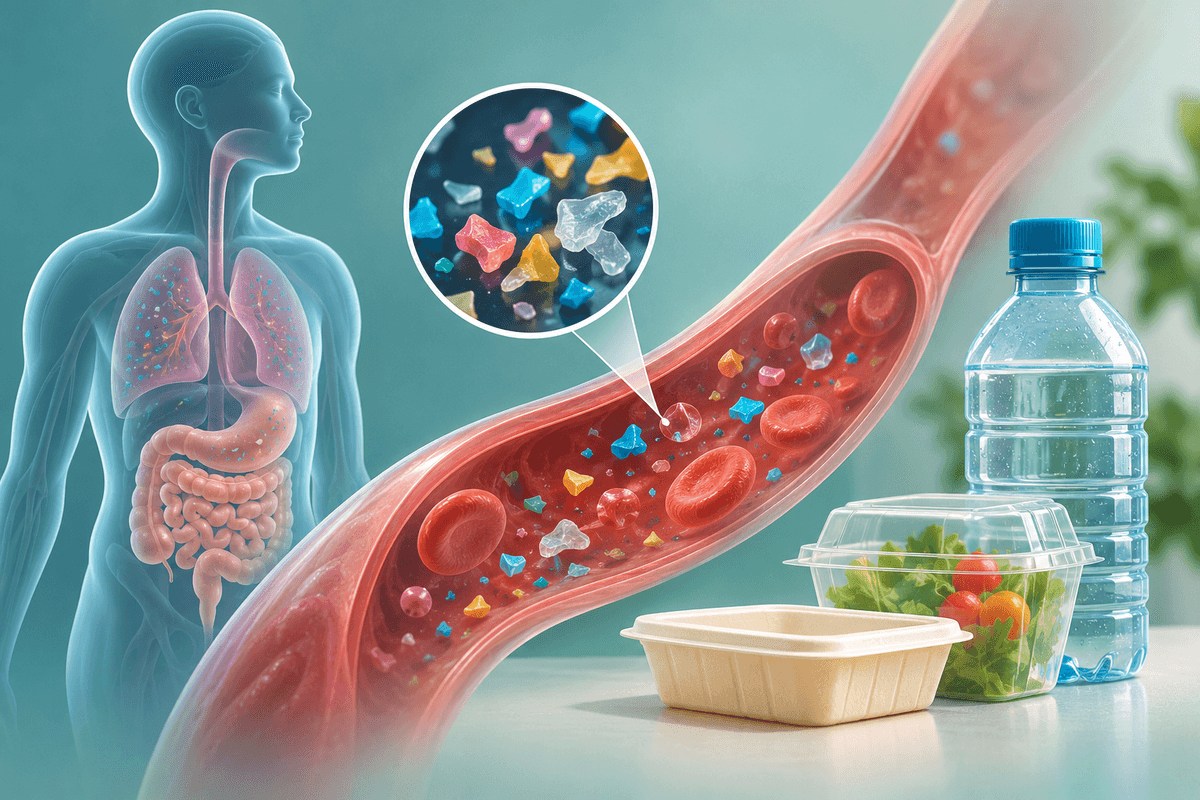
♻️Microplastics in Human Blood: What the Evidence Shows
Microplastic particles have been detected in human blood, placenta and artery plaque. Learn what studies found, what it may mean for health, and practical ways to reduce exposure.
Scanura Editorial
Health Education Team
Written by Scanura Editorial for health education. This article is not a substitute for advice from a qualified doctor. About our editorial standards
Microplastics in Human Blood: What the Evidence Shows
Tiny plastic particles — microplastics and nanoplastics — have been found not just in oceans and fish, but in human blood, placenta, lungs and artery plaque. If you have seen headlines about "plastic in our blood" and wondered whether it is dangerous, the honest answer is: scientists have confirmed the presence, but are still studying whether it causes harm.
This guide explains what researchers have found, what it may mean for cardiovascular health, where exposure comes from, and practical steps to reduce your intake. It is educational, not medical advice.
Direct Answer: Is Plastic in the Blood Harmful?
Studies have detected microplastics in human blood, but they have not yet proven that these particles cause disease in people. A 2024 study in Nature Scientific Reports found microplastics in 88.9% of blood samples tested, at an average of about 4.2 particles per millilitre. Other research has found plastic particles in placenta, lung tissue and artery plaque.
A systematic review of cardiovascular risk found that people with microplastics in artery plaque had higher rates of heart attack, stroke and death — but these are observational associations, not proof that plastic caused the events. The evidence is early and evolving.
Bottom line: exposure is widespread and real; health effects are plausible but not yet firmly established. Reducing exposure is sensible; panicking is not.
What Studies Have Found
| Finding | What it means |
|---|---|
| Plastic in blood | Detected in most participants in small pilot studies; common types include polystyrene, polypropylene and polyethylene. |
| Plastic in plaque | Found in fatty deposits inside arteries; linked in one study to higher cardiovascular events. |
| Plastic in placenta | Detected in umbilical cord and placental tissue; significance for pregnancy is under study. |
| Coagulation markers | Some blood-clotting factors appear to interact with plastic particles in lab research. |
Most studies are small, and particle detection methods vary. Larger, longer trials are needed before firm conclusions can be drawn.
Where Exposure Comes From
- Bottled water and tap water — plastic particles can leach from bottles and enter water supplies.
- Food packaging and containers — reheating food in plastic can release particles and chemicals.
- Seafood — fish and shellfish can accumulate microplastics from polluted water.
- Indoor dust — synthetic textiles, carpets and furniture shed plastic fibres you can inhale or ingest.
- Personal care products — some scrubs and cosmetics previously contained microbeads (banned in many places).
Practical Steps to Reduce Exposure
You cannot eliminate plastic exposure entirely, but you can meaningfully cut it:
- Drink filtered tap water instead of bottled water, where your local supply is safe.
- Avoid reheating food in plastic — transfer to glass or ceramic before microwaving.
- Use steel or glass bottles and containers for daily use.
- Choose fresh, loose produce over heavily wrapped ready-to-eat foods.
- Ventilate your home and dust with a damp cloth to reduce inhaled plastic fibres.
- Don't panic — focus on gradual reduction, not impossible elimination.
Limitations and When to Seek Care
- Early science: Most human data come from small, observational studies. Presence of particles does not equal proven disease.
- No routine test: There is no standard clinical test to measure your personal microplastic load, and no approved treatment to remove it.
- See a doctor for real symptoms: Chest pain, breathing difficulty or unusual symptoms should be assessed medically — not attributed to microplastics without evaluation.
Key Takeaways
- Microplastics have been detected in human blood, placenta and artery plaque.
- Presence is proven; harm is not yet firmly established — evidence is early and observational.
- Cardiovascular links are associations, not proven cause and effect.
- Major sources include bottled water, plastic packaging, seafood and indoor dust.
- Reduce exposure with filtered water, glass/steel containers, and avoiding microwaving plastic.
- No routine test or treatment exists for personal microplastic load.
- Seek medical care for actual symptoms rather than self-attributing them to plastic.
Sources and Further Reading
- Nature Scientific Reports — Microplastic particles in human blood and coagulation markers
- PMC — Micro- and Nanoplastics as Emerging Cardiovascular Risk Factors: Systematic Review
- BBC Future — How do microplastics in our bodies affect our health?
This article is for educational purposes only. Scanura does not provide medical diagnosis or treatment advice. Always consult your doctor for personal health decisions.
Medical References
Step-by-Step Guide
- 1
Cut single-use plastic
Switch to steel or glass bottles and containers; avoid reheating food in plastic.
- 2
Filter drinking water
Use a certified water filter and avoid bottled water where tap water is safe.
- 3
Choose fresh over packaged
Prefer fresh, loose produce over heavily wrapped ready-to-eat foods.
- 4
Ventilate and dust
Open windows and wipe surfaces with a damp cloth to reduce indoor plastic dust.
- 5
Don't panic
Current evidence shows presence, not proven harm — focus on reduction, not elimination.
📬 One health report guide, every week
Normal ranges, what your values mean, and what to ask your doctor — in plain language. Free, unsubscribe anytime.