🥬Magnesium Deficiency: Warning Signs, Causes and Food Sources
Low magnesium can cause cramps, fatigue and irregular heartbeat. Learn the warning signs, common causes, and magnesium-rich foods common in Indian diets.
Scanura Editorial
Health Education Team
Written by Scanura Editorial for health education. This article is not a substitute for advice from a qualified doctor. About our editorial standards
Magnesium Deficiency: Warning Signs, Causes and Food Sources
Magnesium is a mineral your body uses for muscle and nerve function, heart rhythm, blood pressure and blood-sugar control. Low magnesium is common and easy to miss because early symptoms are vague. This guide covers the warning signs, causes, diagnosis, and magnesium-rich foods found in Indian diets.
It is educational, not medical advice.
Direct Answer: How Common Is Magnesium Deficiency?
True clinical magnesium deficiency is uncommon in healthy people with varied diets, but suboptimal intake is widespread. Many Indians do not meet recommended magnesium intakes, and certain medicines or health conditions can lower levels further. Severe deficiency can affect heart rhythm and nerves and needs medical care.
Why Magnesium Matters
Magnesium helps:
- Muscles contract and relax
- Nerves send signals
- The heart maintain a steady rhythm
- Blood pressure and blood sugar stay in range
- Bones stay strong
Warning Signs
| Stage | Possible signs |
|---|---|
| Early | Loss of appetite, nausea, fatigue, weakness |
| Moderate | Muscle cramps, twitches, tingling, numbness |
| Severe | Irregular heartbeat, seizures, personality changes, low calcium or potassium |
Early symptoms are nonspecific and overlap with many other issues, so testing matters if symptoms persist.
Common Causes
- Low dietary intake (refined diets, low vegetable consumption)
- Digestive disorders that reduce absorption
- Chronic alcohol use
- Certain medicines: diuretics, proton-pump inhibitors, some antibiotics
- Diabetes and kidney disease
- Older age and pregnancy
Magnesium-Rich Foods in Indian Diets
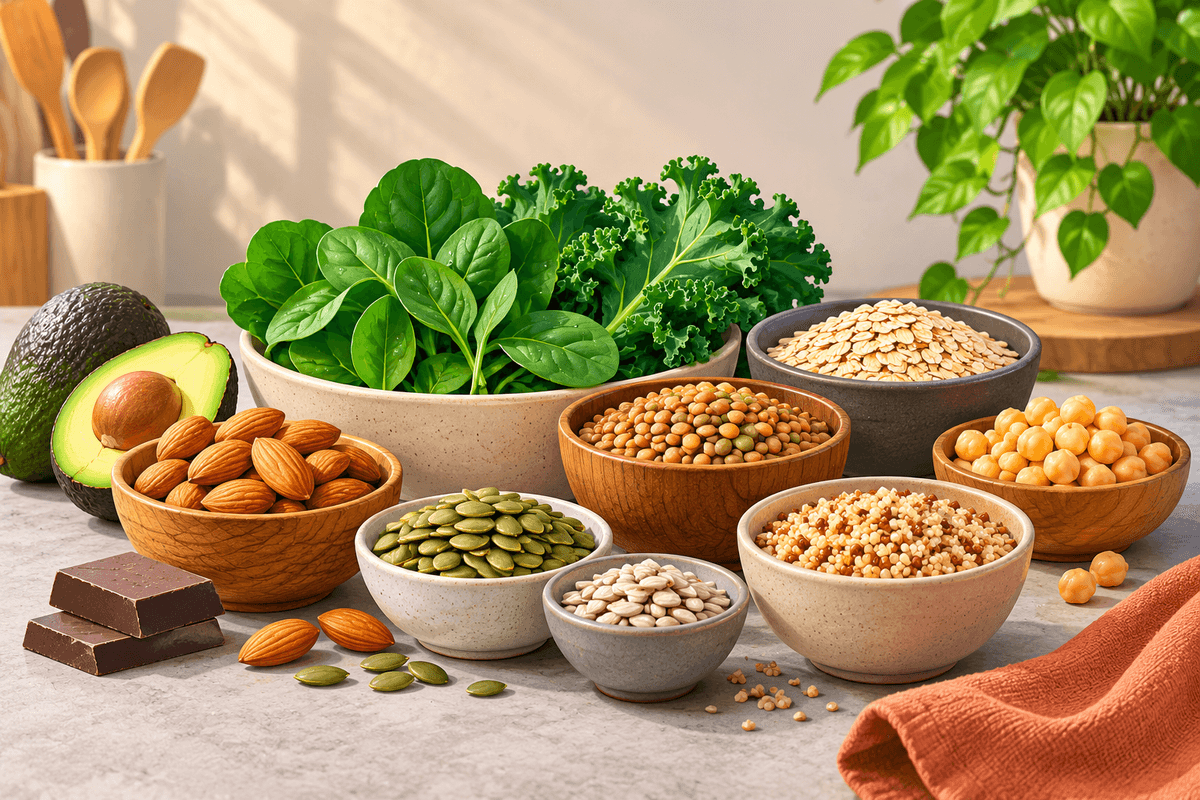
You can usually meet needs through food. Good sources include:
- Leafy greens — spinach, amaranth, moringa
- Nuts and seeds — almonds, cashews, pumpkin seeds, sesame
- Legumes — lentils (dal), chickpeas, black beans, soybeans
- Whole grains — brown rice, millets (ragi, bajra, jowar), oats, whole wheat
- Other — bananas, dark chocolate (in moderation), tofu
A varied vegetarian Indian diet can provide adequate magnesium if it includes these foods regularly.
Practical Steps
- Recognise early signs — fatigue, muscle cramps, tingling, weakness.
- Add magnesium-rich foods daily — greens, nuts, seeds, dal, millets.
- Review your medicines — ask your doctor if diuretics or acid-reflux drugs may lower magnesium.
- Get tested only if needed — a blood magnesium test is not routine; your clinician decides.
- Supplement only on medical advice — excess magnesium can be unsafe, especially with kidney disease.
When to Seek Care
Seek medical attention for:
- Irregular heartbeat, palpitations or fainting
- Muscle spasms or weakness that worsen
- Seizures or confusion
- Persistent symptoms despite dietary changes
People with kidney disease should not take magnesium supplements without a clinician, because impaired kidneys cannot clear excess magnesium.
Key Takeaways
- Magnesium supports muscles, nerves, heart rhythm and blood pressure.
- Severe deficiency is uncommon; suboptimal intake is more common.
- Early signs: fatigue, muscle cramps, tingling, weakness, nausea.
- Food first: leafy greens, nuts, seeds, lentils, millets, whole grains.
- Some medicines and kidney disease can lower magnesium.
- Supplement only if a clinician advises it.
- Seek care for heart rhythm changes or worsening neuromuscular symptoms.
Sources and Further Reading
This article is for educational purposes only. Scanura does not provide medical diagnosis or treatment advice. Always consult your doctor before starting supplements, especially if you have kidney disease.
Step-by-Step Guide
- 1
Recognise early signs
Watch for loss of appetite, nausea, fatigue, weakness and muscle cramps.
- 2
Add magnesium-rich foods
Eat leafy greens, nuts, seeds, whole grains, lentils and beans regularly.
- 3
Review medicines
Ask your doctor if diuretics, PPIs or other medicines may lower magnesium.
- 4
Get tested if needed
Ask your clinician about a magnesium blood test if symptoms persist.
- 5
Supplement only on advice
Do not start magnesium supplements without a clinician, especially with kidney disease.
📬 One health report guide, every week
Normal ranges, what your values mean, and what to ask your doctor — in plain language. Free, unsubscribe anytime.