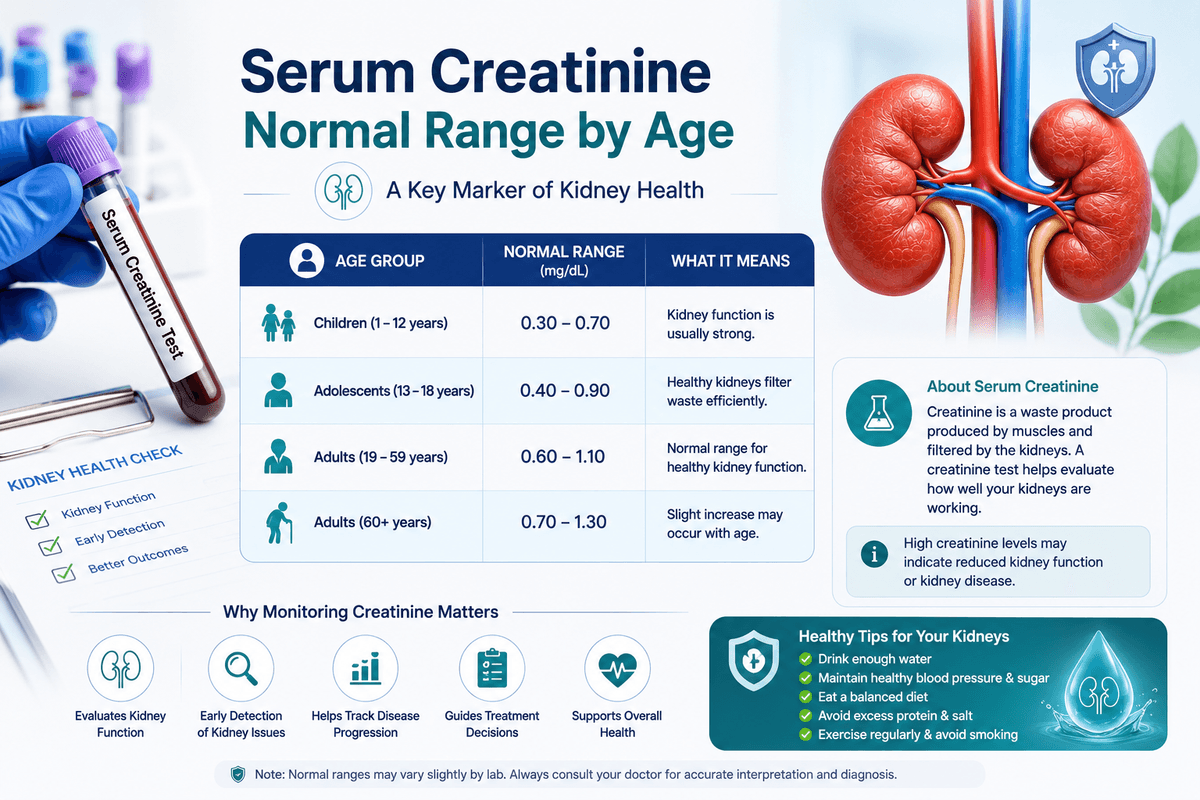
🫘Serum Creatinine Normal Range by Age: Kidney Health
Creatinine 1.2 means different things at age 30 vs 70. Learn age- and sex-specific normal ranges, eGFR stages, and how to protect your kidneys in India.
Scanura Editorial
Health Education Team
Written by Scanura Editorial for health education. This article is not a substitute for advice from a qualified doctor. About our editorial standards
Serum Creatinine Normal Range by Age: Kidney Health Guide
Your Kidney Function Test (KFT) report shows Serum Creatinine at 1.4 mg/dL. The lab marks it high. Your uncle says his is 1.6 at age 70 and his doctor called it "normal for his age." Your wife's is 0.9. Who is right? And does a slightly high creatinine mean your kidneys are failing?
Creatinine is the most widely used blood marker of kidney function — but it is also one of the most misinterpreted. It is affected by age, sex, muscle mass, diet, and hydration — not just kidney health. A 25-year-old man and a 75-year-old woman cannot share the same "normal" number.
This guide explains what creatinine measures, age- and sex-specific normal ranges in India, how eGFR gives a clearer picture, causes of high and low creatinine, symptoms of kidney disease, and when to see a nephrologist. For full KFT panel details, see our kidney function test guide.
What Is Creatinine?
Creatinine is a waste product formed when muscles use creatine phosphate for energy. It is produced at a fairly constant daily rate (depending on muscle mass), filtered freely by the kidneys, and excreted in urine.
| Key Fact | Implication |
|---|---|
| Produced by muscles | More muscle = higher baseline creatinine |
| Filtered by kidneys | Damaged kidneys clear less → blood level rises |
| Not reabsorbed | Pure filtration marker (unlike urea) |
| Stable day-to-day | Good for monitoring trends |
Creatinine is not sensitive to early kidney damage. You can lose 50% of kidney function before creatinine rises noticeably. That is why eGFR (estimated Glomerular Filtration Rate) is calculated from creatinine, age, and sex.
Serum Creatinine Normal Range by Age and Sex
Indian labs typically report:
| Group | Creatinine Range (mg/dL) |
|---|---|
| Adult men (18–60) | 0.7 – 1.3 |
| Adult women (18–60) | 0.6 – 1.1 |
| Elderly men (>60) | 0.8 – 1.5 (higher acceptable) |
| Elderly women (>60) | 0.6 – 1.2 |
| Children | Age-specific — much lower |
| Bodybuilders / very muscular men | May run up to 1.5–1.7 without kidney disease |
Why Age Matters
| Factor | Effect on Creatinine |
|---|---|
| Muscle mass decreases with age | Less creatinine produced — can mask kidney decline |
| Kidney function naturally declines | ~1% GFR loss per year after age 40 in many people |
| Same creatinine at age 30 vs 70 | Means very different kidney function |
Example: Creatinine 1.2 mg/dL in a 30-year-old man ≈ eGFR ~75 (mildly reduced). Same 1.2 in a 75-year-old woman ≈ eGFR ~48 (moderate CKD). The number looks identical; the kidney health is not.
This is why always calculate eGFR — never judge creatinine alone.
eGFR: The Number That Actually Matters
eGFR (estimated Glomerular Filtration Rate) estimates how many millilitres of blood your kidneys filter per minute, normalised to body surface area.
| eGFR (mL/min/1.73m²) | Kidney Stage | Meaning |
|---|---|---|
| ≥90 | G1 (Normal or high) | Normal function; may have kidney damage if protein in urine |
| 60–89 | G2 (Mildly decreased) | Early CKD — monitor annually |
| 45–59 | G3a (Mild-moderate) | CKD — nephrologist follow-up |
| 30–44 | G3b (Moderate-severe) | Significant CKD — plan treatment |
| 15–29 | G4 (Severe) | Advanced CKD — prepare for dialysis/transplant |
| <15 | G5 (Kidney failure) | Dialysis or transplant needed |
eGFR is calculated using formulas (CKD-EPI or MDRD) that include creatinine, age, sex, and sometimes race/cystatin C.
Creatinine to eGFR Quick Examples (CKD-EPI approximation)
| Profile | Creatinine | Approximate eGFR |
|---|---|---|
| Man, 30 years | 1.0 mg/dL | ~95 (normal) |
| Man, 30 years | 1.5 mg/dL | ~60 (borderline CKD) |
| Woman, 65 years | 1.2 mg/dL | ~48 (CKD stage 3a) |
| Man, 70 years | 1.5 mg/dL | ~50 (CKD stage 3a) |
| Woman, 40 years | 1.3 mg/dL | ~48 (needs investigation) |
Use the eGFR printed on your lab report — do not guess.
Other Tests on a KFT Panel
| Test | What It Shows |
|---|---|
| Blood Urea Nitrogen (BUN) / Urea | Protein breakdown waste; rises with kidney disease, dehydration, high protein diet |
| BUN/Creatinine ratio | >20 suggests dehydration or GI bleeding; <10 suggests liver disease or malnutrition |
| Uric acid | Gout, kidney stones, kidney disease |
| Sodium, potassium | Electrolyte balance regulated by kidneys |
| Calcium, phosphorus | Mineral bone disease in advanced CKD |
| Urine albumin/creatinine ratio | Early kidney damage — protein leak before creatinine rises |
Causes of High Creatinine
Chronic Kidney Disease (CKD) — Most Important
Long-term damage from:
| Cause | Indian Context |
|---|---|
| Diabetes (diabetic nephropathy) | #1 cause of CKD in urban India |
| Hypertension | #2 cause; often combined with diabetes |
| Glomerulonephritis | IgA nephropathy, post-infectious GN |
| Chronic interstitial nephritis | Painkiller (NSAID) overuse, ayurvedic preparations with heavy metals |
| Polycystic kidney disease | Inherited; family history |
| Recurrent kidney stones | Obstructive damage over years |
| CKD of unknown origin (CKDu) | Reported in agricultural communities (Sri Lanka, parts of India) |
Acute Kidney Injury (AKI) — Sudden Rise
| Cause | Examples |
|---|---|
| Dehydration | Diarrhoea, vomiting, heat stroke — common in Indian summers |
| Medicines | NSAIDs (ibuprofen, diclofenac), aminoglycosides, contrast dye |
| Infection | Sepsis, malaria, leptospirosis, dengue haemorrhagic fever |
| Urinary obstruction | Enlarged prostate, kidney stones |
| Snake bite / haemolysis | Pigment nephropathy |
AKI may be reversible if treated promptly. Creatinine can rise over days and fall with treatment.
Non-Kidney Causes of Elevated Creatinine
| Cause | Mechanism |
|---|---|
| High muscle mass | Gym enthusiasts, manual labourers |
| Creatine supplements | Directly increases serum creatinine without kidney damage |
| High meat diet | Mild transient rise |
| Medicines | Trimethoprim, cimetidine, fenofibrate interfere with creatinine secretion |
| Rhabdomyolysis | Muscle breakdown — very high creatinine + high CK |
Causes of Low Creatinine
| Cause | Notes |
|---|---|
| Low muscle mass | Elderly, malnourished, chronic illness |
| Liver disease | Reduced creatine synthesis |
| Pregnancy | Physiological increase in GFR — creatinine falls |
| Vegetarian diet | Lower muscle mass and dietary creatine |
Low creatinine is rarely dangerous but may underestimate kidney disease in frail elderly — cystatin C-based eGFR is more accurate in this group.
Symptoms of Kidney Disease
Early CKD is often silent — no symptoms until eGFR falls below 30–40.
| Stage | Symptoms |
|---|---|
| Early (eGFR 60–90) | Usually none; may have foamy urine (protein) or swollen eyelids in morning |
| Moderate (eGFR 30–60) | Fatigue, mild ankle swelling, nocturia (urinating at night) |
| Advanced (eGFR <30) | Significant swelling (legs, face), nausea, poor appetite, itching, breathlessness |
| Kidney failure (eGFR <15) | Severe symptoms above; confusion, pericarditis, life-threatening electrolyte abnormalities |
Red Flag Symptoms — Seek Urgent Care
- Not urinating for 12+ hours (anuria)
- Severe swelling + breathlessness — pulmonary oedema
- Confusion or seizures with known kidney disease
- Creatinine doubling within days — acute kidney injury
- Blood in urine + high creatinine — glomerulonephritis
Age-Specific Kidney Health Guidance
Adults 18–40
- Baseline creatinine and eGFR at least once if diabetic, hypertensive, or family history of kidney disease
- Avoid chronic NSAID use for back pain and headaches
- Stay hydrated during summers and exercise
- Monitor if gym supplements include creatine — inform your doctor
Adults 40–60
- Annual KFT if diabetic or hypertensive (non-negotiable)
- Target BP <130/80 if diabetic; <140/90 otherwise
- HbA1c <7% for diabetes — kidney protection
- ACE inhibitors or ARBs if diabetic with proteinuria (doctor-prescribed)
Adults 60+
- eGFR naturally declines — focus on rate of decline, not single value
- Avoid dehydration — elderly are vulnerable to AKI from diarrhoea, fever
- Review all medicines for kidney toxicity (NSAIDs, metformin dose adjustment when eGFR low)
- Cystatin C eGFR if frail with low muscle mass
- Vaccination (flu, pneumococcal) — kidney patients at higher infection risk
Children
- Creatinine much lower than adults
- Paediatric nephrologist for any abnormal KFT
- Congenital anomalies, reflux nephropathy, HUS (post-diarrhoeal) are key causes
Protecting Your Kidneys: Practical Steps
| Step | Details |
|---|---|
| Control diabetes | HbA1c target individualised; SGLT2 inhibitors protect kidneys in diabetes |
| Control blood pressure | Target per guidelines; home monitoring |
| Limit salt | <5 g/day; reduce pickles, papad, processed snacks |
| Avoid NSAIDs | Use paracetamol for pain when possible; avoid daily diclofenac/ibuprofen |
| Stay hydrated | 2–3 litres/day unless fluid-restricted for advanced CKD |
| Don't ignore UTI | Treat promptly; recurrent infections damage kidneys |
| Limit protein if advanced CKD | Doctor-guided; not needed in early CKD |
| No smoking | Accelerates kidney and cardiovascular damage |
| Exercise regularly | Protects against diabetes and hypertension |
| Annual KFT | If diabetic, hypertensive, or family history |
When to See a Nephrologist
| Situation | Urgency |
|---|---|
| eGFR <60 on two tests 3 months apart | Routine nephrology referral |
| eGFR dropping >5 mL/min/year | Urgent evaluation |
| Protein in urine (ACR >30 mg/g) | Nephrology + diabetes/HTN optimisation |
| Blood in urine with high creatinine | Urgent — glomerulonephritis workup |
| Creatinine >2.0 mg/dL | Nephrology referral |
| Diabetes + any CKD stage | Co-management with endocrinologist |
| Planning pregnancy with CKD | Pre-conception nephrology counselling |
Monitoring Over Time
Single creatinine values are snapshots. What matters:
| Trend | Meaning |
|---|---|
| Stable creatinine over years | Reassuring — even if mildly above "young adult" range in elderly |
| Rising 0.1–0.2 mg/dL per year | Progressive CKD — act now |
| Sudden jump | AKI — find and treat cause immediately |
| Falling after AKI | Recovery — continue monitoring 3–6 months |
Keep all KFT reports in one place. Upload each to scanura to track eGFR trends across years.
Questions to Ask Your Nephrologist
- "What is my eGFR — and which CKD stage does that mean?"
- "Is my creatinine high for my age and muscle mass?"
- "Do I have protein in my urine?"
- "Are any of my medicines harming my kidneys?"
- "How often should I repeat KFT?"
- "Do I need to adjust diabetes or blood pressure medicines?"
How scanura Helps
Upload your KFT report to scanura and see creatinine, urea, eGFR, and electrolytes explained in plain Hindi or English. Track how your kidney numbers change over time and know when a value is borderline vs critical for your age.
Key Takeaways
- Creatinine is a muscle waste product cleared by kidneys — higher levels suggest reduced kidney filtration.
- Normal creatinine differs by age and sex — 1.2 mg/dL means different things at age 30 vs 70.
- eGFR is more meaningful than creatinine alone — always check the eGFR on your report.
- Diabetes and hypertension are the top causes of CKD in India — annual KFT is essential if you have either.
- Early kidney disease is silent — urine protein testing catches damage before creatinine rises.
- Dehydration, NSAIDs, and infections can cause sudden creatinine spikes (AKI) — often reversible.
- eGFR below 60 persisting 3 months = chronic kidney disease — needs nephrologist follow-up.
- Protect kidneys by controlling sugar, BP, and avoiding chronic painkiller use.
Disclaimer: This article is for educational purposes only. scanura does not provide medical diagnosis. Always consult your doctor for medical decisions.
Medical References
Step-by-Step Guide
- 1
Check eGFR not just creatinine
eGFR accounts for age and sex — more accurate than creatinine alone.
- 2
Know your age-specific range
Elderly adults have higher acceptable creatinine than young adults.
- 3
Annual KFT if diabetic or hypertensive
Diabetes and high BP are the top CKD causes in India.
- 4
Check urine for protein
Protein leak appears before creatinine rises.
- 5
Avoid chronic painkiller use
NSAIDs like diclofenac damage kidneys over time.
- 6
See nephrologist if eGFR below 60
Persistent eGFR under 60 for 3 months means CKD.
📬 One health report guide, every week
Normal ranges, what your values mean, and what to ask your doctor — in plain language. Free, unsubscribe anytime.