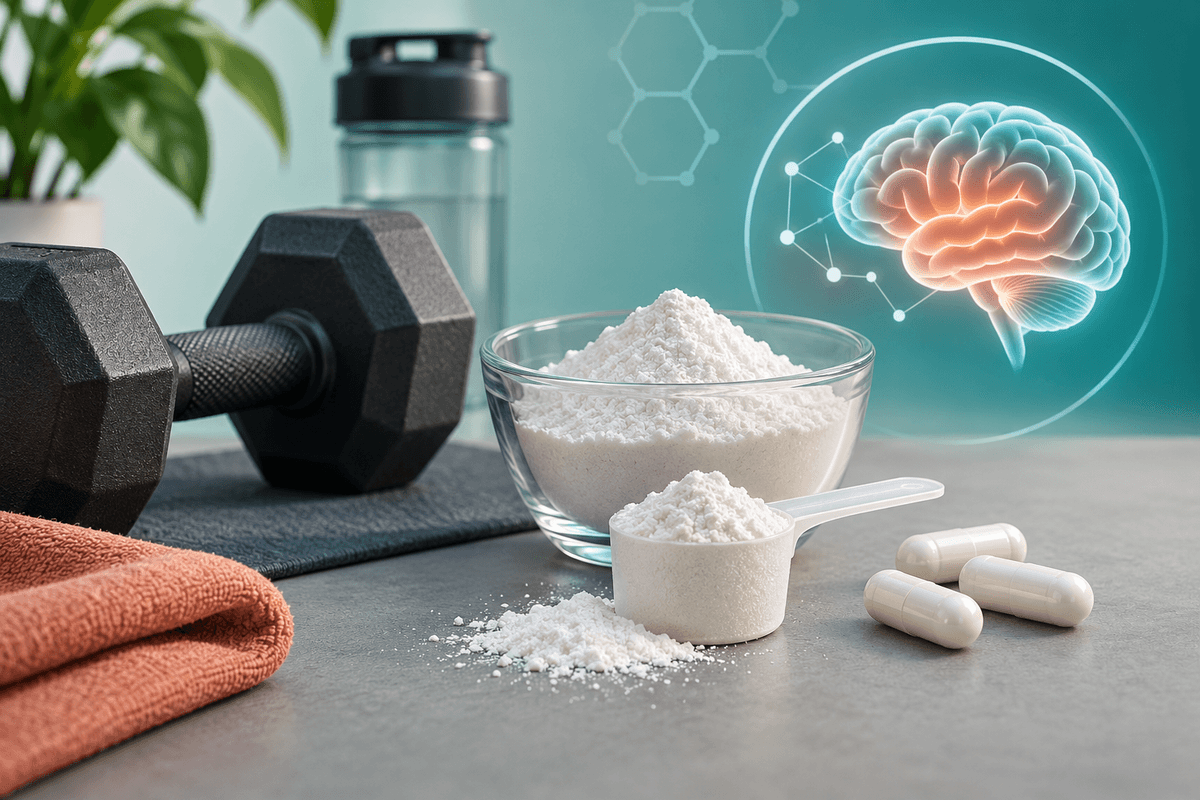
💪Creatine Supplement: Muscle, Brain, Safety and Myths
Creatine is one of the most researched supplements. Learn what evidence shows for muscle, strength and brain health, plus safety, dosing and who should avoid it.
Scanura Editorial
Health Education Team
Written by Scanura Editorial for health education. This article is not a substitute for advice from a qualified doctor. About our editorial standards
Creatine Supplement: Muscle, Brain, Safety and Myths
Creatine is one of the most researched supplements in sports nutrition. Marketed for muscle, strength, recovery and even brain health, it is surrounded by both strong evidence and persistent myths. This guide separates what clinical trials and position stands show from marketing claims.
It is educational, not medical advice.
Direct Answer: Does Creatine Work?
Yes — for muscle and strength. Creatine monohydrate consistently improves performance in short, high-intensity efforts (sprinting, weightlifting, repeated bursts) and increases lean body mass when combined with resistance training. The International Society of Sports Nutrition (ISSN) calls it the most effective ergogenic supplement available for these goals.
Evidence for brain health is promising but preliminary. Creatine is present in the brain and may support cognition under stress (sleep deprivation, aging, trauma), but it is not a proven treatment for any neurological condition.
What the Evidence Shows
| Claim | Evidence status |
|---|---|
| Strength and muscle gain | Strong — consistent benefit with resistance training |
| High-intensity exercise performance | Strong — sprints, jumps, repeated efforts |
| Recovery / less muscle damage | Moderate — some data show reduced inflammation and soreness |
| Brain health / cognition | Early — promising, not yet proven for daily use |
| Injury prevention | Emerging — possible role, not definitive |
| Weight loss or fat burning | Weak — no direct fat-loss effect |
How to Use It
You do not need a "loading" phase, though it works faster:
- Maintenance (simplest): 3–5 g of creatine monohydrate daily. Reaches full muscle saturation in about 3–4 weeks.
- Loading (faster): ~20 g/day split into 4 doses for 5–7 days, then 3–5 g daily. Saturates muscle in about a week but causes more bloating.
Take it consistently, every day, including rest days. Timing matters less than regularity. Taking it with a meal that contains carbs or protein may slightly improve uptake.
Form: Plain creatine monohydrate (micronized) is the best-researched, cheapest form. "Buffered," "HCl," or liquid creatine are not clearly superior and cost more.
Safety and Side Effects
Creatine has a strong safety record in healthy people when used at recommended doses. The ISSN concludes it is safe for long-term use in healthy adults and adolescents.
Possible side effects:
- Weight gain — mostly water drawn into muscle (1–2 kg in the first week), not fat
- Bloating or stomach upset — more common during loading
- Muscle cramping — rare; hydration usually helps
Who should avoid or get medical advice first:
- Kidney disease or reduced kidney function
- Regular NSAID use (ibuprofen, naproxen) — combined use may stress kidneys
- Pregnancy or breastfeeding (safety not established)
- Age under 18 (consult a pediatrician)
There is no good evidence that creatine causes hair loss or kidney damage in healthy people.
Creatine Myths
- "Creatine is a steroid." False — it is an amino-acid derivative, not a hormone.
- "Creatine causes baldness." Based on one small, unreplicated study; no solid evidence.
- "You must load." False — maintenance works just as well over time.
- "Creatine damages kidneys." Not supported in healthy people; caution only if kidney disease already exists.
Key Takeaways
- Creatine monohydrate is the most proven supplement for strength and high-intensity performance.
- 3–5 g daily is sufficient; loading is optional and faster, not better long-term.
- Brain-benefit claims are early — not a proven treatment.
- It is safe for healthy adults at recommended doses.
- Expect water-weight gain, not fat gain.
- Skip expensive forms — plain monohydrate is best.
- Talk to a clinician if you have kidney disease or take NSAIDs regularly.
- It supports training — it does not replace training.
Sources and Further Reading
- ISSN — Position stand on creatine supplementation
- ISSN — Common questions and misconceptions about creatine
- GSSI — Safety and efficacy of creatine monohydrate over 25 years
This article is for educational purposes only. Scanura does not provide medical diagnosis or treatment advice. Always consult your doctor before starting supplements, especially if you have kidney disease.
Medical References
Step-by-Step Guide
- 1
Choose creatine monohydrate
Pick creatine monohydrate — the most researched and cheapest form. Avoid expensive 'advanced' blends.
- 2
Decide loading or maintenance
Loading (20 g/day for 5–7 days) works faster; 3–5 g daily reaches the same level in about 3–4 weeks.
- 3
Take it with carbs or protein
Consuming creatine with a meal improves uptake; timing matters less than consistency.
- 4
Drink enough water
Creatine draws water into muscles — stay hydrated, especially in hot weather or during intense training.
- 5
Check with your doctor
Avoid or get medical advice if you have kidney disease, take NSAIDs regularly, or are pregnant.
📬 One health report guide, every week
Normal ranges, what your values mean, and what to ask your doctor — in plain language. Free, unsubscribe anytime.