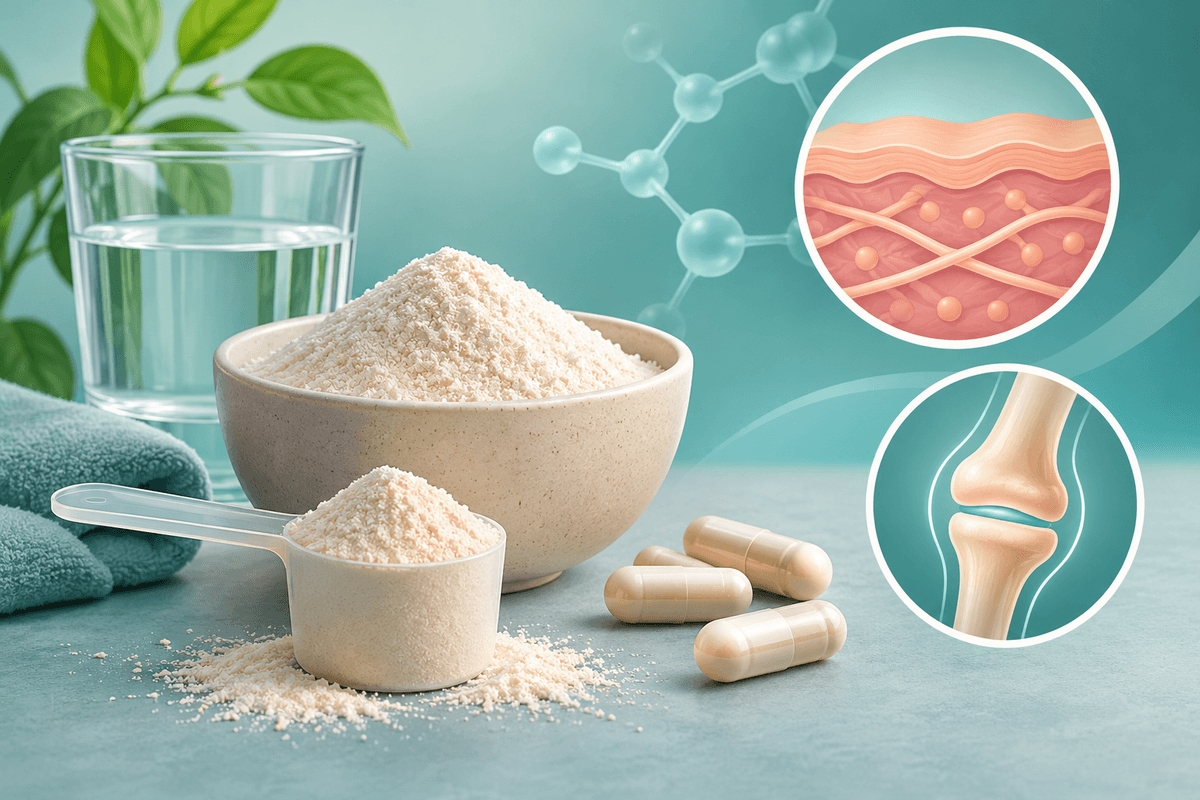
💊Collagen Supplements for Skin and Joints: What the Evidence Actually Shows
Collagen supplements are marketed for skin, hair and joints. Learn what clinical trials and meta-analyses show, and where the evidence is uncertain.
Scanura Editorial
Health Education Team
Written by Scanura Editorial for health education. This article is not a substitute for advice from a qualified doctor. About our editorial standards
Collagen Supplements for Skin and Joints: What the Evidence Actually Shows
Collagen powders, capsules and drinks are sold everywhere, promising smoother skin, fewer wrinkles and less joint pain. But the evidence is mixed, and some large reviews have found little benefit. This guide separates what trials actually show from marketing claims.
It is educational, not medical advice.
Direct Answer: Do Collagen Supplements Work?
Possibly, modestly, for some outcomes — but the evidence is inconsistent. Some randomized trials and meta-analyses report small improvements in skin hydration and elasticity and reduced joint pain. However, a 2025 meta-analysis in The American Journal of Medicine found no significant beneficial effect of collagen supplements on skin aging in its pooled analysis. The bottom line: collagen is not a proven anti-aging treatment, and results vary widely between individuals.
What the Evidence Says
| Outcome | What research shows |
|---|---|
| Skin hydration / elasticity | Some trials show small short-term improvements; other meta-analyses find no clear benefit. |
| Skin wrinkles | Not consistently proven; anti-aging claims are overstated. |
| Joint pain | Some trials show modest reduction in activity-related joint discomfort. |
| Hair and nails | Limited evidence; claims are mostly anecdotal. |
Many collagen studies are small, short-term, and funded by supplement companies, which can bias results.
What Collagen Actually Is
Collagen is a protein your body makes from amino acids. When you eat collagen powder or bone broth, your digestion breaks it into amino acids — your body does not deliver it intact to your skin or joints. There is no guarantee those amino acids will be used to make collagen in the place you want.
Practical Steps
- Set realistic expectations — modest skin/joint benefits are possible, but not guaranteed or dramatic.
- Check study quality — prefer independent, peer-reviewed trials over brand-funded studies.
- Read the label — look for hydrolyzed collagen peptides; note that effective doses vary.
- Try food first — protein-rich foods (dairy, lentils, eggs, fish, soy) give your body the amino acids it needs.
- Stop if it disagrees — discontinue and consult a clinician if you get digestive upset or allergic symptoms.
Limitations and Safety
- Not regulated like medicines — supplement quality and dose can vary between brands.
- Industry funding — many positive studies are sponsored by collagen sellers.
- Allergy and digestion — some people react to bovine, marine or poultry sources; digestive upset is common.
- Not a substitute — collagen will not replace sunscreen, a balanced diet, or medical treatment for joint disease.
Key Takeaways
- Collagen supplements may modestly help skin hydration and joint comfort in some trials.
- A 2025 meta-analysis found no clear skin-aging benefit overall — evidence is mixed.
- Your body digests collagen into amino acids; it does not deliver it intact to skin or joints.
- Anti-aging and wrinkle-erasing claims are overstated.
- Protein-rich foods can supply the same building blocks.
- Choose independent studies; be sceptical of brand-funded claims.
- Stop and consult a clinician if you have allergic or digestive reactions.
Sources and Further Reading
- PubMed — Effects of Collagen Supplements on Skin Aging: Systematic Review and Meta-Analysis
- The Conversation — Collagen supplements can help your skin and joints, large new study finds
This article is for educational purposes only. Scanura does not provide medical diagnosis or treatment advice. Always consult your doctor before starting supplements.
Medical References
Step-by-Step Guide
- 1
Set realistic expectations
Collagen may modestly help skin hydration and joint comfort, but it is not a proven anti-aging treatment.
- 2
Check study quality
Prefer peer-reviewed trials; many collagen studies are small or industry-funded.
- 3
Read the label
Look for hydrolyzed collagen peptides and check the dose used in research.
- 4
Try food first
Protein-rich foods (dairy, lentils, eggs, fish) provide amino acids your body uses to make collagen.
- 5
Stop if it disagrees
Discontinue and consult a clinician if you get digestive upset or allergic symptoms.
📬 One health report guide, every week
Normal ranges, what your values mean, and what to ask your doctor — in plain language. Free, unsubscribe anytime.