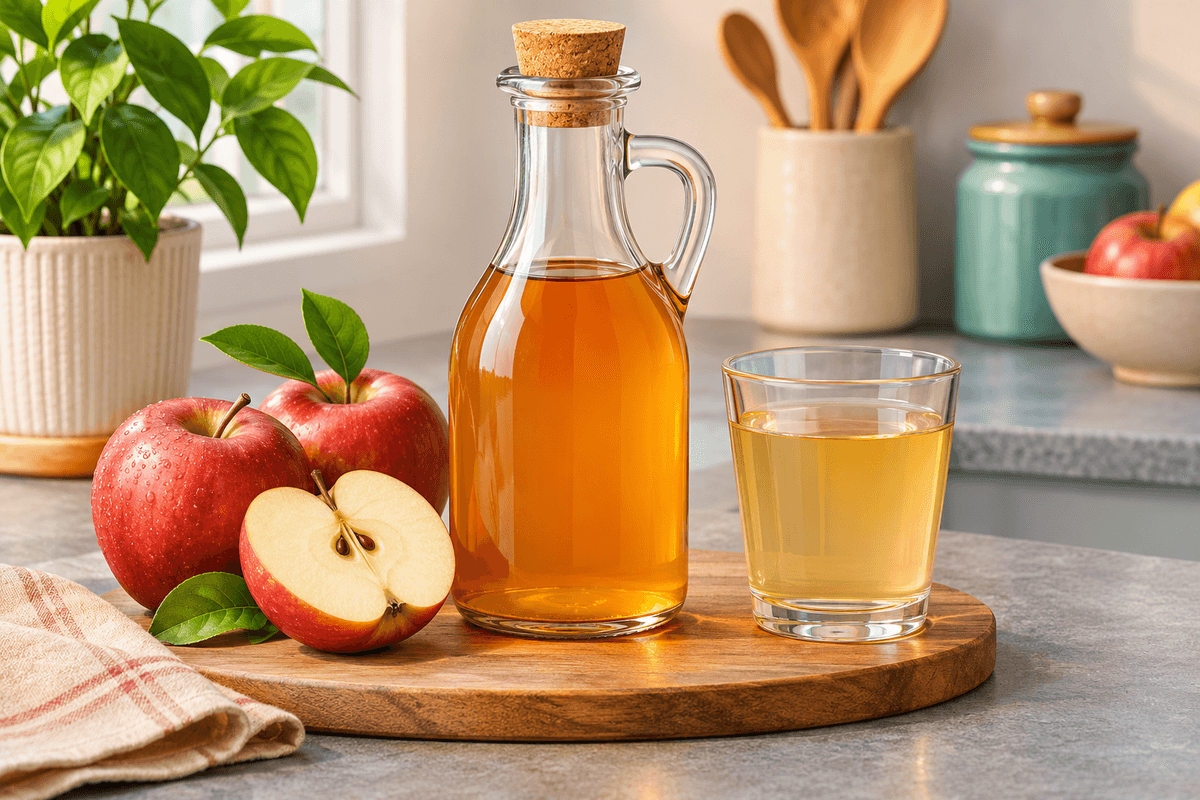
🍎Apple Cider Vinegar: Blood Sugar, Weight Loss and Safety
Apple cider vinegar is promoted for blood sugar and weight loss. Learn what small trials show, the real effect size, and safety risks like tooth erosion.
Scanura Editorial
Health Education Team
Written by Scanura Editorial for health education. This article is not a substitute for advice from a qualified doctor. About our editorial standards
Apple Cider Vinegar: Blood Sugar, Weight Loss and Safety
Apple cider vinegar (ACV) is promoted as a cure-all for blood sugar, weight loss and "detox." Small trials show modest effects on post-meal glucose, but weight-loss benefits are minimal and safety risks — especially tooth erosion — are real. This guide explains what trials actually show and how to use ACV safely if you choose to.
It is educational, not medical advice.
Direct Answer: Does ACV Help Blood Sugar or Weight?
Possibly, modestly, for blood sugar — not meaningfully for weight. A few small trials found that taking diluted ACV before or with a carbohydrate-rich meal blunts the post-meal glucose rise slightly. A systematic review found any weight-loss effect is small and inconsistent. ACV is not a substitute for diabetes medication, diet or physical activity.
Any benefit is small and short-term; do not rely on it to manage blood sugar.
What the Evidence Shows
| Claim | Evidence status |
|---|---|
| Post-meal blood sugar | Small short-term reduction in some trials |
| Fasting blood sugar / HbA1c | Inconsistent; no proven long-term benefit |
| Weight loss | Weak — minimal and inconsistent effect |
| Cholesterol | Mixed — small trials, not conclusive |
| "Detox" or cleansing | No evidence — the body detoxes itself |
Safety Risks
ACV is acidic (about 5% acetic acid), and that creates real risks:
- Tooth enamel erosion — drinking it straight or frequently can permanently damage enamel
- Throat and stomach irritation — burning, nausea, especially undiluted
- Low potassium — very high intakes have been linked to low potassium and bone issues
- Drug interactions — may strengthen diabetes medicines (hypoglycemia risk) and interact with diuretics
There are case reports of tooth erosion and esophageal injury from undiluted ACV.
If You Choose to Use It
- Always dilute — 1–2 tablespoons in a large glass of water, never straight.
- Use a straw — reduces contact with teeth.
- Rinse your mouth with plain water afterward (don't brush immediately — enamel is softened).
- Time it with meals — before or with carbohydrate-containing meals is when any glucose effect appears.
- Start small — see how your stomach tolerates it.
- Skip if you have kidney disease, gastroparesis, or take diabetes medicines/diuretics without medical advice.
Key Takeaways
- ACV may slightly blunt post-meal blood sugar — the effect is small and short-term.
- It is not proven for meaningful weight loss.
- Never drink it undiluted — tooth erosion and throat injury are real risks.
- Dilute, use a straw, and rinse your mouth afterward.
- It can interact with diabetes medicines and diuretics.
- ACV is not a diabetes treatment or a detox.
Sources and Further Reading
- PubMed — Safety and side effects of apple vinegar intake: systematic review
- PubMed — Unhealthy weight loss: erosion by apple cider vinegar
- Healthline — Apple cider vinegar side effects
This article is for educational purposes only. Scanura does not provide medical diagnosis or treatment advice. Always consult your doctor before using ACV medicinally, especially if you take diabetes medicine.
Medical References
Step-by-Step Guide
- 1
Always dilute it
Never drink apple cider vinegar straight — dilute 1–2 tablespoons in a large glass of water.
- 2
Use a straw and rinse
A straw reduces tooth contact; rinse your mouth with water afterward to protect enamel.
- 3
Time it with meals
Taking diluted ACV before or with carbohydrate-rich meals is when small blood-sugar effects are seen.
- 4
Don't expect weight loss
Any weight effect is modest — ACV is not a substitute for diet and activity.
- 5
Get medical advice if on medicines
ACV can interact with diabetes medicines and diuretics, and may lower potassium.
📬 One health report guide, every week
Normal ranges, what your values mean, and what to ask your doctor — in plain language. Free, unsubscribe anytime.