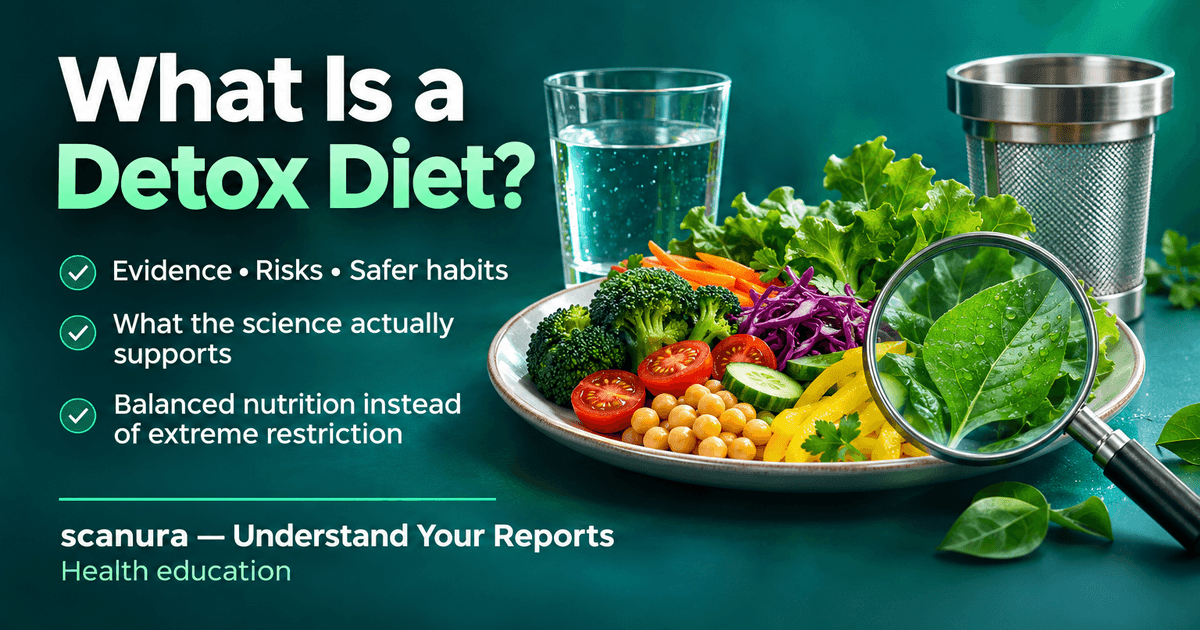
🥬What Is a Detox Diet? Benefits, Risks & What to Eat
What is a detox diet, and does it really remove toxins? Compare the evidence, risks, red flags and safer habits before trying a juice cleanse or restrictive plan.
Scanura Editorial
Health Education Team
Written by Scanura Editorial for health education. This article is not a substitute for advice from a qualified doctor. About our editorial standards
What Is a Detox Diet? Benefits, Risks & What to Eat
A detox diet is a short-term eating plan marketed as helping the body remove “toxins,” reset metabolism or lose weight. It may involve fasting, juice-only eating, food-group elimination, herbs or supplements, or laxatives.
The direct answer is clear: there is no good evidence that a commercial detox diet removes toxins more effectively than normal, balanced eating. Most early weight loss comes from eating fewer calories, not a special detox effect. Medical detoxification for poisoning or confirmed heavy-metal exposure is different and requires a clinical team.
In brief: A detox diet is a restrictive marketing label, not a necessary health reset. A sustainable calorie plan, regular activity, sleep and targeted medical care are safer. Severe restriction can cause dehydration, electrolyte imbalance, medicine interactions, organ injury and disordered-eating behaviours.
What Is a Detox Diet?
“Detox” is an umbrella marketing term, not one standardized diet. The US National Center for Complementary and Integrative Health (NCCIH) lists several approaches sold as detoxification:
| Common approach | What it may involve | Main concern |
|---|---|---|
| Juice or liquid cleanse | Only fruit/vegetable drinks, broths or other liquids for several days | Low protein, fat and fibre; blood-sugar swings; nutrient inadequacy |
| Fasting | Skipping meals or eating only during a narrow window | Weakness, headache, fainting, dehydration and medication problems |
| Food-group elimination | Removing grains, dairy, gluten, sugar or another group | Nutrient gaps, unnecessary restriction and difficulty sustaining the plan |
| Herbal or supplement cleanse | Teas, powders, capsules or proprietary blends | Hidden ingredients, contamination, interactions and dose uncertainty |
| Colon cleansing | Laxatives, enemas or colonic irrigation | Diarrhoea, dehydration, electrolyte imbalance, bowel injury and infection risk |
| Sauna-based “sweat detox” | Heat to make the body sweat | Claims that sweating removes meaningful toxin loads are not supported for general use |
These approaches may be sold online, in clinics, at spas or as part of naturopathic care. “Natural” does not mean safe, and a practitioner’s testimonial is not clinical evidence.
What Does “Detox” Actually Mean?
In medicine, detoxification can describe treatment of a specific toxic exposure. Emergency teams may use medicines or procedures after poisoning, and chelation may be used for selected serious heavy-metal conditions under specialist supervision. NCCIH notes that the CDC recommends chelation only in such specific cases.
That is different from buying a juice cleanse or “liver detox” tea. The body already has continuous detoxification systems: the liver processes substances, the kidneys filter blood and regulate water and minerals, and the lungs and gut help eliminate materials. Adequate nutrition, hydration, movement and treatment of disease are more useful than starving these systems.
What Does the Research Say?
The Evidence Base for Detox Diets Is Small and Weak
NCCIH says only a small number of studies have tested detoxification programmes in people. Some reported changes in weight, blood pressure or insulin resistance, but the studies had design problems, few participants and, in some cases, no independent peer review.
A 2015 critical review by Klein and Kiat found very little clinical evidence supporting commercial detox diets. At the time, no randomised controlled trials had assessed their effectiveness in humans. A 2017 review cited by NCCIH concluded that initial weight loss from juicing and detox diets came from very low calorie intake, while people tended to regain weight after returning to their previous eating pattern. Long-term effects had not been studied.
In short, toxin elimination is not convincingly demonstrated, long-term weight loss is unsupported, and metabolic changes cannot be separated reliably from calorie restriction. A short-term scale change may reflect less food and fluid, smaller intestinal contents or water loss—not toxin removal.
Why “Detox” Products Are a Red Flag
The FDA has acted against misleading detox products that may contain undeclared medicines, make unsupported disease claims or use devices for unapproved purposes.
In 2019, FDA recalled Golean DETOX capsules after testing found undeclared sibutramine, an appetite suppressant withdrawn from the US market, and phenolphthalein, a former laxative ingredient. FDA warned that sibutramine could raise blood pressure or pulse and interact dangerously with medicines. A capsule can look herbal and still contain a pharmaceutical with major cardiovascular effects.
What Can a Detox Diet Do — and What Can It Not?
| Claim | What the evidence supports |
|---|---|
| “It removes toxins” | No convincing evidence that a commercial food-based detox removes toxins better than normal metabolism |
| “It resets your metabolism” | No established reset; calorie restriction may temporarily change weight and appetite, but the long-term result depends on sustainable habits |
| “It causes rapid weight loss” | Scale weight can fall quickly, largely through lower intake, fluid and gut-content changes; this is not proof of durable fat loss |
| “It cures bloating or a ‘sluggish liver’” | Symptoms have many causes. A cleanse does not diagnose or treat the underlying condition |
| “It raises immunity” | Not established for detox diets; food quality, sleep, vaccination and medical care are the relevant foundations |
| “It removes environmental pollutants” | No evidence that routine juicing or fasting lowers body pollutant levels or health risks |
| “It is safe because it is all natural” | Not necessarily. Herbs, laxatives and restrictive plans can cause harm and interact with treatment |
Some people feel better after a short change in eating because they drop ultra-processed foods, eat more vegetables, drink more water or sleep differently. Those benefits can usually be obtained without severe restriction or unnecessary supplements.
Is a Short Detox Diet Dangerous?
The risk depends on the method, duration and individual health.
Dehydration and Electrolyte Imbalance
Laxatives can cause diarrhoea, dehydration and poor nutrient absorption. Drinking large amounts of water or herbal tea without food can also cause dangerous electrolyte imbalances. Sodium and potassium are among the electrolytes that regulate fluid balance and nerve and muscle function.
MedlinePlus lists common dehydration symptoms as intense thirst, dry mouth, reduced urination or sweating, dark urine, dry skin, tiredness and dizziness. Severe dehydration can cause confusion, fainting, lack of urination, a rapid heartbeat, rapid breathing or shock.
Blood-Sugar Problems
A juice-only plan can deliver a lot of sugar with little protein, fat or fibre, causing rapid glucose rises followed by hunger or a low. People taking insulin or glucose-lowering medicines are especially at risk of medication-related hypoglycaemia. Anyone with diabetes should change the plan only with their healthcare team.
Medicine, Kidney and Bowel Risks
Fasting, laxatives, herbs and concentrated supplements can change medicine absorption or effects. NIDDK advises asking a pharmacist about kidney effects and interactions, and keeping an updated list of every product. Do not stop a prescribed medicine because a cleanse booklet says fasting may “reset” the body.
Dehydration can reduce kidney blood flow, and over-the-counter anti-inflammatory painkillers can damage dehydrated kidneys. Colon cleansing may cause serious harm, especially with gastrointestinal disease, previous colon surgery, severe haemorrhoids, kidney disease or heart disease.
Foodborne Illness
Unpasteurised juices can carry harmful bacteria. CDC advises pasteurised juice or cider and identifies children under five, adults aged 65 or older, pregnant people and those with weakened immune systems as higher-risk groups.
Who Should Not Try a Detox Diet Without Professional Advice?
Extra caution is warranted if you have:
- diabetes, insulin resistance or a history of hypoglycaemia;
- kidney, liver, heart or gastrointestinal disease;
- an eating disorder or disordered-eating behaviours;
- pregnancy, breastfeeding, or a child or teenager;
- a history of fainting, malnutrition or low body weight;
- several medicines, especially those with a narrow safe range; or
- recent major illness, surgery or dehydration.
The National Eating Disorders Association lists frequent dieting, dramatic weight loss, rigid food rules, skipping meals, purging, laxative or diuretic use, excessive exercise and fainting as possible warning signs. A “detox” can reinforce those behaviours.
If food and weight thoughts dominate your day, or you hide food, feel trapped after meals or use laxatives, seek professional support rather than another diet challenge.
A Safer Alternative: Support Your Body Instead
If the goal is better energy, digestion or weight, use a plan that addresses the cause and can be maintained.
1. Set a realistic goal
For adults with overweight or obesity, NIDDK cites losing about 5% to 10% of starting weight within six months as a realistic initial goal. This is a general example, not a target for everyone.
2. Build a normal, filling plate
Include:
- Protein: dal, beans, eggs, fish, chicken, curd or another suitable food;
- Vegetables and fruit: varied colours and adequate fibre;
- High-fibre carbohydrates: whole wheat, millets, oats or brown rice in sensible portions;
- Healthy fats: nuts, seeds or measured amounts of oil;
- Water: enough to avoid thirst, adjusted for climate, activity, pregnancy and medical conditions.
The right mix depends on allergies, culture, preferences, budget and medical needs.
3. Add activity and recovery
Regular walking, strength work and adequate sleep support weight, blood pressure, mood and metabolic health. NIDDK recommends programs with physical activity, behaviour support and a maintenance plan.
4. Investigate the symptom
Bloating, fatigue, reflux, acne or weight change can reflect many problems. Tests should follow symptoms and risk factors—for example, a CBC for anaemia, glucose or HbA1c for diabetes risk, thyroid tests when indicated, or liver and kidney tests after relevant exposure. There is no general “toxin screen” that validates a cleanse.
If a clinician orders electrolytes, kidney or liver tests, scanura can explain the report in plain language. It does not diagnose the cause or replace care.
Warning Signs: When to Stop and Get Help
Seek prompt medical advice after a restrictive diet or cleanse if you develop:
- persistent vomiting or diarrhoea;
- severe abdominal pain, blood in the stool, or a swollen abdomen;
- fainting, confusion, marked drowsiness or severe weakness;
- a very fast or irregular heartbeat;
- little or no urine, or persistent dizziness;
- cramps, numbness or muscle weakness; or
- facial swelling, breathing difficulty or widespread hives.
Fainting, confusion, lack of urination, a rapid heartbeat, rapid breathing or shock require emergency care. Severe abdominal pain, significant bleeding, breathing difficulty or a suspected overdose also need urgent help.
Frequently Asked Questions
Do detox diets really remove toxins?
No convincing evidence shows that commercial detox diets remove toxins better than normal body processes. Medical detoxification is a different intervention for a diagnosed toxic exposure.
How much weight can you lose on a juice cleanse?
Scale weight can fall quickly, but much of the early change may be fluid and reduced intestinal contents. Durable fat loss depends on sustainable habits, and juice-only plans risk low protein, fat and fibre intake.
Is a 24-hour or three-day cleanse safe?
Not automatically. Even brief restriction can cause low blood sugar, weakness, dehydration or medicine problems. People with diabetes, pregnancy, an eating-disorder history, kidney disease or heart disease should avoid self-directed cleansing.
Can detox tea help with weight loss?
Some teas contain laxatives or undeclared ingredients. Weight loss may reflect dehydration or bowel emptying rather than fat loss, and FDA recalls have found detox supplements contaminated with medicines.
Is fasting better than juicing?
Neither has proven special detox benefits. Fasting can cause faintness and dehydration; juice diets can cause nutrient gaps and blood-sugar swings. Ordinary structured eating is usually safer and easier to maintain.
Does a detox diet help fatty liver or a high “toxin” test?
No general detox diet has been shown to treat fatty liver disease. Management depends on the cause and should follow clinical guidance. A surprising laboratory value needs context, not a “cleanse.”
Key Takeaways
- A detox diet is not a standardized medical treatment. It can mean fasting, juice, restrictive eating, supplements or colon cleansing.
- Commercial detox diets have not been shown to remove toxins effectively. The evidence is sparse and low quality.
- Early scale loss is not proof of toxin removal. It usually reflects lower calorie and fluid intake.
- Severe restriction can cause real harm. Dehydration, electrolyte imbalance, low blood sugar, interactions, deficiency and bowel injury are important risks.
- Colon cleansing and supplement teas deserve particular caution. Some products have contained undeclared medicines.
- Safer progress comes from a sustainable plan. Adequate nutrition, realistic goals, activity, sleep and maintenance support are more reliable.
- Test the clinical problem, not a marketing promise. Anaemia, diabetes, thyroid disease and organ problems need targeted evaluation.
- Fainting, confusion, no urine, a rapid heartbeat, breathing difficulty or severe abdominal pain is an emergency. Stop restrictive dieting and seek urgent care.
Sources and Further Reading
- NCCIH, “‘Detoxes’ and ‘Cleanses’: What You Need To Know”, last updated March 2025.
- Klein AV, Kiat H, “Detox diets for toxin elimination and weight management: a critical review of the evidence”, Journal of Human Nutrition and Dietetics, 2015.
- NIDDK, “Choosing a Safe & Successful Weight-loss Program”, last reviewed February 2024.
- NIDDK, “Keeping Kidneys Safe: Smart Choices about Medicines”, last reviewed June 2018.
- CDC, “Safer Food Choices”, January 31, 2025.
- MedlinePlus, “Dehydration”, last updated December 29, 2023.
- FDA, “Golean Detox USA Issues Voluntary Nationwide Recall … Due to Presence of Undeclared Sibutramine and Phenolphthalein”, February 25, 2019.
- National Eating Disorders Association, “What Are the Warning Signs of Eating Disorders?”.
Disclaimer: This article is for educational purposes only. It is not medical advice and does not establish a doctor–patient relationship. Discuss restrictive diets, fasting, supplements or changes to prescribed treatment with a qualified healthcare professional. Supplements and detox products do not replace medical treatment.
Medical References
- NCCIH — ‘Detoxes’ and ‘Cleanses’: What You Need To Know
- Klein AV, Kiat H — Detox diets for toxin elimination and weight management: a critical review of the evidence
- NIDDK — Choosing a Safe & Successful Weight-loss Program
- NIDDK — Keeping Kidneys Safe: Smart Choices about Medicines
- CDC — Safer Food Choices
- MedlinePlus — Dehydration
- FDA — Recall of Golean DETOX Capsules Due to Undeclared Sibutramine and Phenolphthalein
- National Eating Disorders Association — What Are the Warning Signs of Eating Disorders?
Step-by-Step Guide
- 1
Define the outcome you actually want
Choose a sustainable goal such as steady energy, better digestion or gradual weight change rather than promising rapid toxin removal.
- 2
Review your health and medicines first
Ask a clinician or pharmacist before fasting or cutting food groups if you take regular medicines or have diabetes, kidney, liver, heart, gastrointestinal or eating-disorder concerns.
- 3
Build a filling, balanced plate
Include a suitable protein, vegetables or fruit, a high-fibre carbohydrate, measured healthy fats and enough fluid, adjusted for your needs.
- 4
Use habits that support maintenance
Add regular activity, adequate sleep and food tracking so you can identify sustainable changes instead of relying on a short cleanse.
- 5
Stop and seek help if symptoms appear
Fainting, confusion, very little urine, a rapid heartbeat, breathing difficulty or severe abdominal pain needs urgent medical care.
📬 One health report guide, every week
Normal ranges, what your values mean, and what to ask your doctor — in plain language. Free, unsubscribe anytime.