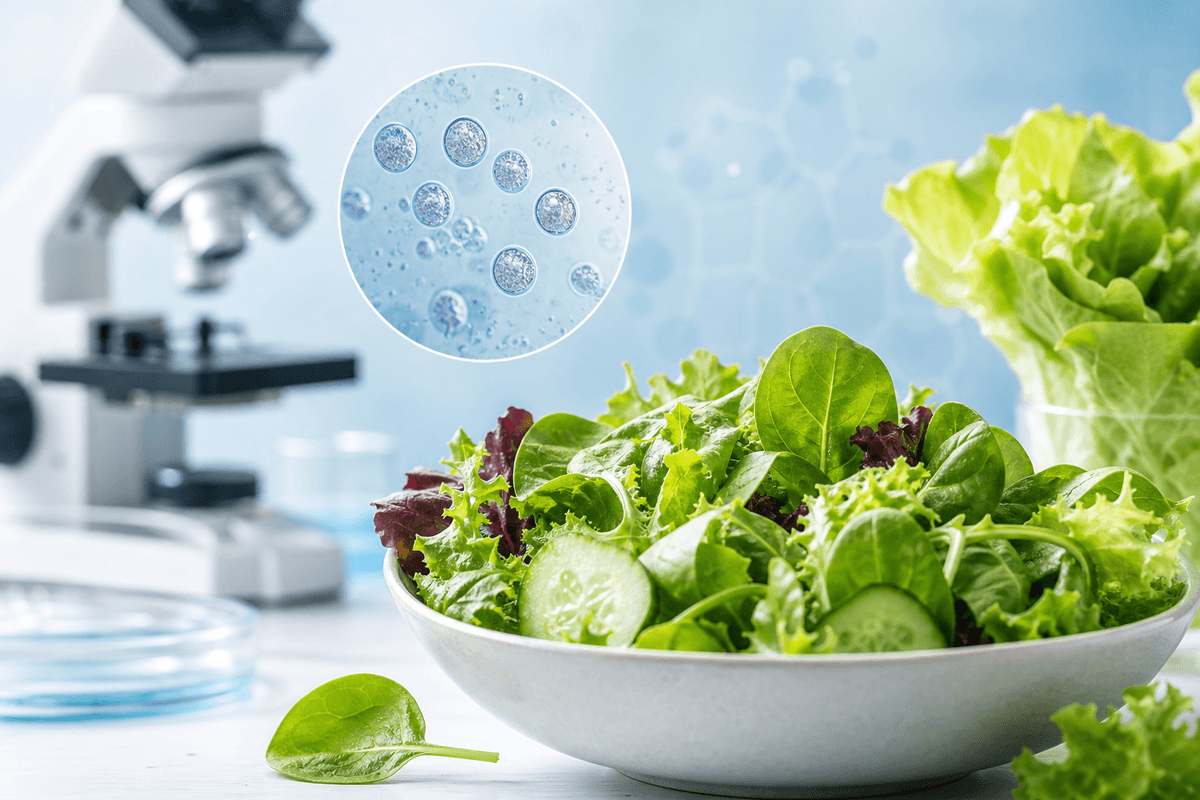
🥬Cyclospora Outbreak 2026: Symptoms, Produce Risk & What to Do
Thousands of people across dozens of US states have fallen ill with Cyclospora — a parasite linked to contaminated lettuce and salad greens. Here's what's happening, the symptoms to watch for, and how to protect yourself.
Scanura Editorial
Health Education Team
Written by Scanura Editorial for health education. This article is not a substitute for advice from a qualified doctor. About our editorial standards
Cyclospora Outbreak 2026: Symptoms, Produce Risk & What to Do
In July 2026, public health departments across the United States are tracking a sharp rise in cyclosporiasis — an intestinal illness caused by the microscopic parasite Cyclospora cayetanensis. State tallies have climbed into the thousands, with Michigan reporting the largest cluster and investigators pointing toward lettuce or salad greens as a likely vehicle — though no specific brand, grower, or supplier has been confirmed yet.
If you have sudden watery diarrhea after eating salads, bagged greens, or restaurant produce, this guide explains what Cyclospora is, how this outbreak differs from ordinary "stomach flu," who is at highest risk, and what to do next.
For the lab and treatment deep dive, see our companion guide: Cyclospora Infection Explained: Symptoms, Stool Test & Treatment. Wondering about stool appearance specifically? Read What Does Cyclospora Poop Look Like?. For produce choices, see What Vegetables Are Safe From Cyclospora?.
What's Happening in the 2026 Outbreak?
As of mid-July 2026:
- Dozens of US states have reported cyclosporiasis cases (news and state tallies have cited roughly 31–32 states).
- Michigan has reported well over 2,000 cases — far above its typical yearly total of around 50.
- Ohio and New York are also among the states with hundreds of reported illnesses.
- National confirmed counts from the CDC can lag behind state numbers while specimens undergo further analysis — so the "official" national total may look lower than what states are seeing on the ground.
- Investigators believe fresh produce, especially lettuce / salad greens, is involved. Other foods have not been fully ruled out.
- No deaths have been highlighted in CDC updates as of early July reporting windows — but dehydration can still make people very ill.
Cyclospora does not usually spread person-to-person the way norovirus does. People get sick by eating or drinking something contaminated with the parasite days to weeks earlier — which is why traceback is hard.
What Is Cyclospora?
Cyclospora cayetanensis is a protozoan parasite that infects the small intestine. Historically, US outbreaks have been linked to imported fresh produce such as:
- Raspberries and other berries
- Basil and cilantro
- Snow peas
- Mesclun / mixed lettuce
The parasite must mature outside the body before it can infect someone — which is one reason household spread is uncommon compared with viruses.
Symptoms to Watch For
The hallmark is watery diarrhea, often described as frequent or explosive bowel movements. Other common symptoms include:
| Symptom | Notes |
|---|---|
| Watery diarrhea | Main feature — can be severe |
| Abdominal cramps / bloating | Often with gas and urgency |
| Nausea / vomiting | Variable |
| Loss of appetite | Common with prolonged illness |
| Fatigue / body aches | Can feel out of proportion to a "simple bug" |
| Low-grade fever | Sometimes present |
Incubation: Symptoms usually start about 1 week after exposure, but the range is roughly 2 days to 2 weeks. That delay makes it easy to blame the wrong meal.
Duration: Without treatment, illness can last from a few days to more than a month. Symptoms may improve, then return in waves — a classic clue for Cyclospora.
Why Lettuce Is Hard to Trace
Fresh leafy greens are:
- Often mixed from multiple sources
- Eaten raw (cooking kills many pathogens; salad greens usually are not cooked)
- Consumed in restaurants where ingredients aren't remembered clearly
- Difficult to fully clean — rinsing reduces risk but does not guarantee safety if contamination is internal or in crevices
Michigan health officials have completed large interview campaigns with patients. Even with strong epidemiologic signals toward salad greens, product identification can take weeks — or the contaminated lot may already be gone from shelves.
Who Is at Highest Risk of Severe Illness?
Cyclosporiasis is usually not life-threatening in healthy adults, but dehydration can be serious for:
- Young children
- Older adults
- Pregnant people
- People with weakened immune systems
- Anyone already dehydrated from heat, travel, or other illness
Seek care sooner if you cannot keep fluids down, feel dizzy, notice little urine, or have bloody diarrhea (blood is less typical for Cyclospora and needs broader evaluation).
Cyclospora vs Common "Food Poisoning"
| Feature | Cyclospora | Norovirus / typical viral gastroenteritis | Salmonella / STEC |
|---|---|---|---|
| Onset | Days to ~2 weeks | Hours to ~2 days | Hours to a few days |
| Person-to-person | Uncommon | Very common | Variable |
| Typical vehicle | Contaminated produce | Contaminated surfaces/food, people | Many foods, animals |
| Illness pattern | Can last weeks; may relapse | Usually days | Days; STEC can be severe |
| Test | Special stool stain/PCR | Often clinical | Stool culture / PCR |
If everyone at a picnic got sick the same night, think virus or classic bacterial food poisoning first. If one household member develops prolonged watery diarrhea a week after a salad bar meal, ask about Cyclospora.
What Should You Do Right Now?
1. Don't panic-throw all groceries — but be smart
Until a specific recall is announced:
- Wash hands before preparing produce
- Rinse fruits and vegetables under running water
- Discard heavily bruised or damaged leaves
- Keep pre-cut salads refrigerated and use promptly
- Follow any official recall notices from FDA/CDC/state health departments if one is issued
Washing helps but is not 100% protective.
2. Get evaluated if diarrhea persists
See a clinician if watery diarrhea lasts more than a few days, especially with fatigue and cramping. Ask specifically about Cyclospora testing — standard stool microscopy can miss it.
3. Treat dehydration early
Oral rehydration solutions, broths, and electrolyte drinks matter. Ors / WHO-style ORS packets are useful. Skip relying on sugary sodas alone.
4. Antibiotics only with a prescription
The usual medication is trimethoprim-sulfamethoxazole (TMP-SMX) — sold under names like Bactrim or Septra — typically for about 10 days. It is not over-the-counter. People with sulfa allergy need alternative plans from a doctor.
Travellers and the India Context
Cyclospora is better known in travellers returning from regions where the parasite is endemic, and in sporadic/seasonal clusters linked to imported produce. Indians living overseas, students, and travellers eating salads abroad during an outbreak season should:
- Prefer cooked vegetables when food safety is uncertain
- Be cautious with bagged salad mixes and herb garnishes
- Seek stool testing that includes Cyclospora if prolonged traveler's diarrhea develops
In India, prolonged diarrhea workups often focus on viral illness, bacterial dysentery, giardia, and amoebiasis — but mention Cyclospora if travel history or imported-produce exposure fits.
Related reading: Typhoid tests, stool occult blood, and electrolyte imbalance after diarrhea.
Why National Counts Can Look Confusing
In 2025, some foodborne pathogens — including Cyclospora — moved from mandatory to optional reporting in parts of US surveillance systems. That means:
- States that keep active Cyclospora surveillance (like Michigan) surface large outbreaks quickly
- National dashboards may undercount or update slowly
- News outlets aggregating state data may report higher totals than CDC "confirmed" figures
For patients, the practical takeaway is simple: trust your symptoms and ask for the right test, even if national headlines jump around.
Questions to Ask Your Doctor
- "Could this be Cyclospora given the current outbreak and my salad exposure?"
- "Will my stool test include Cyclospora PCR or special staining?"
- "How many stool samples do you need?"
- "Is TMP-SMX safe for me — any sulfa allergy, pregnancy, or kidney issues?"
- "When should I go to the ER for dehydration?"
- "Do I need to stay home from work/school — and for how long?"
How scanura Helps
If your doctor orders blood work for dehydration or complications — CBC, electrolytes, kidney function — upload the report to scanura for a plain-language explanation of sodium, potassium, creatinine, and white cell trends while you recover. Pair that with clinical care for the parasite itself.
Key Takeaways
- July 2026 cyclosporiasis cases have surged across many US states, with Michigan especially hard hit.
- Lettuce / salad greens are the leading suspicion — but no single product is confirmed in public updates yet.
- Watery, sometimes explosive diarrhea + fatigue, starting about a week after produce exposure, is the classic pattern.
- Illness can last weeks and relapse without antibiotics.
- Person-to-person spread is uncommon — this is mostly a food/water contamination story.
- Ask for Cyclospora-specific stool testing — routine labs can miss it.
- Hydration and timely medical care matter most for children, elderly, and immunocompromised people.
- Follow official recalls if and when a specific product is named.
Disclaimer: This article is for educational purposes only and reflects publicly reported outbreak information as of mid-July 2026. Case counts and food vehicles change as investigations continue. scanura does not provide medical diagnosis. Always consult a qualified clinician for personal medical decisions.
Medical References
Step-by-Step Guide
- 1
Recognize the symptom pattern
Watch for watery, often explosive diarrhea with cramping, bloating, nausea, and unusual fatigue — especially if symptoms start about a week after eating fresh produce.
- 2
Note what you ate
Write down recent salads, lettuce mixes, herbs, berries, and restaurant meals from the past 1–2 weeks. Food history helps traceback investigations.
- 3
See a doctor if diarrhea lasts
Seek medical care if watery diarrhea lasts more than a few days, you become dehydrated, or you are elderly, pregnant, or immunocompromised.
- 4
Ask for Cyclospora testing
Request stool testing that specifically looks for Cyclospora — routine O&P exams can miss it unless special stains or molecular panels are used.
- 5
Wash and prepare produce carefully
Wash hands and rinse fresh fruits and vegetables under running water. Cut away bruised areas and refrigerate pre-cut produce promptly.
- 6
Stay hydrated while recovering
Replace fluids and electrolytes. Untreated cyclosporiasis can last weeks and symptoms may improve then return.
📬 One health report guide, every week
Normal ranges, what your values mean, and what to ask your doctor — in plain language. Free, unsubscribe anytime.