🧠Carly Simon Parkinson’s & Skin Cancer: What Her Story Teaches
Carly Simon revealed Parkinson’s disease and facial basal cell carcinoma after years away from the spotlight — saying ‘I have not stopped living.’ Here’s what those diagnoses mean in plain language.
Scanura Editorial
Health Education Team
Written by Scanura Editorial for health education. This article is not a substitute for advice from a qualified doctor. About our editorial standards
Carly Simon Parkinson’s & Skin Cancer: What Her Story Teaches
On 27 July 2026, Grammy-winning singer and Rock & Roll Hall of Fame inductee Carly Simon, 83, publicly explained years of relative silence. In a statement shared with major news outlets including NBC News / TODAY, she said she had been learning how to live with Parkinson’s disease — and that during the same period she had surgery for basal cell carcinoma on her face.
Her closing message was neither denial nor forced positivity: “I have not stopped living, and I have not stopped working.” She is recording a new album, Comes in Waves, and described music as something that still arrives when she needs it — while refusing to call Parkinson’s a gift or a blessing.
This article is not celebrity gossip. It uses her carefully worded disclosure as a doorway into two conditions many families eventually face: a progressive neurological disease that is easy to misattribute to “just ageing” or arthritis, and the most common form of skin cancer — highly treatable, yet still emotionally disruptive when it involves the face.
What Carly Simon Shared
Simon’s statement, as reported by NBC News, Rolling Stone, and The Hollywood Reporter, covers several clinically important points:
- Fans noticed her absence. She thanked people who wrote asking how she was, then answered directly: she had been adjusting to Parkinson’s and deciding how much to say publicly.
- Symptoms are unpredictable. Some days she is so tired she cannot get the day moving; other days she has more room to move, think, work, and feel like herself.
- Mobility problems came first in a confusing way. She had arthritis in her knees and one hip, then joint replacement surgery. When walking still required considerable help, her family knew something more was going on.
- Diagnosis followed specialist evaluation at the Mayo Clinic. She began medication for movement and other symptoms.
- Non-motor symptoms mattered as much as tremor or gait. She named anxiety, depression, exhaustion, and apathy — describing apathy as if the brain “misplaced the guest list” for participating in life.
- Basal cell carcinoma was removed from her face. Surgery changed her appearance and deepened self-consciousness about being seen publicly — she wryly noted the irony of having written “You’re So Vain.”
- Withdrawal from public view felt like the most manageable response amid mobility issues, diagnosis, surgery, and emotional fallout. She compared herself to an “all-season bear.”
- Creative work continued. Recording Comes in Waves gave shape to days that often lacked shape. Illness, she said, can change your life without becoming the whole of it.
That last idea is the educational heart of her disclosure: chronic disease is real, hard, and sometimes frightening — and a full human life can still continue beside it.
Parkinson’s Disease in Plain Language
Parkinson’s disease (PD) is a progressive disorder of the nervous system. It mainly affects movement, but it is never only a movement disease.
What goes wrong in the brain?
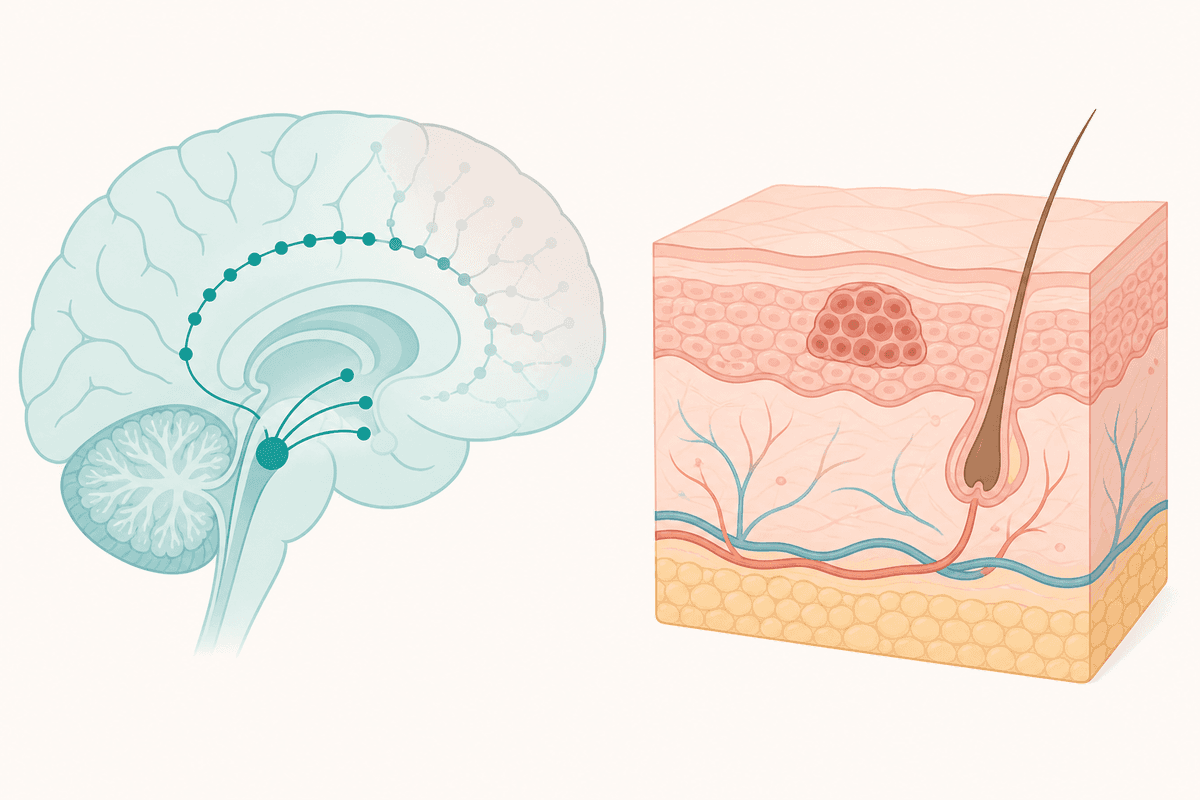
In Parkinson’s, nerve cells in a midbrain region called the substantia nigra gradually die or stop working well. Those cells normally produce dopamine, a chemical messenger that helps control smooth, intentional movement. As dopamine falls:
- Movements become slower (bradykinesia)
- Muscles may stiffen (rigidity)
- A resting tremor may appear (often starting on one side)
- Balance and walking become less automatic
- Fine motor tasks — buttoning a shirt, handwriting — get harder
By the time classic motor signs are obvious, a large share of those dopamine-producing cells may already be lost. That is one reason early recognition matters — and why vague early symptoms are easy to miss.
Classic motor signs
| Sign | What it can look like |
|---|---|
| Tremor | Rhythmic shaking at rest, often in a hand or fingers |
| Bradykinesia | Slowing of all movement; getting “stuck” starting a step |
| Rigidity | Stiff limbs or neck; reduced arm swing while walking |
| Postural instability | Unsteady balance; falls or near-falls |
| Gait changes | Shuffling steps, stooped posture, freezing of gait |
Not everyone has a dramatic tremor. Some people present mainly with stiffness, slow walking, or falls — which can be wrongly blamed on arthritis, “old age,” or recovery from orthopaedic surgery.
Non-motor symptoms people underestimate
Simon’s description of anxiety, depression, exhaustion, and apathy matches what neurologists see every day. Parkinson’s can also involve:
- Loss of smell (anosmia)
- Sleep disorders (including REM sleep behaviour disorder)
- Constipation
- Soft voice and reduced facial expression (“masked face”)
- Cognitive changes in later stages for some patients
- Pain and fatigue that do not track neatly with visible tremor
Apathy is especially misunderstood by families. It is not laziness or lack of love. It is a change in the brain’s drive and initiative systems — exactly the “misplaced guest list” metaphor Simon used.
Why Diagnosis Can Be Delayed
Simon’s path — joint pain, replacement surgery, then persistent inability to walk without help — is a familiar clinical trap.
Orthopaedic problems and Parkinson’s can coexist
Knee and hip arthritis are extremely common after age 60. Joint replacement can be genuinely needed. But Parkinson’s also impairs gait, posture, and the automatic programmes that make walking effortless. After surgery:
- Physical therapy may progress more slowly than expected
- Balance may remain poor despite a successful implant
- Freezing, shuffling, or reduced arm swing may still be present
When recovery “doesn’t feel right,” it is reasonable to ask: Is there a neurological contribution? That question led Simon’s family toward deeper evaluation.
There is no single blood test for Parkinson’s
Diagnosis is primarily clinical — based on history, neurological examination, response to dopaminergic medication, and sometimes imaging (such as DaTscan in selected cases) to support the diagnosis or rule out look-alikes. Blood tests still matter to exclude other conditions that can mimic Parkinsonism (thyroid disease, certain drug effects, metabolic problems). Understanding your lab reports in plain language — something scanura is built for — can help you prepare better questions for a neurologist, even when Parkinson’s itself is not diagnosed from a CBC or LFT.
Mimics and look-alikes
Doctors also consider:
- Drug-induced Parkinsonism (for example from some antipsychotics or anti-nausea medicines)
- Vascular Parkinsonism after small strokes
- Atypical Parkinsonian syndromes (progressive supranuclear palsy, multiple system atrophy, etc.)
- Essential tremor (different pattern from Parkinson’s tremor)
A second opinion at a movement-disorder centre — as Simon received at Mayo Clinic — is often worthwhile when the picture is complex.
Living With Parkinson’s: What Treatment Usually Involves
There is no cure yet. There is meaningful treatment.
Medicines
The cornerstone for many people is levodopa (often combined with carbidopa), which the brain converts into dopamine. Other options include dopamine agonists, MAO-B inhibitors, COMT inhibitors, and medicines for specific symptoms (tremor, constipation, sleep, mood). Timing of doses becomes part of daily life; “on” and “off” periods are common topics in clinic visits.
Simon noted she began medication for movement and other symptoms. Response varies. Dose adjustments over months and years are normal — not a sign of failure.
Therapy and lifestyle
Evidence-supported supports include:
- Physiotherapy for gait, balance, and fall prevention
- Speech therapy for voice volume and swallowing
- Occupational therapy for daily living skills
- Exercise — especially aerobic activity, strength work, and programmes such as boxing-based or dance-based PD classes
- Nutrition — adequate protein timing around medicines (as advised by the neurologist), fibre for constipation, bone health
- Mental health care for depression, anxiety, and caregiver stress
Advanced options
For carefully selected patients, deep brain stimulation (DBS) or other device-aided therapies may help motor fluctuations. These are specialist decisions after thorough evaluation.
Emotional honesty without toxic positivity
Simon’s refusal to call Parkinson’s a “gift” is medically and psychologically healthy. Chronic illness can coexist with gratitude for family, art, and still-good days — without pretending the disease is a blessing. That stance reduces shame for patients who feel angry or frightened.
Basal Cell Carcinoma: The Skin Cancer She Named
Alongside Parkinson’s, Simon disclosed treatment for basal cell carcinoma (BCC) on her face. The cancer was removed. The surgery changed how she looked and how she felt about being photographed or appearing in public.
What is basal cell carcinoma?
BCC is the most common skin cancer worldwide. It usually grows slowly and rarely spreads (metastasises) to distant organs when treated early. It arises from basal cells in the outer skin layer, often on sun-exposed areas: face, ears, neck, scalp, shoulders.
Typical warning signs
| Clue | Description |
|---|---|
| Pearly or waxy bump | Often translucent, with visible tiny blood vessels |
| Sore that won’t heal | Bleeds, scabs, then reopens |
| Scar-like flat patch | Pale or yellowish area that expands slowly |
| Pink growth with rolled border | Classic “rodent ulcer” description in older texts |
Any changing spot on the face deserves a dermatology check — especially after decades of sun exposure.
Why facial surgery can feel bigger than the diagnosis
Medically, BCC is often “good news among bad news”: highly curable with excision, Mohs surgery, or other local treatments. Emotionally, the face is identity. Even a successful cancer removal can leave scars, asymmetry, or a changed contour. Simon’s self-consciousness — and her decision to step back from public view — illustrates that cure of disease ≠ end of psychological impact.
Prevention that still matters at any age
- Broad-spectrum sunscreen on face and hands daily
- Hats and shade in peak UV hours
- No tanning beds
- Annual skin checks if you have fair skin, many moles, prior skin cancer, or heavy lifetime sun exposure
- Prompt review of any non-healing facial sore
BCC is different from melanoma, which is less common but far more dangerous when it spreads. Do not assume every skin spot is “just BCC” — get it examined.
Two Diagnoses at Once: The Compound Stress
Simon’s story shows how neurological disease + visible facial surgery can amplify each other:
- Mobility limits reduce outings and social contact
- Appearance changes raise anxiety about being seen
- Fatigue and apathy make initiation of social plans harder
- Depression/anxiety from Parkinson’s can intensify body-image distress
- Public careers add a layer of scrutiny most patients never face — but private shame about scars or tremor is universal
For caregivers and clinicians, the lesson is to treat the whole person: movement, skin, mood, sleep, and identity — not only the dopaminergic motor score.
What Families and Readers Can Take Away
Early questions to ask a doctor
If you or a parent notice:
- New resting tremor
- Slowed walking after “successful” joint surgery
- Loss of smell, soft voice, or smaller handwriting
- Constipation plus sleep acting-out dreams
- A facial sore that bleeds and will not heal
…ask for evaluation. Bring a short symptom timeline. Video of an unusual gait episode can help specialists.
Support without minimising
Helpful phrases often sound like Simon’s own honesty:
- “This is hard — and we’re still here.”
- “Some days will look different; that doesn’t mean you’ve disappeared.”
- “What would make today a little more possible?”
Unhelpful: “At least it’s not worse,” or “Just think positive,” or “You’re so vain for caring about the scar.” Appearance distress after facial surgery is valid.
Creative and purposeful activity
Simon described music as giving shape to shapeless days and a place to go without leaving the room. For others that may be prayer, gardening, reading circles, volunteering online, or grandparent routines. Purpose is not a cure — but it is medicine for meaning.
Parkinson’s and Skin Cancer: India’s Context Briefly
Parkinson’s is under-recognised in many parts of India, especially when tremor is mild and stiffness dominates. Access to movement-disorder neurologists is uneven; general physicians may attribute early signs to ageing or arthritis — the same trap Simon described. Skin cancer incidence is lower in darker skin phototypes on average, but basal cell carcinoma still occurs, particularly on the face, and delayed presentation is common when spots are dismissed as “old scars” or pigmentation. Urban UV exposure, outdoor work, and prior radiation or immunosuppression raise risk.
If labs are ordered during a neurological workup (thyroid, B12, metabolic panels), tools like scanura can help you read the PDF in plain language before the appointment — so you spend clinic time on decisions, not decoding abbreviations.
Key Takeaways
- In July 2026, Carly Simon revealed she has Parkinson’s disease and had surgery for facial basal cell carcinoma, explaining years away from public life.
- Her line “I have not stopped living” rejects both denial and toxic positivity — illness changed her life without becoming its whole story.
- Parkinson’s is a progressive dopamine-related neurological disease with motor and non-motor symptoms (fatigue, anxiety, depression, apathy).
- Joint arthritis and Parkinson’s can coexist; poor walking after joint replacement may need a neurological look.
- Diagnosis is mainly clinical, often confirmed at specialist centres; medicines and therapy can substantially improve quality of life even without a cure.
- Basal cell carcinoma is usually highly treatable, but facial surgery can still wound confidence and social comfort.
- Treat the person: movement, skin, mood, sleep, and meaningful work or art — not only one diagnosis at a time.
- Seek care early for new tremor, unexplained gait change, or a non-healing facial lesion.
Disclaimer: This article is for educational purposes only. It summarises publicly reported statements about Carly Simon’s health as of July 2026 and general medical information about Parkinson’s disease and basal cell carcinoma. It is not a diagnosis, prognosis, or treatment plan for any individual. Always consult a qualified neurologist, dermatologist, or your primary physician for personal medical advice.
Medical References
Step-by-Step Guide
- 1
Know what Simon shared
In July 2026 she said years of public silence followed a Parkinson’s diagnosis after Mayo Clinic evaluation, plus surgery for facial basal cell carcinoma.
- 2
Learn Parkinson’s basics
Parkinson’s is a progressive neurological disease affecting dopamine pathways — causing tremor, stiffness, slow movement, balance problems, and non-motor symptoms like fatigue and apathy.
- 3
Separate joint pain from Parkinson’s
Arthritis and joint replacement can coexist with Parkinson’s. Persistent walking difficulty after orthopaedic surgery deserves neurological evaluation.
- 4
Understand basal cell carcinoma
It is the most common skin cancer, usually slow-growing and highly treatable when removed early — but facial surgery can still affect appearance and confidence.
- 5
Watch for early warning signs
See a doctor for new resting tremor, slowed movement, shuffling gait, loss of smell, or a changing skin spot that bleeds or does not heal.
- 6
Support the whole person
Medication, physiotherapy, sun protection, mental health care, and meaningful work or creative routines all matter — illness is not the whole of a life.
📬 One health report guide, every week
Normal ranges, what your values mean, and what to ask your doctor — in plain language. Free, unsubscribe anytime.