🐟Brown Bullhead Catfish Cancer: Contagious Melanoma Explained
Scientists found that black skin tumours in brown bullhead catfish are a rare transmissible cancer — the first confirmed in fish. Here's what it means for lakes, wildlife, and people.
Scanura Editorial
Health Education Team
Written by Scanura Editorial for health education. This article is not a substitute for advice from a qualified doctor. About our editorial standards
Brown Bullhead Catfish Cancer: Contagious Melanoma Explained
For more than a decade, anglers on Lake Memphremagog — the long lake that straddles Vermont (USA) and Quebec (Canada) — have pulled up brown bullhead catfish with unsettling black streaks and raised dark lumps. Biologists confirmed those lesions were melanoma, a skin cancer. The puzzle was why: bottom-dwelling catfish are not sunbathing fish, and chemical pollution alone did not fully explain what researchers were seeing.
In July 2026, a team led by scientists in Vermont published a landmark answer in Nature: the tumours are a clonally transmissible cancer. The cancer cells themselves act more like parasites, moving from fish to fish, than like ordinary tumours that grow only from one animal's own mutated cells.
This is the first documented transmissible cancer in a fish — and the first found in a freshwater ecosystem.
What Is a Brown Bullhead?
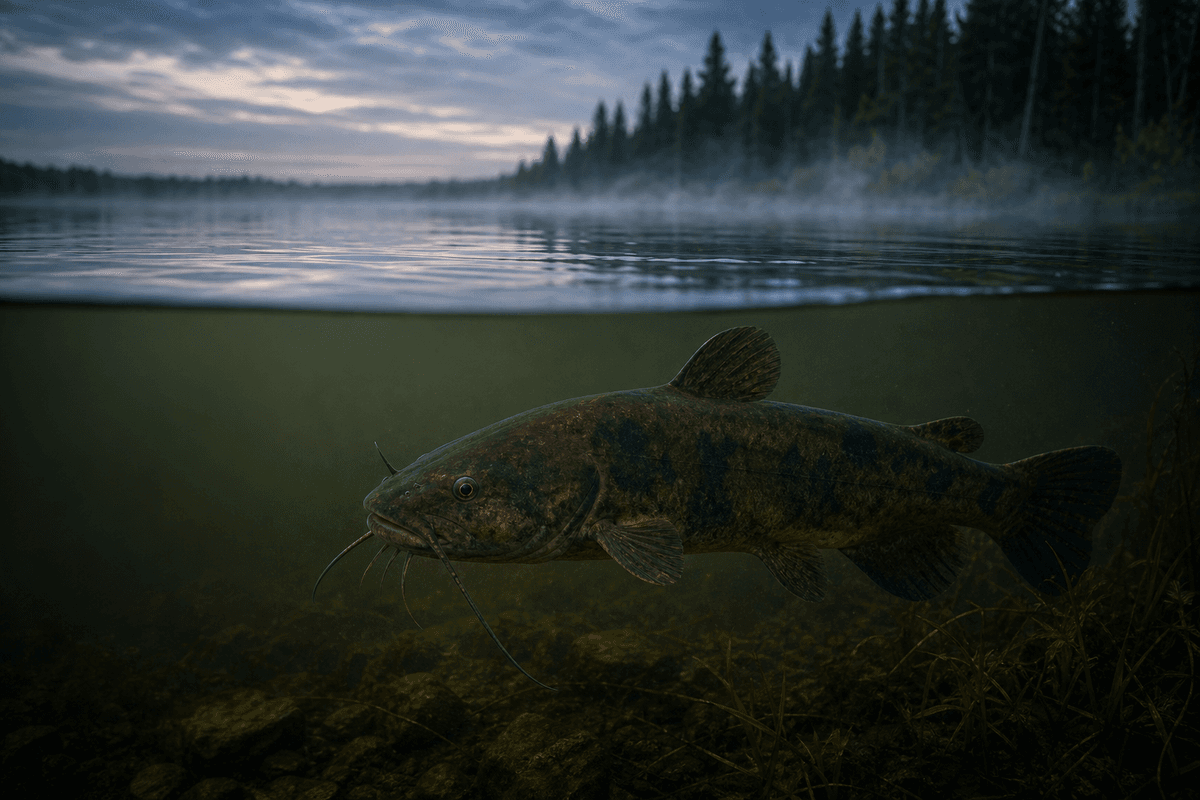
The brown bullhead (Ameiurus nebulosus) is a common North American catfish. Key traits that matter for disease and pollution science:
| Trait | Why it matters |
|---|---|
| Bottom-dweller | Lives close to sediment where contaminants settle |
| Scaleless / contact-heavy | Spawning fish pack tightly in shallow water — good for cell transfer |
| Widely monitored | Long used as a sentinel species for water quality |
| Long-lived | Older fish accumulate years of chemical or pathogen exposure |
Because bullheads "sample" the lake floor for years, tumours in this species have historically been treated as a warning light for polluted waters.
Two Different Cancers in the Same Species
It is easy to mix these up. Brown bullheads appear in cancer research for two separate stories:
1. Pollution-linked liver tumours (classic story)
For decades, studies in places like Ohio's Black River and Washington, D.C.'s Anacostia River linked high rates of liver neoplasms to polycyclic aromatic hydrocarbons (PAHs) in sediment — chemicals from coal, petroleum, road runoff, and industrial coking.
When a major PAH source closed on the Black River, liver tumour rates in bullheads later fell — strong evidence that cleaning sediment pollution can reverse that cancer pattern.
2. Transmissible skin melanoma (2026 Nature finding)
The Lake Memphremagog lesions are skin melanomas. Whole-genome sequencing showed the tumours are genetically a single clonal lineage: tumour DNA from different fish matches other tumours far better than it matches the fish hosting them.
That is the opposite of ordinary cancer, where each tumour is a mutated version of that individual's own cells.
Bottom line: Same fish species, different diseases. Pollution-linked liver cancer ≠ contagious melanoma.
What Did the Nature Study Show?
Researchers sequenced tumour and matched healthy tissue from Lake Memphremagog bullheads (samples spanning 2015, 2019, and 2023), plus reference fish from nearby waters.
Key findings:
- Mitochondrial and nuclear genomes of tumours cluster together as one lineage, separate from host fish.
- Tumours share hundreds of thousands of genetic variants that healthy host tissue does not — far more sharing than expected between independent ordinary cancers.
- Structural variants and copy-number patterns also match across tumours.
- Screens did not find a virus or microbe uniquely tied to the tumours — supporting the idea that the cancer cells themselves are the infectious agent.
- Phylogenetic clues suggest the lineage may have originated outside Lake Memphremagog and then spread.
Prevalence has been high for years: studies around 2014–2017 found melanomas in roughly 23–37% of sampled bullheads; more recent lake-wide checks still put many sites near ~30% of larger fish.
Similar melanistic lesions have also been reported in other northeastern waters (for example ponds in Maine and New Hampshire), raising questions about how far the lineage has travelled.
How Does Contagious Cancer Work?
Most cancers are not contagious. A rare exception is when living cancer cells leave one animal, survive long enough, and engraft on another — dodging the new host's immune system.
Before this fish finding, naturally occurring transmissible cancers were known in only three animal groups:
| Animal | Disease | Rough character |
|---|---|---|
| Dogs | Canine transmissible venereal tumour (CTVT) | Ancient lineage; often survivable |
| Tasmanian devils | Facial tumour disease (DFTD) | Relatively young; often lethal |
| Bivalves (clams, mussels, etc.) | Transmissible neoplasia | Multiple independent lineages; sometimes cross-species |
Brown bullhead melanoma is now described as the fourth documented type. Scientists note an early-1900s Massachusetts pond outbreak of black bullhead tumours that could be transferred by contact — a historical hint that something like this may have happened before, without the genetics to prove it.
Suspected transmission in bullheads
Lab proof of fish-to-fish transfer is still being pursued, but leading hypotheses include:
- Spawning contact — adults crowd in shallow water; spines behind the pectoral fins could abrade skin and pass cells
- Environmental persistence — free-floating tumour cells briefly surviving in sediment or water
- Immune stress — pollution, hormones, or habitat stress possibly making hosts more vulnerable (still under study)
Is This Dangerous for People?
No known human infection risk from this cancer lineage.
Researchers and public agencies emphasize:
- The tumour cells are adapted to brown bullheads, not people
- There is no evidence the cancer infects humans or other species outside this lineage's known hosts
- Lake Memphremagog supplies drinking water for more than 175,000 people; the finding does not mean the water is giving people melanoma
Practical notes for anglers and the public:
- Fish with lesions can still be handled for catch-and-release or research with normal hygiene (wash hands; clean knives and boards).
- Many scientists say they personally would not eat fish with obvious tumours — a caution, not a proven toxin rule.
- Always follow local fish-consumption advisories for mercury, PCBs, and other contaminants — those risks are separate from contagious melanoma.
- Do not dump bait fish or move live bullheads between water bodies; that could spread wildlife disease.
This is not the same as human melanoma caused by UV light. Contagious cancer in animals is a different biological phenomenon.
Why Scientists Care Beyond One Lake
Transmissible cancers force hard questions about ecology and medicine:
- How often do cancer cells evolve the ability to jump hosts?
- Can climate change, flooding, or pollutants (for example after major storms such as Irene in 2011) create conditions that favour emergence or spread?
- What does a ~30% infection rate mean for long-term bullhead populations?
- Can wildlife monitoring catch the next lineage earlier?
For environmental health, bullheads remain useful sentinels — but tumour type matters. Liver tumour maps still track chemical exposure. Skin melanoma maps may now also track a wildlife contagion.
Practical Questions People Ask
Can I catch cancer from swimming in the lake?
There is no evidence this melanoma infects humans through swimming, drinking treated municipal water, or casual contact.
Is this the same as cancer in polluted rivers?
No. Classic industrial/urban river studies mainly tracked liver tumours linked to PAHs. Memphremagog's headline finding is skin melanoma that is genetically clonal and contagious.
Are all black spots on catfish this cancer?
Not necessarily. Histopathology distinguishes non-raised melanistic areas from invasive melanoma. Scientists sample carefully; a dark mark alone is not a home diagnosis.
Should India or other countries worry about local catfish?
This lineage is documented in northeastern North American waters so far. Different catfish species and ecosystems need their own evidence. Global takeaway: wildlife cancers can sometimes behave like infectious diseases — rare, but real.
Does this change how doctors treat human cancer?
Not directly for day-to-day oncology. It does deepen basic science on how cancer cells evade immunity and survive outside a host — themes that also matter in transplant medicine and metastasis research.
What scanura Readers Should Remember
scanura helps you understand human lab reports — CBC, LFT, tumour markers, and more — in plain language. A contagious fish melanoma will not show up on your blood test.
What is useful to take away:
- Cancer is usually not contagious in people — this fish story is a rare wildlife exception, not a new rule for human patients.
- Environmental health and human health are linked through water quality, contaminants, and food advisories — even when a specific tumour lineage does not infect us.
- If you have a personal cancer concern or abnormal labs, talk to a doctor and use tools like scanura to prepare clearer questions — do not use wildlife headlines as a substitute for medical care.
Key Takeaways
- Black tumours on brown bullheads in Lake Memphremagog are malignant melanomas.
- A 2026 Nature study shows they form a single clonal, transmissible cancer — the first confirmed in fish.
- Tumour genomes match each other, not their host fish — the genetic signature of a contagious lineage.
- This is different from classic PAH-linked liver tumours in bullheads from industrial rivers.
- There is no known risk to humans; the cancer is not known to jump to people.
- Roughly one in three larger bullheads in parts of the lake have been affected in recent surveys.
- Transmission is still being pinned down; spawning contact is a leading hypothesis.
- Follow local eating advisories, avoid moving live fish between waters, and treat this as a wildlife disease story with lessons for environmental monitoring.
Disclaimer: This article is for educational purposes only and summarizes peer-reviewed research and public science communication as of July 2026. It is not medical, veterinary, or food-safety advice for your specific situation. Always follow local public-health and fish-consumption guidance, and consult a qualified clinician for human health concerns.
Medical References
Step-by-Step Guide
- 1
Know what was found
Black raised lesions on brown bullhead catfish in Lake Memphremagog are malignant melanomas that behave as a clonal, transmissible cancer lineage.
- 2
Separate two tumour stories
Classic Great Lakes / urban-river bullhead liver tumours are linked to PAH pollution. This new melanoma lineage is genetically contagious fish-to-fish, not the same disease.
- 3
Understand the genetics
Tumour DNA matches other tumours more than the host fish — the opposite of ordinary cancer, which arises from the host's own cells.
- 4
Assess human risk
Researchers report no known risk to people. The cancer is not known to infect other species. The lake remains a drinking-water source for over 175,000 people.
- 5
Handle fish carefully
Affected fish can be handled for study. Many scientists personally avoid eating fish with visible tumours; follow local fish-consumption advisories.
- 6
Watch what comes next
Researchers are still confirming the exact transmission route (likely contact during spawning) and tracking spread in other New England and Canadian waters.
📬 One health report guide, every week
Normal ranges, what your values mean, and what to ask your doctor — in plain language. Free, unsubscribe anytime.